Carrot City: urban agriculture in Toronto
 image courtesy of http://www.petite-riviere.com
Some people, like my colleague, Carolyn, have very successful home gardens. I drooled over the pictures of her garlic. Me? Not so lucky. When I talked my husband into buying a house instead of a condo, it was supposedly so the kids would have a backyard to play in. But really, it was so that I could have a vegetable garden. After 7 years of trying, I concede defeat to the rabbits, raccoons and all the other neighbourhood critters I have been feeding. The buffet is now closed.
I actually had better luck when I had a container garden on a roof in downtown Toronto. My best success happened when my husband and I sat on the roof spitting watermelon seeds into the containers and many of the seeds sprouted. I could've had a bajillion watermelons!
Rooftop gardens are only one of the alternatives to traditional vegetable gardens. Carrot City is a Ryerson University research initiative that looks at how design can enable the production of food in a city. On October 1, Ryerson University professors June Komisar, Joe Nasr and Mark Gorgolewski will discuss urban agriculture in Toronto at North York Central Library.
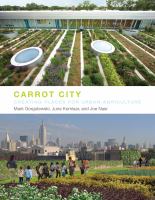
The library carries the professors' book, Carrot City: creating places for urban agriculture, along with many other titles on urban agriculture:
 |
 |
 |
| Carrot City: creating places for urban agriculture by Mark Gorgolewski, June Komisar and Joe Nasr | The essential urban farmer by Novella Carpenter and Willow Rosenthal | Digging the city: an urban agriculture manifesto by Rhona McAdam |
 |
 |
 |
| City farmer: adventures in urban food growing by Lorraine Johnson | The urban food revolution: changing the way we feed cities by Peter Ladner | Eat up: the inside scoop on rooftop agriculture by Lauren Mandel |
5 thoughts on “Carrot City: urban agriculture in Toronto”
Enjoyed your post Cathy. The squirrels are my backyard enemy. I love that young folks are trying veggie gardening, but am so glad that FARMERS really do FEED CITIES!
I am glad you enjoyed the post, Jessica. During the program, the professors mentioned that i)Carrot City showcased opportunities for urban agriculture for those were interested and ii) urban agriculture had the benefit of community building, as well as food production. Farmers are definitely needed to feed all the folks living in urban areas!
Enjoyed your post. Thanks for sharing..
Thanks for your comment, Angela. I am glad you enjoyed the post. I hope to do further programs on urban agriculture in the future…stay tuned!
thanks for this it is great.