Harper Lee and the Most Exciting Literary Event of the Year
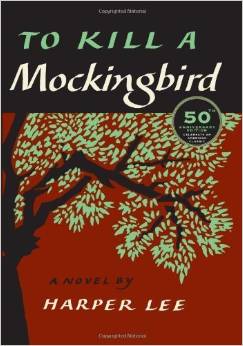 When students ask me for a copy of Harper Lee’s To kill a mockingbird, I like to walk them to the shelf where the author’s one and only book lives. It gives me a chance to say, “Did you know that Harper Lee only published one book in her whole career?” If they look surprised or quizzical I say, "This book is so good, she didn’t need to write another one.” Sometimes I see a little spark of hope in their eyes –- the hope that this book might be pretty good — unlike some of the snore inducing stuff they've had to read for English class.
During the short walk to the shelf I don't have time to tell them the story of how a young woman from a small southern town ended up in a cold water flat in New York in the 1950s, determined to try her hand at writing. Harper Lee (or Nelle, as she's known to family and friends) had been following in the footsteps of her father and sister, both lawyers. She attended law school at the University of Alabama, writing for the campus humour magazine in her spare time, but her heart wasn't in the law. Against her father's advice, she dropped out of school and moved to New York at the age of 23 to become a writer, as her childhood friend Truman Capote had done before her. She got a job as a clerk at an airline and wrote in her spare time. Years passed. Then, in 1956, friends gave her an amazing Christmas gift. Inside an envelope labeled "Nelle" nestled in the Christmas tree, was a note that read, "You have one year off from your job to write whatever you please. Merry Christmas." The financial gift allowed Lee to quit her job and write full time. And the rest, as they say, is history.
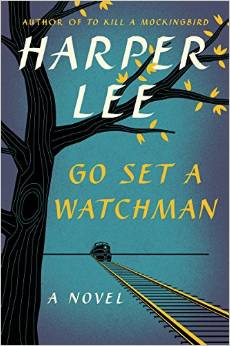 Soon, I won't be able to say that Harper Lee only published one book. On July 14th, 55 years after the publication of To kill a mockingbird in 1960, Go set a watchman will be released. In 2014, Lee’s lawyer was checking on the condition of the original manuscript for Mockingbird when she discovered the manuscript for Go set a watchman, which was thought to have been lost. It was written before Mockingbird, but it takes place years after the events of that novel. Scout, a character beloved by Mockingbird fans, is grown up and living in New York City in the "new" book. After Lee submitted the manuscript for Go set a watchman in the 1950s, her editor advised her to tell the story from the perspective of Scout as a little girl. “I was a first-time writer, so I did what I was told,” Lee said.
Harper Lee's editor was right. To kill a mockingbird won'the Pulitzer Prize in 1961. (In a 1964 interview, Lee described her feelings about the book's success: "I never expected any sort of success with Mockingbird…I was hoping for a quick and merciful death at the hands of reviewers.") A powerful indictment against racism published by a southerner during a time when segregation along racial lines was still the practice in public places such as schools, buses, restrooms, and restaurants in the Southern states, To kill a mockingbird is one of the most widely read and loved American novels. Oprah Winfrey remembers, “just devouring it, not being able to get enough of it.” Author Wally Lamb read it as a teenager. “It was the first time in my life that a book sort of captured me. That was exciting; I didn’t realize that literature could do that.” Mark Childress says the experience of reading To Kill a Mockingbird at the age of nine is the reason he's a writer today.
In 1962, the movie version of To kill a mockingbird, starring Gregory Peck, won'three academy awards, intensifying the spotlight on Lee. She walked out of that spotlight around 1964 and never looked back. For years, fans waited in vain for another book. Lee kept a low profile, splitting her time between her native Monroeville Alabama and New York. For a time, she worked on a book about a murderous, self-ordained preacher, based on a true story, but eventually dropped the project. It seemed that one book by Harper Lee was all the world was going to get. Until now.
How do you get ready for the most exciting literary event of the year? Here are some suggestions:
1. Reserve Go set a watchman. Here are the formats the library currently offers:
- Regular print book
- Ebook
- Large print book
- Audiobook
- eAudiobook
- Talking Book: CD Format (restricted to print disabled patrons)
 2. Watch the classic movie To kill a mockingbird. (You can reserve a copy from the library.) Nominated for eight Academy Awards, it won for Best Actor (Gregory Peck), Best Art Direction, and Best Adapted Screenplay. Here's a suggestion within a suggestion: bake a batch of southern style biscuits and watch the movie with your dad on Father's Day. Can you think of a better movie dad than Gregory Peck as Atticus Finch?
3. If you've already read Mockingbird, and are one of that curious breed — those who won't read the same book twice — try reading another southern writer, such as Eudora Welty, Carson McCullers, William Faulkner, Richard Wright, Zora Neale Hurston, Alice Walker, Flannery O’Connor, or Pat Conroy.
 4. Watch the movie Hey, Boo: Harper Lee and To kill a mockingbird. Authors and celebrities talk about the influence the book has had on them, but the best thing about this movie, in my opinion, is being able to listen to the delightful Alice Finch Lee, Harper Lee's older sister, who died in 2014. Lee has said that the character Atticus Finch was modelled after her lawyer father, and her lawyer sister, who she called “Atticus in a skirt.” Alice practiced law in Monroeville, Alabama until she was 100 years old!
5. Read a biography of Harper Lee. I recommend Mockingbird: a portrait of Harper Lee, by Charles J. Shields. I'm currently devouring this unauthorized biography. I've come across some delicious southern names in the book, such as Theodocia Eurfassa Windham (Harper Lee's grandmother), Truman Streckfus Persons (Truman Capote's birth name), Lille Mae Faulk (his mother's name) and Archulus Julius Persons (his father's name).
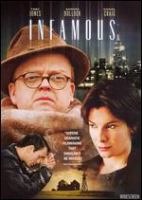
6. Watch the movies Infamous and Capote. Harper Lee is depicted in both (played by Catherine Keener in Capote, and by Sandra Bullock in Infamous.) These movies cover the time period when Truman Capote was researching the murder of the Clutter family in Holcomb, Kansas in 1959 for his book, In cold blood. Lee went with Capote to Kansas, acting as his research assistant.
7. Listen to the audiobook version of To kill a mockingbird, which is narrated by Sissy Spacek. I applaud the publisher for choosing Spacek. Her southern accent makes me think of honey melting on a hot biscuit on an August afternoon.
8. Reread To kill a mockingbird. What better time is there than a sultry Toronto summer to revisit the small Alabama town of Maycomb, where "Men's stiff collars wilted by nine in the morning. Ladies bathed before noon, after their three-o'clock naps, and by nightfall were like soft teacakes with frostings of sweat and sweet talcum."
Here are the formats the library offers:
- Regular print book
- Large print book
- Audiobook
- eAudiobook
- eBook
- Talking book: CD Format (restricted to print disabled patrons)
12 thoughts on “Harper Lee and the Most Exciting Literary Event of the Year”
Fascinating stuff. Never knew this. I will have to read this other book.
Maureen,
Thank you for this excellent detailed look at Harper Lee and her book. I am looking forward to reading the biography of her that you have suggested.
I think you’ll enjoy the biography by Charles J. Shields. It’s clear that he’s done a lot of research on Harper Lee, and he’s really good at painting a picture with words, and giving the reader a feel for a particular time and place. For instance, when he describes Lee’s time at Huntingdon College, where an important part of a student’s education was to learn “social graces” (Huntingdon was for women only.) “Dinner was never a haphazard affair. The girls ate at tables of eight. At the head was a female instructor…The right piece of silverware had to be used for each course…Now and then the instructor would peek under the table to make sure none of the girls had her legs crossed–feet flat on the floor. Once a month…the girls were expected to come down to dinner in evening dress.” Fascinating, and so different from today!
Here’s a bit from the biography I found very interesting. Harper Lee got so frustrated rewriting “To kill a mockingbird” that one night she threw the entire draft out the window of her New York apartment into the snow. Lucky for us, her editor insisted she go out and retrieve the pages!
Thank you, Maureen, for your lovely blog. I am going to reread “To Kill a Mockingbird!”
I’m glad to hear that, Muriel — it’s one of those books that many of us read when we were young. With the passing of the years, the picture begins to fade, the details are lost. “To kill a mockingbird” is one of those books that is worth rereading. Thanks for you comment.
What is it about To Kill a Mockingbird which makes it seemingly so necessary a novel in ten languages, especially in America? To give Lee the Presidential Medal of Freedom for this one book seems a bit over the top. In the UK it is considered the book that everyone must read, over and above the Bible (!). I groan when someone tells me it is his or her favourite book.
Thanks for commenting, Loren.
I’m not sure what you mean by “seemingly so necessary.” Maybe you are referring to the fact that “To kill a mockingbird” is required reading for many high school students? The whole idea of having a favourite book is something I don’t relate to. There are so many books that I love, for different reasons. And comparing them is like comparing apples and oranges. But I do understand how a specific book, or aspect of a book, can affect someone deeply, embed itself in a reader’s mind and become a touch stone for them. TKMB has had this effect on many people. I think it’s an excellent book, well worth rereading, but I’m going to quote someone who has far more experience with TKMB than I do. She’s an English teacher from Winnipeg who says TKMB is her favourite book to teach. I think her thoughts about why she loves to teach this book, begins, at least, to answer your question.
“I love teaching this classic because of its depth. It is a beautifully written coming of age story, a study in the nature of courage, truth and integrity, and a poignant tale of the injustice of racial discrimination. Sadly, and despite the progress the world has made, students find this novel relevant because of the connections they can draw to human rights abuses present in their world.”
Those are very good points. I think the difficulty is mine, not Lee`s. I tend to equate popularity with mediocrity, not at all the case with this novel — it won a Pulitzer Prize, after all.
I just reread To Kill a Mockingbird and it was a completely different book for me now compared to reading it as a teenager…which was wonderful, both times. My copy from the library was incredibly well-worn and every now and then there were underlines and comments. Most of them, I’m guessing, were from those teenagers studying it for English class! My favourite comment was on a sticky. I turned to chapter 9 and the sticky said “Rising action starts here”. Just in case you missed it (very big grin).
I get that, Loren. I used to like a certain band (not naming names), back when they were relatively unknown. The more their popularity increased, the less I seemed to like them. Some of us just seem to have an instinctive distrust of the tidal wave of popular opinion. I’m doing my best to shut out opinions about “Go set a watchman” right now. Soon I will have the book in my eager little hands – it’s waiting for me on the hold shelf.
I read an article online a while back, which argued that fans of TKMB should not read Go set a watchman. The author argued that there was no way the book could be better than TKMB, and that a reader’s memory of TKMB would be ruined by the new book. That’s just plain ridiculous, in my opinion. Even if “Go set a watchman” were inferior (and I’m not in the business of sitting in judgement upon books, and placing them in hierarchical order), so what? Does the experience of watching Shakespeare’s “Titus Andronicus “ (not one of my favourites) somehow mar my enjoyment of “A midsummer night’s dream” (which I love)? Not on your life! Oops – I think I went off on a tangent, responding to your comment!
That’s hilarious, Andrea! Throws me back to those days of high school English class, and the dramatic structure diagram we all had to learn, and all that weirdly precise terminology, lined up in order like bowling pins: exposition, rising action, climax, falling action, denouement. Sigh! Like you were learning the parts of an engine…
I like what you said about the experience of reading “To kill a mockingbird” being different for you when you read it again as an adult. I’m going to quote you the next time someone tells me they never read the same book twice.
Quote away. It’s amazing how a different perspective brings to life new aspects especially in one’s reading. There are lots of books that I have reread over my (long)reading career and each time it has been a new adventure.