Who Cares If It Rains?
Sometimes, it is just what you pay attention to. Ever wondered, for example, how people saw the constellations – shapes of bears, hunters, scorpions, while we see undifferentiated masses of stars? That is if we’re lucky enough, here in the well-lighted city, to see the stars at all?
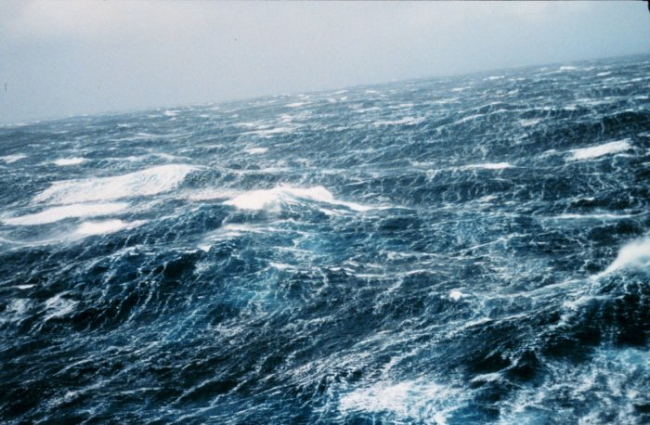 photo credit: Cap't. Fatty Goodlander
So it is with weather lore. For farmers, who depend on the weather to put bread on the table, and for fisher-people, whose safety depends on accurate readings of the sky and water, consistent weather indicators are of huge value. So they pay attention. For myself – noticing to the extent that I get myself appropriately clothed is as far as this goes.
You’ve likely heard about some of these weather truisms though:
Red sky at night, sailor’s delight; red sky at morning, sailor’s warning. (This one is mostly true.)
If March comes in like a lamb it goes out like a lion. If it comes in like a lion, then it goes out like a lamb. (This one isn't true beyond chance.)
My neighbor down the street said that the Mountain Ash tree two blocks away was loaded with berries, indicating, in her Scottish family lore, that the coming winter will be harsh and long. There are several sayings recorded in Weather Lore: a Collection of Proverbs that attest to similar weather wisdom:
Mountain many rains, many rowans*.
Ash many rowans, many yawns*.
Hedge fruit many haws, 
Many snaws.
Many sloes
Many cold toes
Many hips and haws
Many frosts and snaws.
(*Rowans are Mountain Ash berries, Yawns are grains of wheat, oats or barley.)

Every culture and landscape has its own lore, usually passed along as an easy-to-remember rhyme. Even if the accuracy of such lore is suspect, it still has value in giving a sense of control when we have very little.
And so the enduring affection for the Farmer’s Almanac, which is still published, more than 220 years after its first printing. The almanac has enough of a following to suggest it still has significance as a foreteller of weather. The Almanac's website claims 80% accuracy, which if true beats the claims of TV weather stations, which are accurate about 60% of the time. Such comparisons are very hard to make though, because what is measured in each case is seldom the same.
The Almanac maintains its allure by keeping its forecasting formula in a locked black box. 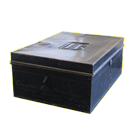
In contrast, the Met Office (the main meteorological agency in the U.K) boasts that it has transparency with respect to its methods and accuracy. But in truth neither the Old Farmer's Almanac nor the Met Office, nor Environment Canada nor the US National Weather Service can'truly say they can accurately predict the weather more than a few days out.
This is because the weather, and how it comes to be, is so complex. Penn State scientist Fuqing Zhang points out that the amount of data meteorologists have from all over the world – temperature, humidity, wind speed, satellite images and so on – are all collected at different times, using different scales of measurement. Computers can help with calculating parts of the results, but finding appropriate ways to put the data together to get helpful predictions is an imperfect art.


 Consider the "butterfly effect", the popular term for "sensitivity to initial conditions." Edward Lorenz described this phenomenon in the 1960s and 70s. The delicate wing beat of a butterfly in Brazil, it was said, could dramatically affect weather weeks and miles away. In other words, tiny variables in a system, whether meteorological or some other complex system, could dramatically change outcomes.
Even further confounding the accuracy of the forecasts we get on local weather stations are reports from the people at Freakonomics.com (authors of the popular book of the same title) that people don't really care about weather report accuracy. When one Freakonomics blogger asked a TV station manager about how the station ensured reliability, the manager said “All viewers care about is the next day. Accuracy is not a big deal to viewers.” Maybe this is true . . . unless you're a farmer or you fish for a living.


Comments