Name Your Poison
I'll admit to a fascination with poisons. So when I saw this new book in the library catalogue, I knew I'd have to read it.
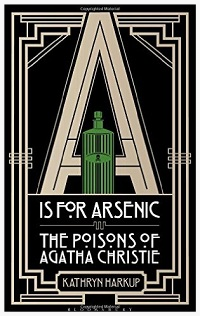 The great British mystery writer Agatha Christie worked as an apothecary or pharmacy assistant during both world wars. Her knowledge of poisons was put to good use in her novels and short stories, where many of her characters were poisoned.
Each chapter in this book examines a poison used by Christie in one of her novels, from the familiar (arsenic and cyanide) to the obscure (ricin and thallium). The author, a research chemist, explains the toxicology of each, as well as how difficult it would have been to obtain, administer and detect in Christie's time – and today.
Copies of A is for Arsenic have just arrived in libraries. It's available as a book and an eBook. To place a hold on a copy in either format, just click on the Place Hold button in the record.
You don't have to be a fan of mystery novels to take an interest in poisons. We should all be mindful about things in our environment and our homes that are potentially toxic, especially if we have small children or pets:
- Common household products that are potentially harmful must be used correctly and stored safely to avoid accidental poisoning. The Canadian government's guide to the safe use of household chemicals recommends contacting the nearest Poison Control Centre if you think, or even suspect, that someone has been exposed to a dangerous product.
- I was surprised to learn from this Common Poisonous Houseplants fact sheet that ingesting just one leaf from an oleander can be fatal. My oleander will now be spending the winter in a quiet corner of the basement.
- If you forage for mushrooms or other wild foods, an identification guide is essential to help you distinguish the poisonous species from those that are safe to eat. The library has field guides for mushrooms and other wild foods.
- Finally, if you're decorating for the holidays, keep in mind that some plants used in holiday decor can be dangerous to small children and pets.
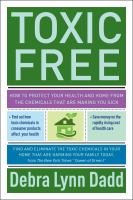
Whether you share my interest in poisons, or are more concerned with protecting yourself from harm, may I suggest the following books?
 |
 |
 |
 |
 |
 |
 |
 |
Comments