Climbing a Literary Mountain in 2016 (Because it’s There)
Years ago I resolved to make no more New Year’s Resolutions. They’re impossible to keep, so what’s the point in setting yourself up for failure year after discouraging year? My resolution to make no more resolutions is the only New Year’s resolution I’ve ever kept. Until now. So many people participate in this yearly self-defeating ritual that I’m starting to feel left out! And how can I argue with the poet Robert Browning, who said, “A man’s reach should exceed his grasp.”
For inspiration, I went online and searched for people’s New Year’s reading resolutions (food and exercise resolutions being a guaranteed path to failure.) The most common reading resolution was to read more, and many people quantified it. The humblest goal was to read one book in the coming year, and the most ambitious set the target at 125 books, with lots of numbers in between – 20 books, 25, 30, 50, 75, 85, 100. People seem to fancy round numbers when it comes to reading resolutions. Quite a few people aimed to read 52 books in 2016 — one book per week.
My online wanderings acquainted me with a character I'll call the literary mountain climber -– a reader whose mission it is to read the entire works of an author in the coming year. Some of the authors these literary mountain climbers were determined to conquer included: Charles Dickens, Ishiguro Kazuo, Agatha Christie, J. R. R. Tolkien, and William Shakespeare.
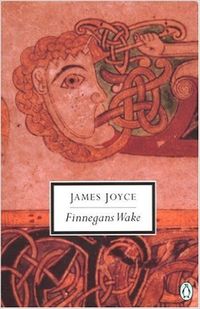
Some readers saw individual books as literary mountains to be climbed and conquered in 2016, such as Finnegans Wake by James Joyce, Moby-Dick by Herman Melville, and Infinite Jest by David Foster Wallace. At 643 pages, the experimental Finnegans wake is seen as one of the most challenging reads in English literature. Publishers Weekly calls Infinite Jest brilliant, hilarious, but also a bloated dirigible that few will have the stamina for. Hats off to you, Toronto readers – 79 of you have reserved the print copy, and 56 of you have reserved the eBook version — perhaps heeding the warning in the Library Journal Review that this book (at 1079 pages) is not for the weak-wristed.
 |
 |
 |
Size wise, Moby-Dick is the smallest of these literary mountains, at 602 pages. But it is my literary Mount Everest. I was defeated by this novel of Captain Ahab’s obsession with the white whale about 20 years ago –- I made it to chapter four. My New Year’s resolution for 2016 is to read Moby-Dick. I'll start from the beginning again. But don't hold me to it — It's a New Year's resolution, after all!
Moby-Dick by Herman Melville.
- Regular print book
- Large print book
- Audiobook CD (read by Frank Muller)
- eBook
- eAudio book (read by Burt Reynolds)
Infinite jest by David Foster Wallace.
Finnegans Wake by James Joyce is available only as a regular print book.
2 thoughts on “Climbing a Literary Mountain in 2016 (Because it’s There)”
Thanks for such an interesting blog, Maureen. I agree with you that many New Year’s resolutions tend to dissolve quickly. Rather, I find that equating the New Year with a new start and a fresh perspective to be more positive. Daniel Pennac’s ten rights of the reader, from his book, “The Rights of the Reader”
(http://www.torontopubliclibrary.ca/search.jsp?Ntt=rights+of+the+reader+pennac)
is the most joyful advice I have ever read about reading:
http://www.goodreads.com/quotes/19297-reader-s-bill-of-rights-1-the-right-to-not-read
I really like Daniel Pennac’s “Rights of the reader” too, Muriel. And although I wholeheartedly agree, in theory, with guideline number three (the right not to finish a book), I also think some books, which might have challenging aspects, shouldn’t be given up on at the first obstacle, (archaic language for example.) Published in 1851, Moby Dick has stood the test of time – as you know, it is considered to be one of the greatest American novels. Which is one reason I’m returning to it. But that’s not the only reason. It’s also because I remember enjoying the first few chapters that I read years ago. I’ve started it again, and though I’m still in the shallows, (I’m on Chapter 4, of 135 chapters) I’m really enjoying it. Soon after the famous first sentence (“Call me Ishmael.”) comes one of the best sentences I have ever read:
“Whenever I find myself growing grim about the mouth; whenever it is a damp, drizzly November in my soul; whenever I find myself involuntarily pausing before coffin warehouses, and bringing up the rear of every funeral I meet; and especially whenever my hypos get such an upper hand of me, that it requires a strong moral principle to prevent me from deliberately stepping into the street, and methodically knocking people’s hats off — then, I account it high time to get to sea as soon as I can.”
But as I said, I’m still only wading around in the shallows of Moby Dick – I’m not sure if I will survive the deep waters far out to sea!