Ripple Effects

Image courtesy of University of Cambridge Institute of Astronomy
Last month scientists from the LIGO Scientific Collaboration announced that on September 14 gravitational waves were detected for the first time. Two LIGO (Laser Interferometer Gravitational-wave Observatory) detectors "measured ripples in the fabric of spacetime – gravitational waves – arriving at the Earth from a cataclysmic event in the distant universe."
Here's the "chirp" that alerted researchers to the presence of the waves.
The existence of gravitational waves was predicted 100 years ago in Einstein's general theory of relativity. Here Neil Turok, Director of the Perimeter Institute, discusses what this discovery means for the future of theoretical physics:
This story made headlines for exactly one day before quietly fading away. Science breakthroughs seldom hold our attention for very long, perhaps because it can be hard to see how they relate to our daily lives. With that it mind I decided to look into how mankind might someday benefit from this discovery.
I learned that there have already been spin-offs from the search for gravitational waves, such as advances in optical engineering and new seismic isolation techniques that improve scientific instruments. But what about practical applications of the waves themselves? Even scientists concede that they are many decades away. Astrophysicist Martin Hendry's view, expressed in a recent article, is typical:
Could we ever harness gravitational waves for practical applications here on Earth? Could new insights about the dark universe help us, perhaps in the far future, not just to measure gravitational fields but to manipulate them, as imagined in the space colonies and wormholes of Christopher Nolan’s Interstellar? That is much harder to predict, but the lesson of history is that new phenomena we discover and explore frequently lead to disruptive technologies that come to underpin our everyday lives. It might take a few centuries, but I am confident the same will be true with gravitational waves.
It doesn't always take centuries for scientific discoveries to result in practical applications. NASA has an interesting list of spin-offs from the space program that benefit our daily lives – everything from LEDs to memory foam and, of course, freeze dried foods.
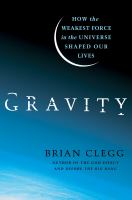
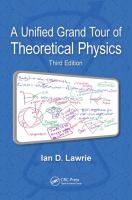
If you're interested in learning more about theoretical astrophysics or cosmology, here are some books to get you started:
 |
 |
 |
| also: eBook, eAudiobook |
 |
 |
 |
| also: eBook, eAudiobook |
 |
 |
 |
| also: eBook | also: eBook |
Comments