Toronto’s Astronomical Heritage
The last
lecture in the library’s Adventures in Astronomy series takes place at
2:00 pm on Thursday, March 14 at the Deer
Park Branch (2nd floor Program Room). The speaker is John Percy,
Professor Emeritus, Astronomy & Astrophysics, University of Toronto. Dr. Percy is
justly well-known to both
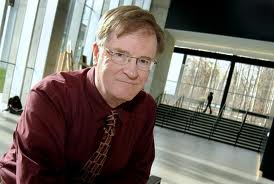 Toronto astronomy buffs and library audiences for his
ability to explain the complexities of astronomy in an accessible and always
interesting way. He has won innumerable awards and accolades, including for his
teaching.
Dr. Percy’s presentation
on Toronto's astronomical heritage from the 1830s until today is based on walking
tours he gave for Heritage Toronto in 2009, 2010 and 2011. By following the
development of astronomy in Toronto since the early 19th century, the presentation will illustrate
the many ways astronomy connects with and impacts upon society and culture. He
will even provide guidebooks! I recommend you arrive at Deer Park at least 30
minutes early as the room is sure to be crowded.
The picture here is of the Toronto Magnetic and Meteorological
Observatory. It is one of Canada's oldest scientific buildings, and has a long
history of connections with both the province and country, as well as with the
University of Toronto. In 1882, the Observatory tower was central to the Dominion
Transit of
 Venus campaign and was to have been one of 13 observing stations in
Canada. Alas, it was cloudy that day in Toronto—unlike the gorgeous day last
June 5 when more than 4,000 people took part in the Dunlap Institute’s Transit
of Venus extravaganza at Varsity Stadium.
Dr. Percy will
also be giving the tour of Toronto's astronomical heritage for Doors
Open Toronto this year—dates are May 25-26, but follow link for more
details.
Another great series of astronomy talks starts in April. The talks are presented in collaboration with U of T's Dunlap Institute for Astronomy and Astrophysics. Titled A Passion for Astronomy, the series will look at black holes, the big bang, supernovae and some of the wilder and wierder planets out there.
Comments