Why Is Dystopia So Popular?
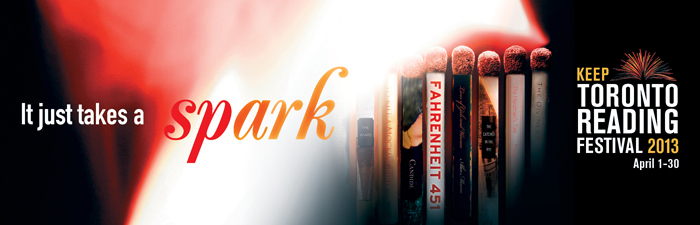
The library is spotlighting Ray Bradbury's "Fahrenheit 451" for this year's One Book community read during the Keep Toronto Reading Festival this April.
Sixty years after its publication, the book's dystopian future – where reading is banned, books are burned and brainless entertainment has seduced the masses – still burns a nightmarish image in readers' minds.
Dystopian novels – such as Hunger Games and Divergent – have become very popular in recent years. We asked two authors to share their thoughts on why they think dystopia is so popular.
Suzanne Young

 Suzanne Young currently resides in Tempe, Arizona, where she teaches high
school English. She is the author of several
books for teens, including "A
Need So Beautiful", "A Want So Wicked" and the just-released "The Program." You can like her on Facebook, follow her on
Twitter,
and read her blog.
"Of all the books I
teach, Ray Bradbury’s "Fahrenheit 451" remains a favorite among my students. A
novel published in 1953, it continues to endure; fascinating teens with its blend
of oppressive government and the hope that one person can change the world.
Bradbury
created a reality in which we can see ourselves – our past, present, and possible
future. But the truly spectacular thing is that every generation can see
themselves in it. He made predictions, some of which came true, and created
character archetypes we still see in novels today.
I think a successful
dystopian story must combine several elements to stand out. The realities
should not only predict, but also reflect a current society. It’s the
exaggeration of our environment that enables us to see our role in it, enables
us to see how we can be part of the solution in a world gone wrong.
Ultimately, the
enjoyment of a dystopian novel stems from its possibility – the likelihood it can
come true. Not every detail must be accurate; in fact, I think it's better if
some elements are fantastical enough to prevent the story from being
dated – always just beyond our current technology or evolution.
In the end, the
truth at the core of a story is what makes readers believe, while the impossible
is what keeps the story viable throughout the years."
Jeyn Roberts

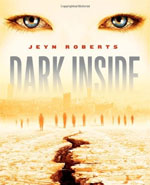
Jeyn Roberts is the author of Dark
Inside and Rage
Within. She is a former singer, songwriter, actress, bicycle
courier, and tree planter. She lives in Vancouver, B.C. Be sure to visit her website, like her on Facebook,
and follow her on Twitter.
"Dystopia: An imaginary place
where everything is as bad
as possible (Concise Oxford Dictionary).
I really like that definition. It
brings so many good stories to mind when I think about it. Not only does it make
me think of the future but it also makes me question some of the events
happening today. As humans, we are already doing things that could lead
humanity down a path towards some very dark and disturbing places.
Let’s face it: the world didn’t end in 2012. Yes, that’s not much of a
surprise but it sure made for some great fiction. In the past few years, a
surge of new young adult literature has taken the market by storm. Dystopia is the new ‘everything’ and its appeal
is unstoppable.
What is the great appeal of a bleak
future? It has existed ever since writers started recording literature. For
thousands of years, man has been warning man of what's coming. It’s always
dark. It’s always dangerous. The 'cautionary tale' is a famous plotline for
storytelling.
The evolution of dystopia fiction is
constantly changing but the storyline is always the same. As the technology
catches up with us, the new future novels will have to go further. There will
always be new challenges to overcome and bleak settings never go out of style.
Our futuristic imagination is never going to stop working.
Dystopian fiction is a safe way to
confront our fears. We can immerse ourselves in these horrible futures from the
safety of our couches. They are thrilling and exciting, but at the same time,
they’re safe. We already know humanity
couldn’t possibly get as bad as that. We
know that there isn’t going to be a great war that leads to children killing
each other in a made-for-television event.
Right? 1984 has already
come and gone. Big Brother doesn’t exist. Right? Right?
The real appeal of dystopia is that
we actually do believe that some of it can happen. Cities can fall. Governments
can become corrupt. Environmental damage already occurs and technology is
becoming increasingly creepy with computers and ex-boyfriends/girlfriends being
able to track our every move.
But we haven’t fallen yet and thankfully, it’s
not going to happen until the future. Right? And we probably won’t be there to
see it. So until then, we’re safe in our bedrooms and can visually experience
these stories without actually having to live them.
It’s similar to horror in that aspect. We can
always enjoy a good bloodbath, especially when we know it’s not real. It could
happen but most likely won’t.
I can only imagine what the
dystopian novels will be like in the year 3000. Will they be the
same? Or will our imaginations finally catch up with us to an extent where
people will be living the horrors we’ve been predicting for thousands of years?
Your guess is as good as mine."
We Want To Hear From You
Please tell us in the comments below: Why are dystopian novels so popular?
One thought on “Why Is Dystopia So Popular?”
I liked Chuck Palahniuk’s book ‘Fight Club’ (more so later because of the subsequent film’s stars Ed Norton and Brad Pitt), but I eventually tired of the dystopic bent of his later novels. I’m not an optimist about the way the planet is deteriorating by its dominant species’ handling, but neither am I allowing this direction and seemingly inevitable catastrophic events to modify how I feel about Mother Earth, or humans. Collective thought, conscious or unconscious, does influence our sphere of being. Better to focus on the best, pleasant, positive and productive than the darkness. This is not ‘happy’ thinking; it is a method of belief that produces a more effective way of life. Preferring to accept the marketing and entertainment industry’s popularizing dystopic themes in books, movies and merchandise (the proliferation of skull images on everything) only promotes further dissolution of our species. It confounds the essence of our true nature. So, I stay away from most of this sh*t. It’s not really ‘good’ for us.