The Siege of Sarajevo by Brian Stewart
By 1992, Europe had been at peace for forty-seven years following the Second World War, but the recent collapse of the Soviet Union sent nationalist shock waves through many nations. The multi-ethnic Federation of Yugoslavia began to crumble as several of its segments, including Slovenia and Croatia, declared independence and set up secessionist governments.
The break-away move of Bosnia-Herzegovina that March, proclaimed in its capital of Sarajevo, led to immediate and bloody conflict. Serbs in the ethnically-diverse state who feared domination by the majority Muslim Slavs formed well-armed fighting units, aided by elements of the former Yugoslav army, dedicated to the forging of a new Serb nation.
The Serb forces quickly seized control of villages and towns, but when they encircled the hills around the capital of Sarajevo, they ran into desperate resistance from mainly Muslim groups supporting their newly-independent government of Bosnia.
Though heavily outgunned by the Serbs, who began shelling the city with rockets, mortars and heavy artillery, the Bosnian forces held out from April 5, 1992 to February 29, 1996, before what became known as the Bosnian War was ended through international diplomacy. This was the largest siege of a capital in the history of modern warfare and of the estimated 14,000 killed 5,000 were civilians.
Throughout the long siege the very name of Sarajevo caused many Europeans to fear a wider conflict, for the city had long been haunted by its reputation as one of history’s most famous flashpoints of war. It was the ethnically-motivated killing of an Austrian archduke in Sarajevo in 1914 that became one of the key causes of the First World War. The ethnic and cultural shockwaves of that giant war were still very evident generations later in the Siege of Sarajevo.
Read the One Book selection for the 2014 Keep Toronto Reading festival– The Cellist of Sarajevo, by Steven Galloway.
About Brian Stewart
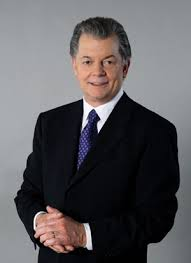
One of this country's most experienced journalists and foreign correspondents, Brian Stewart is currently a Distinguished Senior Fellow at the Munk School for Global Affairs at the University of Toronto. He also sits on the advisory board of Human Rights Watch Canada. In almost four decades of reporting, he has covered many of the world's conflicts and reported from 10 war zones, from El Salvador to Beirut and Afghanistan.
Comments