Noirvember Reading: 10 Film Noir Adaptations

November 26, 2015 | Beau | Comments (4)

In honour of Noirvember (the month formerly known as November; see also Movember), and for all you book-to-movie buffs out there, I offer you this selection of ten classic film noir favourites, adapted from books, and all available at the Toronto Public Library:

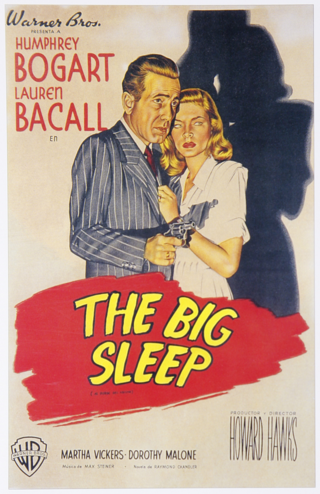
THE BIG SLEEP


The Big Sleep book The Big Sleep film

Raymond Chandler's 1939 hard-boiled novel is the first to feature Philip Marlowe, that quintessential hard-drinking, wise-cracking private eye with a moral centre in an immoral world. The 1946 film adaptation, directed by Howard Hawks, stars Humphrey Bogart (Marlowe) and Lauren Bacall (the mysterious Vivian Rutledge), who by that time were romantically involved, and it shows. Both the novel and the film are famously more interested in style and atmosphere than plot, which is so convoluted that no one – author and director included – ever really knew who killed who.

Source: Backstory: Interviews with Screenwriters of Hollywood's Golden Age.

book | ebook | eaudiobook || DVD


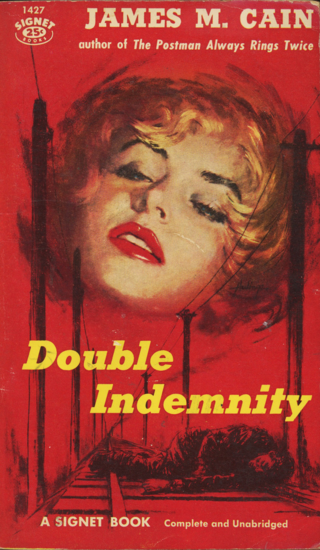
DOUBLE INDEMNITY


  Double Indemnity book Double Indemnity film


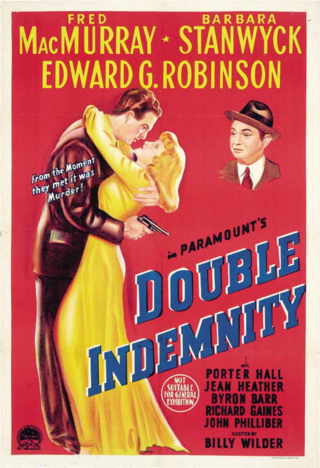
James M. Cain's 1943 taut novella, first published in 1936 as a serial in Liberty magazine, was inspired by a 1927 murder in which a woman persuaded her boyfriend to kill her husband after taking out a hefty insurance policy on hubby's life. The 1944 film adaptation stars Fred MacMurray (the insurance salesman), Barbara Stanwyck (the femme fatale), and Edward G. Robinson (the claims adjuster), and was co-written by Raymond Chandler and director Billy Wilder. The film version was much-loved by author Cain, who said, "It's the only picture I ever saw made from my books that had things in it I wish I had thought of."

Source: The Raymond Chandler Papers: Selected Letters and Non-Fiction, 1909-1959.

book | book – reference only || DVD | evideo


IN A LONELY PLACE


In a Lonely Place book In a Lonely Place film


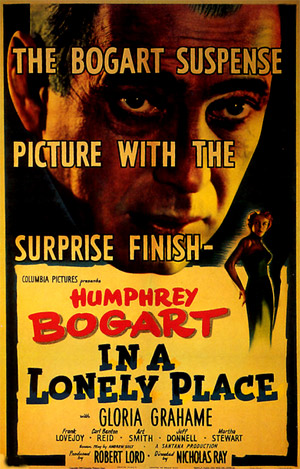
Dorothy B. Hughes' 1947 serial killer thriller is told from the perspective of war veteran Dix Steele, whose romantic pursuit of his neighbour Laurel Grey (probably my favourite femme fatale of classic noir fiction) is doomed from the start. Hughes pre-dates other better-known queens of the genre, such as Patricia Highsmith and Ruth Rendell, yet today only two of her fourteen published novels are in print (the other, Ride the Pink Horse was also adapted into a film of the same name). The 1950 film version directed by Nicholas Ray stars Humphrey Bogart (Steele) and Gloria Grahame (Grey) and is markedly different from the novel but no less admired.

book || DVD


KISS ME DEADLY


Kiss Me Deadly book Kiss Me Deadly film


Mickey Spillane's 1952 pulpy crime novel is the sixth to feature detective Mike Hammer, that archetypal, brutally violent anti-hero private eye who takes the law into his own hands. The 1955 film adaptation, directed by Robert Aldrich, stars Ralph Meeker (Hammer) and Maxine Cooper (his secretary/lover Velma) on their search for the "the great whatsit" – a briefcase that contains a mysterious glowing substance. The film's pop culture influence can be seen in the recurrence of the glowing suitcase in other films such as Repo Man, Pulp Fiction, and Guardians of the Galaxy.

book – reference onlyebook || DVD


THE LADY FROM SHANGHAI / IF I DIE BEFORE I WAKE


   If I Die Before I wake The Lady from Shanghai film


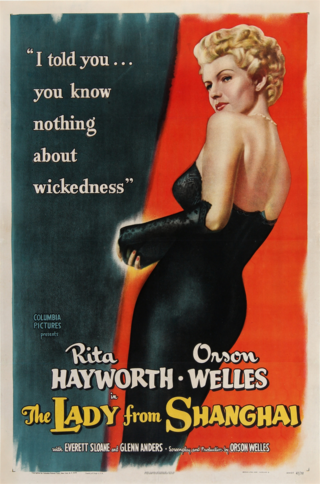
Sherwood King's fast-paced 1938 novel is the story of a good-looking sap named Laurence Planter who winds up headed for death row for a murder he didn't commit. The 1947 film adaptation was directed by Orson Welles who also stars (Laurence), alongside his estranged wife Rita Hayworth (the beautiful blonde Elsa), and whose divorce was finalized shortly after the movie was released. According to Welles, the idea to adapt King's novel came about by accident; he ran out of money for a project he was working on, so he called Harry Cohn, head of Columbia studios, and said:

"I have a great story for you if you could send me $50,000 by telegram in one hour. I'll sign a contract to make it." "What story?" Cohn said. I was calling from a pay phone, and next to it was a display of paperbacks and I gave him the title of one of them, Lady from Shanghai. I said, "Buy the novel and I'll make the film." An hour later, we got the money.

Source: This is Orson Welles.

book | book – reference only || DVD


THE MALTESE FALCON


The Maltese Falcon book The Maltese Falcon film


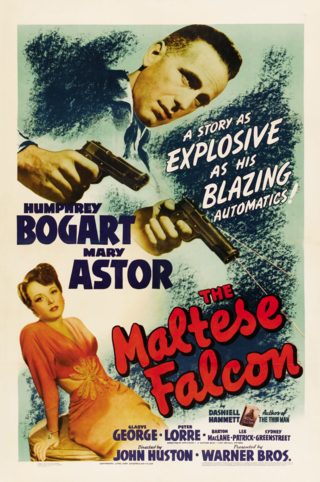
Dashiell Hammett's 1929 detective novel, originally serialized in Black Mask magazine, introduces private detective Sam Spade, a precursor to Marlowe. The 1941 film adaptation was director John Huston's first picture and is considered by some to be the first major film noir. It stars Humphrey Bogart (making his third appearance on this list), this time as Spade, with Mary Astor as his femme fatale client (Ruth Wonderly/Brigid O'Shaugnessy), alongside three unforgettable villains played by Peter Lorre, Elisha Cook Jr., and Sydney Greenstreet as "The Fat Man." There were two other film versions (in 1931 and 1936), but Huston's comes closest to the book, keeping much of Hammett's dialogue intact, and is widely regarded as a masterpiece of adaptation as well as direction, photography, and performance.

Source: "The Maltese Falcon: A Tale Thrice Filmed" in American Cinematographer, April 1997.

book | ebook | large print book ||  DVD


MILDRED PIERCE


Mildred Pierce book Mildred Pierce film


James M. Cain is known for his hard-boiled style, but this 1941 novel is more of a psychological study, told from the point-of-view of a hardworking divorceé as she struggles to maintain her social status and rivals her daughter for a man's love. The 1945 film adaptation was directed by Michael Curtiz and stars Joan Crawford (Mildred), Ann Blyth (her spoiled daughter Veda), and Zachary Scott (Monte, the sleazy love interest). The film differs substantially from the book, most notably by adding a murder and removing overt depictions of a sexual relationship between Veda and Monte, which would have violated the Motion Picture Production Code. But what makes the novel as much a noir as the film is in the desperate intensity with which Mildred loves Veda; as Cain writes:

"The one living thing she had loved had turned on her repeatedly, with tooth and fang, and now had left her without so much as a kiss or a pleasant goodbye. Her only crime, if she had committed one, was that she had loved this girl too well.”

Todd Haynes' 2011 miniseries adaptation is quite faithful to the novel and is also recommended.

audiobook | book | eaudiobook | ebook | talking book – print disabled patrons only || DVD


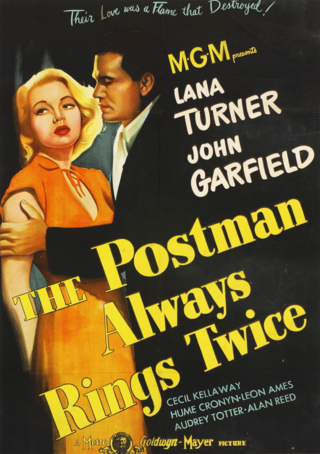
THE POSTMAN ALWAYS RINGS TWICE


The Postman Always Rings Twice book The Postman Always Rings Twice film


Another book by Cain, this one his gritty 1934 debut, tells the story of doomed drifter Frank Chambers who stumbles into a job at a diner where he falls hard for the dangerously alluring Cora and hatches a grisly plan to get rid of her husband, diner owner Nick. The novel was a sensation at the time of publication, became the subject of an obscenity trial in Boston, and was reportedly an influence on Camus' existential masterpiece The Outsider (also translated as The Stranger). The 1946 film adaptation was directed by Tay Garnett and stars John Garfield (Frank) and Lana Turner (Cora). Cain didn't see the final version of the film until 1976, a year before his death; he deemed it "a passably viewable picture."

Source: "Tough Guy: James M. Cain Interviewed" in Film Comment May-June, 1976.

audiobook | book | book – reference only || DVD


STRANGERS ON A TRAIN


Strangers on a Train book Strangers on a Train movie


Patricia Highsmith's 1950 debut is a tense psychological thriller about two strangers, the sociopathic Bruno and the (relatively) sane Guy, who meet and have a conversation about killing each other's enemy in order to establish the perfect alibi. The 1951 film version was directed by Alfred Hitchcock and stars Robert Walker (Bruno) and Farley Granger (Guy), with a screenplay co-written by Raymond Chandler, in his final scriptwriting stint. The film retains much of the novel's homoerotic subtext, despite the fact that homosexuality was a taboo topic for American films at the time. Highsmith regarded it as one of the best of the films made from her novels, largely because of the incredible performance from Robert Walker, whose Bruno may be the blueprint for that other memorable Highsmith sociopath, Tom Ripley.

Source: Out of the Shadows: Expanding the Canon of Classic Film Noir

book | book – reference only | audiobook – ESL | eaudiobook | ebook | talking book – for print disabled patrons || DVD


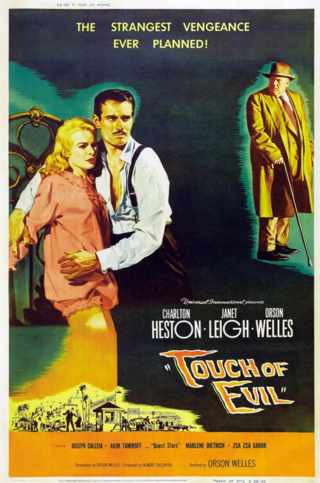
TOUCH OF EVIL / BADGE OF EVIL


Badge of Evil book Touch of Evil film


This 1956 novel by Whit Masterson (the pen name of authors Robert Wade and Bill Miller) is the story of a murder investigation that leads to the investigation of police corruption in a Mexican-American border town. The 1958 film adaptation was directed by Orson Welles (again) who also co-stars (again), alongside Charlton Heston and Janet Leigh, with cameos by Zsa Zsa Gábor and Marlene Dietrich. Legend has it that Welles, who hadn't directed in Hollywood for ten years, chose the worst script he was offered to prove he could make a great film out of it. Today, it is indeed considered by many to be one of his greatest films (the opening shot alone is iconic: a single, uninterrupted, three-minute-long crane tracking shot), as well as the last of the classic noir era. It was also Welles' last American film.

Source: "The evolution of Orson Welles's Touch of Evil from novel to film" in Cinema Journal, Winter 1985.

book | evideo


Do you have a favourite novel turned film noir?

Leave a comment and share your recommendations!


Selected Further Reading:

Comments

4 thoughts on “Noirvember Reading: 10 Film Noir Adaptations

  1. These are some of my favourite films of all time. I recall reading in a Chandler bio years ago that Chandler and Cain actually loathed each other – yet Double Indemnity is such a fantastic film. Great list, love the trailers.

    Reply
  2. phew! what a homage to James M. Cain, whom I must confess I prefer to Chandler. Mildred Pierce the book is amazingly more powerful than the movie. Divest yourself from the definitive cinema distraction of Joan Crawford and Ann Blyth and you will so love the book. Lots of wonderful Bogart in here too. So glad you included In A Lonely Place, a later underappreciated work with the most entrancing Gloria Grahame. She’s one of a few definitive “B” and noir actresses (thank you Nicholas Ray); her real life has as much intrigue as Mildred Pierce’s. Thanks for the very fulsome blog post.

    Reply
  3. There’s an interview with Cain in which he’s asked if he’s read Hammett and Chandler, who he was constantly compared to. His answer: “I read a few pages of Dashiell Hammett, that’s all. And Chandler. Well, I tried.” Made me laugh.
    http://www.theparisreview.org/interviews/3474/the-art-of-fiction-no-69-james-m-cain
    Later in the same interview, he recalls the making of Double Indemnity, and that Chandler was re-writing a lot of his original dialogue. Wilder was unhappy about it, but Cain was in agreement. I love his explanation: “[my] dialogue is written to the eye. That ragged right-hand margin that is so exciting and wonderful to look at can’t be recited by the actors… I could write the spoken stuff well enough, but on the page there just wasn’t any room for talky climaxes.”
    So, whatever loathing they had for each other, at least they saw eye to eye on that. Double Indemnity might’ve been a lesser film if they hadn’t.
    Thanks for your comment, Viv.

    Reply
  4. I honestly didn’t intend for Cain to take up quite so much space as he did in this post but I guess he kind of snuck up on me. If this is list is any indication, I must be drawn to novels told from the perspective of conflicted or troubled characters, as so many of Cain’s seem to be, rather than those detectives who restore order from chaos, uphold the status quo, etc. And, oh yes, speaking of troubled characters… Gloria Grahame would have been 92 years old on Saturday. She was totally sublime onscreen, and pretty scandalous off.
    Thanks for your comment, Marie.

    Reply

Leave a Comment

Your email address will not be published. Required fields are marked *

Noirvember Reading: 10 Film Noir Adaptations

November 26, 2015 | Claire B. | Comments (4)

In honour of Noirvember (the month formerly known as November; see also Movember), and for all you book-to-movie buffs out there, I offer you this selection of ten classic film noir favourites, adapted from books, and all available at the Toronto Public Library:

THE BIG SLEEP
 

The Big Sleep book The Big Sleep film

Raymond Chandler's 1939 hard-boiled novel is the first to feature Philip Marlowe, that quintessential hard-drinking, wise-cracking private eye with a moral centre in an immoral world. The 1946 film adaptation, directed by Howard Hawks, stars Humphrey Bogart (Marlowe) and Lauren Bacall (the mysterious Vivian Rutledge), who by that time were romantically involved, and it shows. Both the novel and the film are famously more interested in style and atmosphere than plot, which is so convoluted that no one – author and director included – ever really knew who killed who.

Source: Backstory: Interviews with Screenwriters of Hollywood's Golden Age.

book | ebook | eaudiobook || DVD


DOUBLE INDEMNITY
 

  Double Indemnity book Double Indemnity film


James M. Cain's 1943 taut novella, first published in 1936 as a serial in Liberty magazine, was inspired by a 1927 murder in which a woman persuaded her boyfriend to kill her husband after taking out a hefty insurance policy on hubby's life. The 1944 film adaptation stars Fred MacMurray (the insurance salesman), Barbara Stanwyck (the femme fatale), and Edward G. Robinson (the claims adjuster), and was co-written by Raymond Chandler and director Billy Wilder. The film version was much-loved by author Cain, who said, "It's the only picture I ever saw made from my books that had things in it I wish I had thought of."

Source: The Raymond Chandler Papers: Selected Letters and Non-Fiction, 1909-1959.

book | book – reference only || DVD | evideo


IN A LONELY PLACE
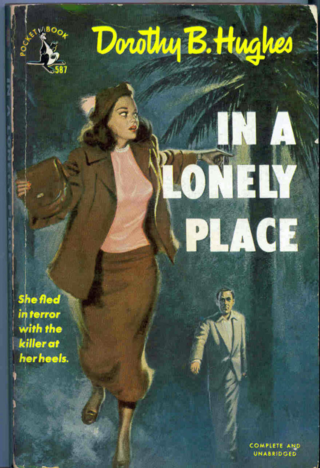


In a Lonely Place book In a Lonely Place film


Dorothy B. Hughes' 1947 serial killer thriller is told from the perspective of war veteran Dix Steele, whose romantic pursuit of his neighbour Laurel Grey (probably my favourite femme fatale of classic noir fiction) is doomed from the start. Hughes pre-dates other better-known queens of the genre, such as Patricia Highsmith and Ruth Rendell, yet today only two of her fourteen published novels are in print (the other, Ride the Pink Horse was also adapted into a film of the same name). The 1950 film version directed by Nicholas Ray stars Humphrey Bogart (Steele) and Gloria Grahame (Grey) and is markedly different from the novel but no less admired.

book || DVD


KISS ME DEADLY


Kiss Me Deadly book Kiss Me Deadly film


Mickey Spillane's 1952 pulpy crime novel is the sixth to feature detective Mike Hammer, that archetypal, brutally violent anti-hero private eye who takes the law into his own hands. The 1955 film adaptation, directed by Robert Aldrich, stars Ralph Meeker (Hammer) and Maxine Cooper (his secretary/lover Velma) on their search for the "the great whatsit" – a briefcase that contains a mysterious glowing substance. The film's pop culture influence can be seen in the recurrence of the glowing suitcase in other films such as Repo Man, Pulp Fiction, and Guardians of the Galaxy.

book – reference onlyebook || DVD


THE LADY FROM SHANGHAI / IF I DIE BEFORE I WAKE
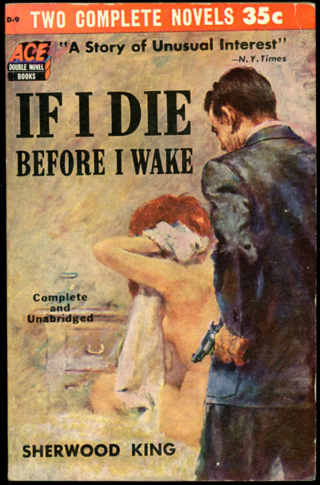
 

   If I Die Before I wake The Lady from Shanghai film


Sherwood King's fast-paced 1938 novel is the story of a good-looking sap named Laurence Planter who winds up headed for death row for a murder he didn't commit. The 1947 film adaptation was directed by Orson Welles who also stars (Laurence), alongside his estranged wife Rita Hayworth (the beautiful blonde Elsa), and whose divorce was finalized shortly after the movie was released. According to Welles, the idea to adapt King's novel came about by accident; he ran out of money for a project he was working on, so he called Harry Cohn, head of Columbia studios, and said:

"I have a great story for you if you could send me $50,000 by telegram in one hour. I'll sign a contract to make it." "What story?" Cohn said. I was calling from a pay phone, and next to it was a display of paperbacks and I gave him the title of one of them, Lady from Shanghai. I said, "Buy the novel and I'll make the film." An hour later, we got the money.

Source: This is Orson Welles.

book | book – reference only || DVD


THE MALTESE FALCON
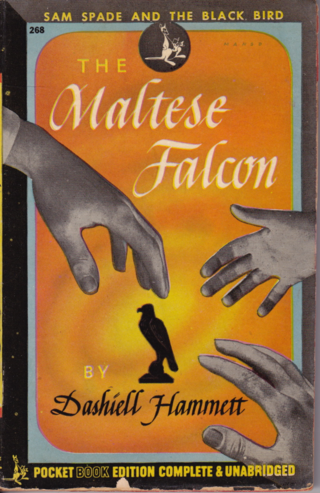
 

The Maltese Falcon book The Maltese Falcon film


Dashiell Hammett's 1929 detective novel, originally serialized in Black Mask magazine, introduces private detective Sam Spade, a precursor to Marlowe. The 1941 film adaptation was director John Huston's first picture and is considered by some to be the first major film noir. It stars Humphrey Bogart (making his third appearance on this list), this time as Spade, with Mary Astor as his femme fatale client (Ruth Wonderly/Brigid O'Shaugnessy), alongside three unforgettable villains played by Peter Lorre, Elisha Cook Jr., and Sydney Greenstreet as "The Fat Man." There were two other film versions (in 1931 and 1936), but Huston's comes closest to the book, keeping much of Hammett's dialogue intact, and is widely regarded as a masterpiece of adaptation as well as direction, photography, and performance.

Source: "The Maltese Falcon: A Tale Thrice Filmed" in American Cinematographer, April 1997.

book | ebook | large print book ||  DVD


MILDRED PIERCE
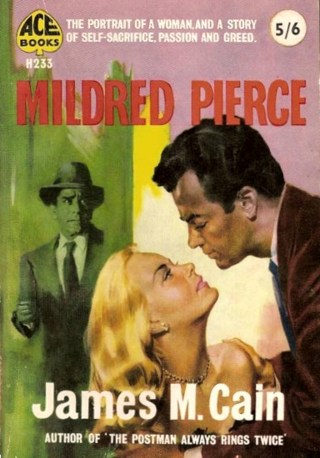
 

Mildred Pierce book Mildred Pierce film


James M. Cain is known for his hard-boiled style, but this 1941 novel is more of a psychological study, told from the point-of-view of a hardworking divorceé as she struggles to maintain her social status and rivals her daughter for a man's love. The 1945 film adaptation was directed by Michael Curtiz and stars Joan Crawford (Mildred), Ann Blyth (her spoiled daughter Veda), and Zachary Scott (Monte, the sleazy love interest). The film differs substantially from the book, most notably by adding a murder and removing overt depictions of a sexual relationship between Veda and Monte, which would have violated the Motion Picture Production Code. But what makes the novel as much a noir as the film is in the desperate intensity with which Mildred loves Veda; as Cain writes:

"The one living thing she had loved had turned on her repeatedly, with tooth and fang, and now had left her without so much as a kiss or a pleasant goodbye. Her only crime, if she had committed one, was that she had loved this girl too well.”

Todd Haynes' 2011 miniseries adaptation is quite faithful to the novel and is also recommended.

audiobook | book | eaudiobook | ebook | talking book – print disabled patrons only || DVD


THE POSTMAN ALWAYS RINGS TWICE
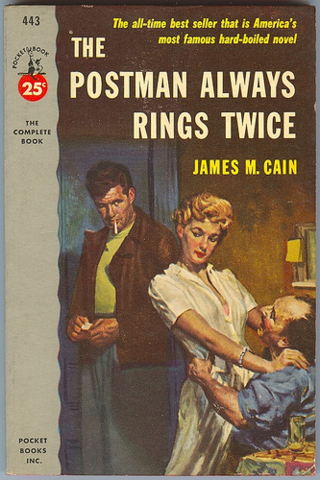
 

The Postman Always Rings Twice book The Postman Always Rings Twice film


Another book by Cain, this one his gritty 1934 debut, tells the story of doomed drifter Frank Chambers who stumbles into a job at a diner where he falls hard for the dangerously alluring Cora and hatches a grisly plan to get rid of her husband, diner owner Nick. The novel was a sensation at the time of publication, became the subject of an obscenity trial in Boston, and was reportedly an influence on Camus' existential masterpiece The Outsider (also translated as The Stranger). The 1946 film adaptation was directed by Tay Garnett and stars John Garfield (Frank) and Lana Turner (Cora). Cain didn't see the final version of the film until 1976, a year before his death; he deemed it "a passably viewable picture."

Source: "Tough Guy: James M. Cain Interviewed" in Film Comment May-June, 1976.

audiobook | book | book – reference only || DVD


STRANGERS ON A TRAIN
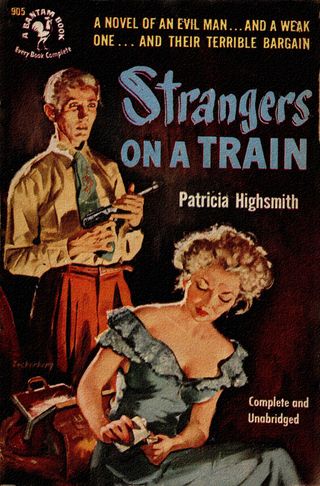
 

Strangers on a Train book Strangers on a Train movie


Patricia Highsmith's 1950 debut is a tense psychological thriller about two strangers, the sociopathic Bruno and the (relatively) sane Guy, who meet and have a conversation about killing each other's enemy in order to establish the perfect alibi. The 1951 film version was directed by Alfred Hitchcock and stars Robert Walker (Bruno) and Farley Granger (Guy), with a screenplay co-written by Raymond Chandler, in his final scriptwriting stint. The film retains much of the novel's homoerotic subtext, despite the fact that homosexuality was a taboo topic for American films at the time. Highsmith regarded it as one of the best of the films made from her novels, largely because of the incredible performance from Robert Walker, whose Bruno may be the blueprint for that other memorable Highsmith sociopath, Tom Ripley.

Source: Out of the Shadows: Expanding the Canon of Classic Film Noir

book | book – reference only | audiobook – ESL | eaudiobook | ebook | talking book – for print disabled patrons || DVD


TOUCH OF EVIL / BADGE OF EVIL
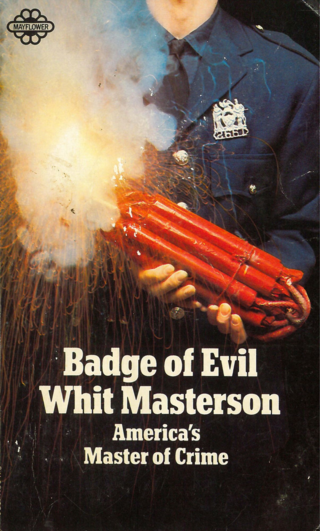
 

Badge of Evil book Touch of Evil film


This 1956 novel by Whit Masterson (the pen name of authors Robert Wade and Bill Miller) is the story of a murder investigation that leads to the investigation of police corruption in a Mexican-American border town. The 1958 film adaptation was directed by Orson Welles (again) who also co-stars (again), alongside Charlton Heston and Janet Leigh, with cameos by Zsa Zsa Gábor and Marlene Dietrich. Legend has it that Welles, who hadn't directed in Hollywood for ten years, chose the worst script he was offered to prove he could make a great film out of it. Today, it is indeed considered by many to be one of his greatest films (the opening shot alone is iconic: a single, uninterrupted, three-minute-long crane tracking shot), as well as the last of the classic noir era. It was also Welles' last American film.

Source: "The evolution of Orson Welles's Touch of Evil from novel to film" in Cinema Journal, Winter 1985.

book | evideo


Do you have a favourite novel turned film noir?

Leave a comment and share your recommendations!


Selected Further Reading:

Comments

4 thoughts on “Noirvember Reading: 10 Film Noir Adaptations

  1. These are some of my favourite films of all time. I recall reading in a Chandler bio years ago that Chandler and Cain actually loathed each other – yet Double Indemnity is such a fantastic film. Great list, love the trailers.

    Reply
  2. phew! what a homage to James M. Cain, whom I must confess I prefer to Chandler. Mildred Pierce the book is amazingly more powerful than the movie. Divest yourself from the definitive cinema distraction of Joan Crawford and Ann Blyth and you will so love the book. Lots of wonderful Bogart in here too. So glad you included In A Lonely Place, a later underappreciated work with the most entrancing Gloria Grahame. She’s one of a few definitive “B” and noir actresses (thank you Nicholas Ray); her real life has as much intrigue as Mildred Pierce’s. Thanks for the very fulsome blog post.

    Reply
  3. There’s an interview with Cain in which he’s asked if he’s read Hammett and Chandler, who he was constantly compared to. His answer: “I read a few pages of Dashiell Hammett, that’s all. And Chandler. Well, I tried.” Made me laugh.
    http://www.theparisreview.org/interviews/3474/the-art-of-fiction-no-69-james-m-cain
    Later in the same interview, he recalls the making of Double Indemnity, and that Chandler was re-writing a lot of his original dialogue. Wilder was unhappy about it, but Cain was in agreement. I love his explanation: “[my] dialogue is written to the eye. That ragged right-hand margin that is so exciting and wonderful to look at can’t be recited by the actors… I could write the spoken stuff well enough, but on the page there just wasn’t any room for talky climaxes.”
    So, whatever loathing they had for each other, at least they saw eye to eye on that. Double Indemnity might’ve been a lesser film if they hadn’t.
    Thanks for your comment, Viv.

    Reply
  4. I honestly didn’t intend for Cain to take up quite so much space as he did in this post but I guess he kind of snuck up on me. If this is list is any indication, I must be drawn to novels told from the perspective of conflicted or troubled characters, as so many of Cain’s seem to be, rather than those detectives who restore order from chaos, uphold the status quo, etc. And, oh yes, speaking of troubled characters… Gloria Grahame would have been 92 years old on Saturday. She was totally sublime onscreen, and pretty scandalous off.
    Thanks for your comment, Marie.

    Reply

Leave a Comment

Your email address will not be published. Required fields are marked *