The Cook Not Mad: testing Canada’s first cookbook
One of the items with enduring appeal among the holdings of Toronto Public Library’s Special Collections Department is The Cook Not Mad, the first cookbook published in Canada. Published in Kingston in 1831, this charming, palm-sized book includes recipes and household tips. It was written for early settlers from Britain, and the recipes reflect that heritage adapted for local ingredients.
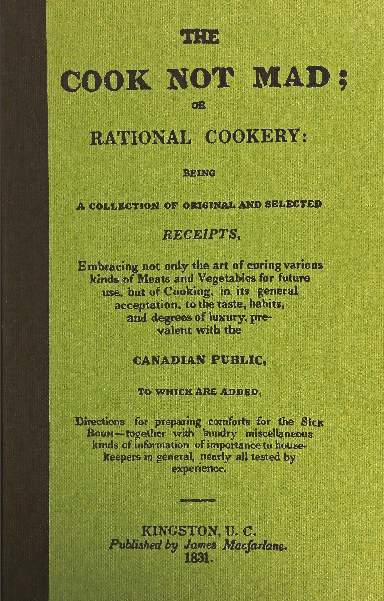
“The Cook Not Mad…” (I won't repeat its full, fantastically long 19th century title here,) is one of thousands of early Canadian books in our Digital Archive, and can be read online from home. No library card is required.
Now that we are all sheltering in place due to Covid 19, I see many people are baking bread and experimenting with an efficient use of pantry resources. In a way, this thoroughly modern pandemic seems to have brought us back to earlier times. In this spirit, I thought it would be interesting to test one of the recipes from The Cook Not Mad for the modern kitchen.
Like the rest of Toronto, I’m following recommendations to only go to the grocery store at most once a week during the pandemic. My pantry therefore lacked the wherewithal for some intriguing recipes in the book, like Rice Snowballs or Federal Cake. However, I found I had everything I needed for recipe number 92, Lemon Pudding.
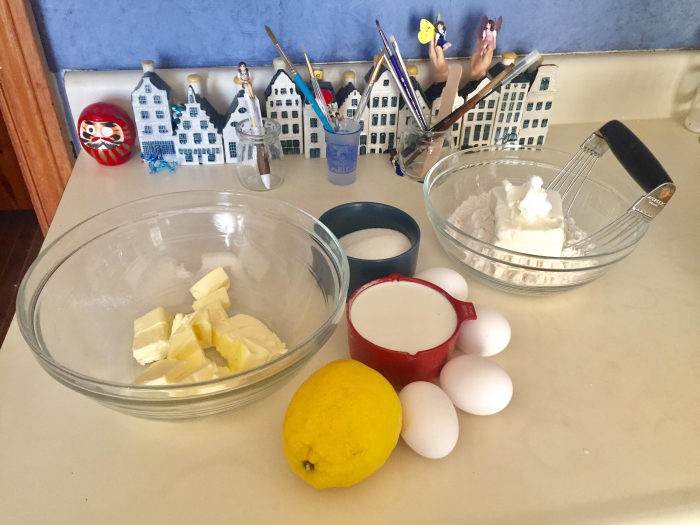
The text is very brief:
Four eggs, four ounces of sugar, one lemon grated with the juice, mix with four ounces of butter, one cup of cream, baked in a paste.
That’s it. Step by step it’s not, but let’s see. In old recipes as in modern ones, it’s necessary to read to the end. Here, for example, the recipe ends with “Bake in a paste.” “Paste” sounds a little…icky, but translated into modern usage, this just means pastry. So our lemon pudding appears to be a tart. The pastry base is not part of the recipe, so I prepared a standard one-crust pie dough and prebaked it, as is often done for custard pies. Fortunately, my pantry also had the beans needed for blind baking the crust.

Now for the filling. No details are given for how to put the ingredients together, so I guessed. I creamed the butter with the sugar, then added the juice and grated rind, then the eggs one by one, using a whisk to keep the mixture smooth. I mixed the cream in last, and poured the result into the cooled crust. There’s no indication of baking temperature, which is not surprising since they didn’t have electric ovens in 1831. Custard pies are normally baked at a lower setting than fruit pies, so I set my oven to 350 and left the pie in until it looked done, which took 40 minutes.
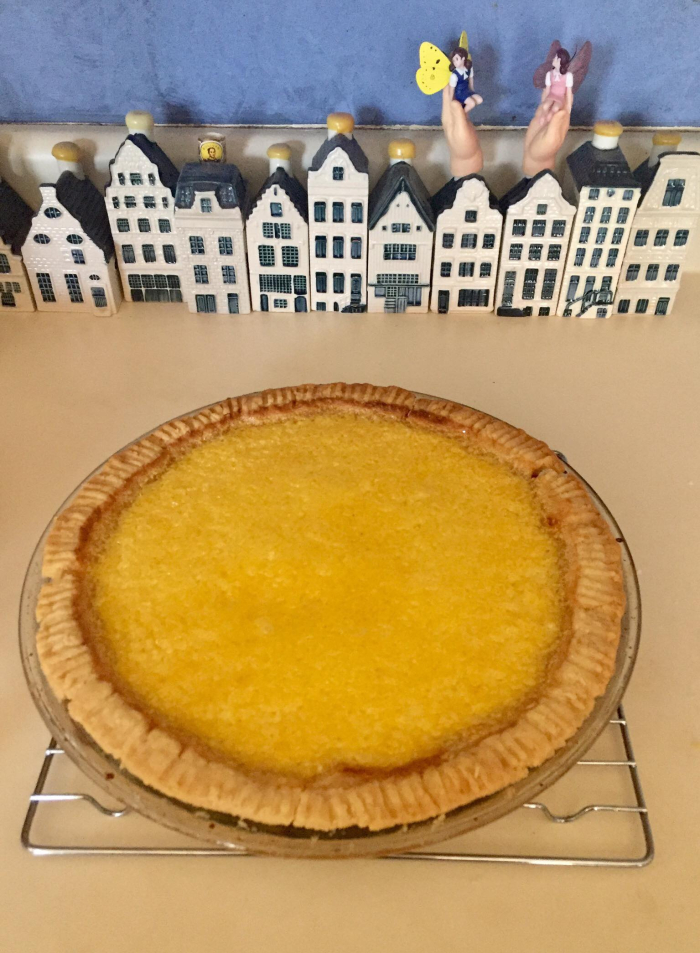
The end result tasted like a lemon square. My perception may be influenced by the fact that I ran out of chocolate or dessert in any form about a week ago, but it tasted pretty good to me. If you like lemon squares, and can’t run out to your nearest café to get one, why not try this recipe from the past? If anyone has suggestions for a different approach to the recipe, please share in the comments!
While you’re enjoying your lemon pudding, you can have a look at more things in the Digital Archive, or the library’s other online resources. Here are a few options:
There are many more vintage ccokbooks in the Digital Archive. I plan to try The Dominion Cook Book next.
Or if you'd prefer something a little more glossy and modern, try the many cookbooks in Overdrive or the magazines in our Digital Magazines. A Toronto Public Library card is required for these last two resources, but if yours has expired while in quarantine, remember that you can now renew online!
Comments