How to Research a Toronto Property
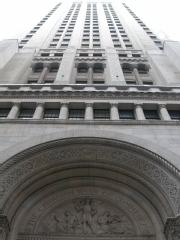
Not the sexiest title - but if you need to research a particular address or property, we thought we would go with the straight-forward approach. So "How to Research a Toronto Property" at the Toronto Reference Library, it is. The Humanities and Social Sciences Department, 2nd floor, has material specifically on Toronto to help you with your research.
What we have
Let's be clear. Researching the history of an address is akin to solving a "Murdoch Mystery". There may be clues around, but you will have to do some serious digging to find them and some careful thought to piece it together. You will need to look at lots of different things.
Information may be found:
- in print or online;
- on microfiche or microfilm;
- on maps;
- in government reports; and / or
- in a book on the shelf.
Be prepared to spend quite a bit of time on this project. Although there is a lot of material in the library, some things are available online through the Library’s website or outside sources.
What we don’t have
We do not keep land surveys, property ownership records or assessments on individual properties or addresses.
Let's get started
In the Humanities and Social Sciences Department, 2nd floor, Toronto Reference Library, you will find:
The Toronto Collection: a unique collection of books, reports, legislative materials, newspaper clippings, maps, community papers and magazines about the City of Toronto. Although primarily focused on the latter half of the 20th century to present, there are older items as well as books on Toronto's history.
 Council Minutes and other legislative reports; former City of Toronto Council Minutes are available in print from 1859 to 1997; useful to trace the development and changes to a specific property.
 City directories and phonebooks: print Toronto directories from 1833 to 2001; can be used to trace specific addresses or names over a period of time.
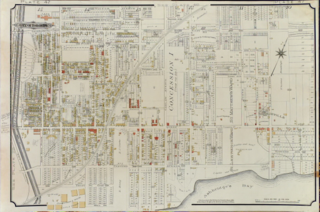
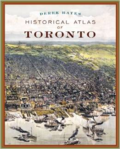 Maps, gazeteers and atlases: Toronto maps include property data maps, topographic maps, aerial photomaps, specialty maps such as land use maps and fire insurance plans.
Community newspapers and magazines: useful to trace developments in a specific area or neighbourhood.
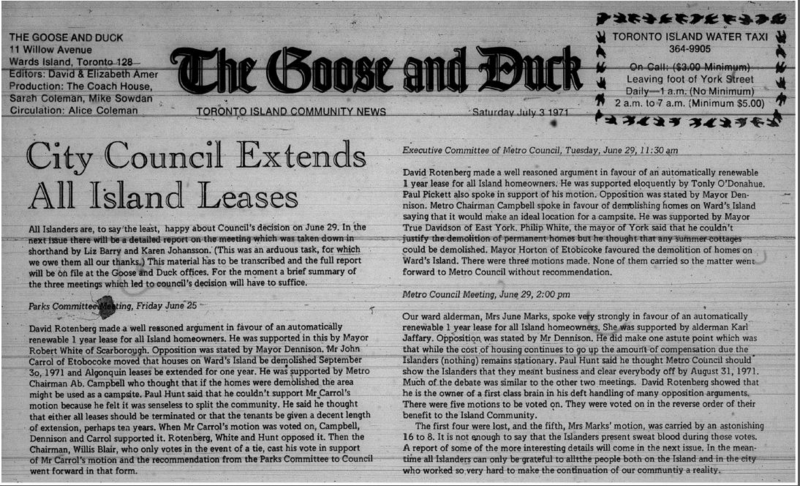
Newspapers: Free access to the digital versions of the Toronto Star and Globe and Mail available on library terminals. (Microfilmed newspapers are kept in the Toronto Star Newspaper Room on the lower level).
Unique clipping files: Toronto newspaper clippings by subject preserved on microfiche from the mid-1960’s until 2010; clipping files on Toronto buildings and more. 
What you can check online
There are online library resources that you can check before arriving at the Library.
Once on the TPL site, check out information about Toronto’s History and don't miss the guide called How to Research Historic Buildings in Toronto.
If you explore all of the Toronto History links, you should be able to pull up neighbourhood information, older city directories, maps and fire insurance plans, architectural information, archival pictures, newspaper articles and links to other resources.
Other sources

Let's go to the City of Toronto site:
- The City of Toronto Archives has photographs of neighbourhoods, streets and properties, maps, directories and written records. They have handy pamphlets like Researching Your House. Before you make a visit, get in touch with the Archives to see what is available and appropriate for your research.
- Council materials and bylaws are available electronically from 1998 on. Sometimes there are reports on a specific address. Often there is some historical background included which may help you flesh out your research. You might need to look at earlier print volumes of the Minutes found at the Library. We can help you to navigate this legislative material.
- Demographic material is available online, too. As with the other materials, a visit to the library may be in order to uncover older statistics on your area of research.
Overwhelmed??
Book-a-Librarian

Did you know that you can book an appointment with a librarian to help you with your search? It's a good idea to get in touch before coming to the Library – just to make sure we have what you need and trained staff on hand to help you.
We can arrange personal sessions, class visits, and group training sessions.
E-Mail : trlhss@torontopubliclibrary.ca
3 thoughts on “How to Research a Toronto Property”
I am also a Toronto based housestian who specializes in research houses. If you are interested in finding out about the history of your home you can contact me at http://www.housestories.ca.
Please excuse the previous typos. I am a Toronto based house historian who specializes in researching houses. If you are interested in finding out about the history of your home you can contact me at http://www.housestories.ca. Thanks
Excellent information. Thank you.