Birds of America: A Collaborative Work

November 9, 2015 | Peggy | Comments (2)

You have just three more weeks to see John J. Audubon’s Birds of America, our current exhibit on display at the TD Gallery at the Toronto Reference Library.

The creation and production of the double-elephant folio edition of Birds of America was a monumental undertaking. Comprised of 435 plates with life-sized images of over a thousand individual birds, it was a remarkable project that relied on the talent and meticulous work of many.

While John James Audubon (1785-1851) was always the primary artist of his watercolours, he also collaborated with other professional artists. Audubon would first outline the entire composition in graphite. Often, his artistic associates would help render backgrounds and plant elements in watercolour, allowing Audubon to focus his efforts on rendering the birds and on completing his mission to paint all known bird species in North America.  

John James Audubon 1826

John James Audubon by John Syme, 1826

In 1820, he was accompanied on a birding expedition down the Ohio and Mississippi rivers by his talented 18-year-old student Joseph R. Mason (1802-1842). Mason, a specialist in botanical illustration, is believed to have contributed to at least 50 of Audubon’s compositions. George Lehman, a Swiss landscape painter, also assisted with painting plants and backgrounds of Audubon’s watercolours for several years.
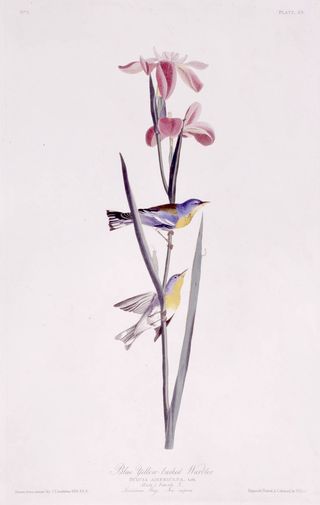
Blue Yellow-backed Warbler

Blue Yellow-backed Warbler (Plate 15), Northern parula warbler, Parula Americana, 1827-1838. Joseph R. Mason was credited with painting the Louisiana flag (Iris fulva) in the background.

Amateur artist Maria Martin (1796-1863) painted plants and insects in around 30 of Audubon’s works. She eventually married Audubon’s close friend, Reverend John Bachman (1790-1874). Some have speculated about the nature of Audubon’s relationship with Martin, as he often referred to her with terms of endearment in his letters to his friend Bachman. Writing to his son Victor in 1833, Audubon wrote: "Miss Martin with her superior talents, assists us greatly in the way of drawing; the insects she has drawn are, perhaps, the best I've seen.”
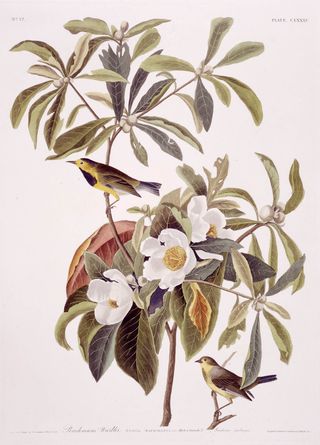
Bachman’s Warbler

Bachman’s Warbler (Plate 185), Vermivora bachmanii, 1833. Audubon drew the bird from specimens belonging to his friend Reverend John Bachman and named the bird in his honour. Maria Martin drew the bush Franklinia alatamaha.

Audubon’s own sons, Victor Gifford and John Woodhouse also contributed in the production of Birds of America. They were also very involved in the creation of their father’s second great work The Viviparous Quadrupeds of North America. The original hand-printed and hand-painted 1845 edition of Quadrupeds, depicting the mammals of North America, is also housed in the Toronto Public Library’s Special Collections. Audubon’s wife Lucy also played an important but largely unrecognized role in the publication – supporting the family while Audubon set out on countless expeditions, she edited Audubon’s writing.  
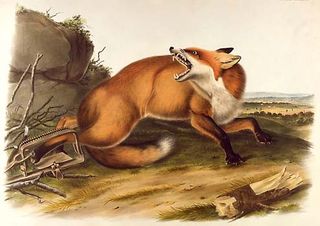
Red Fox

Red Fox, John James Audubon and Rev. John Bachman, Viviparous Quadrupeds of North America, New York: J. J. Audubon, 1845-1848, hand-coloured lithograph

Audubon occasionally credited these artists in his Ornithological Biography, the separately published text that accompanied Birds of America. However, he likely considered their contributions to be in the tradition of the Old Masters where teams of studio assistants would work together to complete paintings and other artworks under their master’s name.

Once Audubon had assembled a portfolio of watercolours, he set off to find a publisher for his masterpiece. After gaining some attention from exhibiting his work, he engaged printmaker William Home Lizars (1788-1859). Lizars completed the first ten plates of Audubon’s work, and then his colourists went on strike forcing Audubon to look for an engraver elsewhere. In London, he found his great collaborator and master printmaker Robert Havell Jr. (1793-1878).
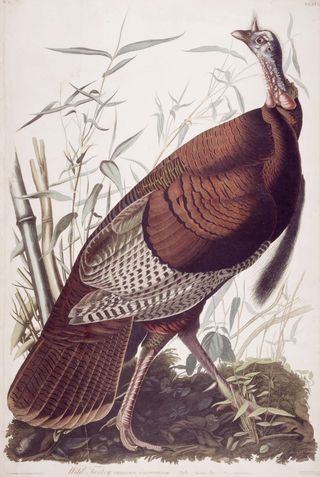
Wild Turkey

Wild Turkey (Plate 1), Meleagris gallopavo, 1827 – 1838. One of ten plates engraved by W. H. Lizars.

Havell would trace the waterolours onto copper plates. He would then produce the prints through a complex process of etching, engraving, and aquatint. Aquatint is a technique of applying acid and acid-resistant resin to create marks in the metal plates which are then used to hold and transfer ink to paper. Audubon was a perfectionist and a dedicated supervisor of the print making process. He would review a proof for each plate making every effort to have them match his original watercolours.

Once the proofs were approved, a group of colorists hand-coloured the prints. Though colour printing was technologically feasible at the time, the highest quality of printing was still largely done by hand, particularly when printing artwork and nature illustrations, as hand-colouring offered a limitless range of colours which resulted in more vivid and true-to-life prints. The process limited the number of copies that could be printed and made the production of works like Birds of America incredibly expensive.

The double-elephant folio edition of Birds of America was coloured by an assembly line of 50 colourists, believed to be predominately young women. As is the case with most hand-colourists of the period, we know almost nothing about these individuals, not even their names. The process took time and skill, but it was largely a thankless task.

Our exhibit, which runs until November 29, is a great opportunity to get up close  to these hand-coloured plates and appreciate not only Audubon’s creative genius, but also the outstanding achievements of these lesser-known collaborators, artists, engravers, and colourists, without whom this masterwork would not exist.  
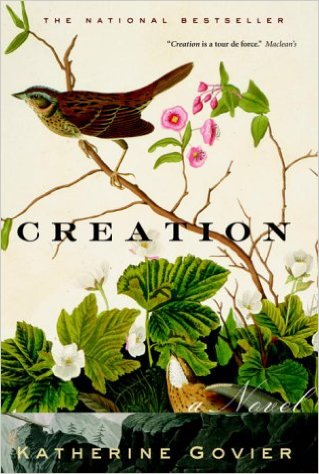
Creation

For a fascinating window into Audubon’s life, including his deep affection for painter Maria Martin, be sure to check out Katherine Govier’s novel Creation. Better yet, join us at the Toronto Reference Library this Wednesday, November 11 at 2 p.m. to hear Govier speak about her fascination with Audubon and how the Toronto Public Library’s copy of Birds of America helped inspire her novel.

Comments

2 thoughts on “Birds of America: A Collaborative Work

  1. Great suggestion, Chloe. We had a fascinating program at the Toronto Reference Library a few weeks ago with John Robert Carley and Mark Peck where the work of FLAP was highlighted along with some helpful suggestions for what homeowners can do to make their homes/windows safer for birds. Thanks for sharing!

    Reply

Leave a Comment

Your email address will not be published. Required fields are marked *

Birds of America: A Collaborative Work

November 9, 2015 | Fiona | Comments (2)

You have just three more weeks to see John J. Audubon’s Birds of America, our current exhibit on display at the TD Gallery at the Toronto Reference Library.

The creation and production of the double-elephant folio edition of Birds of America was a monumental undertaking. Comprised of 435 plates with life-sized images of over a thousand individual birds, it was a remarkable project that relied on the talent and meticulous work of many.

While John James Audubon (1785-1851) was always the primary artist of his watercolours, he also collaborated with other professional artists. Audubon would first outline the entire composition in graphite. Often, his artistic associates would help render backgrounds and plant elements in watercolour, allowing Audubon to focus his efforts on rendering the birds and on completing his mission to paint all known bird species in North America.  

John James Audubon 1826

John James Audubon by John Syme, 1826

In 1820, he was accompanied on a birding expedition down the Ohio and Mississippi rivers by his talented 18-year-old student Joseph R. Mason (1802-1842). Mason, a specialist in botanical illustration, is believed to have contributed to at least 50 of Audubon’s compositions. George Lehman, a Swiss landscape painter, also assisted with painting plants and backgrounds of Audubon’s watercolours for several years.

Blue Yellow-backed Warbler

Blue Yellow-backed Warbler (Plate 15), Northern parula warbler, Parula Americana, 1827-1838. Joseph R. Mason was credited with painting the Louisiana flag (Iris fulva) in the background.

Amateur artist Maria Martin (1796-1863) painted plants and insects in around 30 of Audubon’s works. She eventually married Audubon’s close friend, Reverend John Bachman (1790-1874). Some have speculated about the nature of Audubon’s relationship with Martin, as he often referred to her with terms of endearment in his letters to his friend Bachman. Writing to his son Victor in 1833, Audubon wrote: "Miss Martin with her superior talents, assists us greatly in the way of drawing; the insects she has drawn are, perhaps, the best I've seen.”

Bachman’s Warbler

Bachman’s Warbler (Plate 185), Vermivora bachmanii, 1833. Audubon drew the bird from specimens belonging to his friend Reverend John Bachman and named the bird in his honour. Maria Martin drew the bush Franklinia alatamaha.

Audubon’s own sons, Victor Gifford and John Woodhouse also contributed in the production of Birds of America. They were also very involved in the creation of their father’s second great work The Viviparous Quadrupeds of North America. The original hand-printed and hand-painted 1845 edition of Quadrupeds, depicting the mammals of North America, is also housed in the Toronto Public Library’s Special Collections. Audubon’s wife Lucy also played an important but largely unrecognized role in the publication – supporting the family while Audubon set out on countless expeditions, she edited Audubon’s writing.  

Red Fox

Red Fox, John James Audubon and Rev. John Bachman, Viviparous Quadrupeds of North America, New York: J. J. Audubon, 1845-1848, hand-coloured lithograph

Audubon occasionally credited these artists in his Ornithological Biography, the separately published text that accompanied Birds of America. However, he likely considered their contributions to be in the tradition of the Old Masters where teams of studio assistants would work together to complete paintings and other artworks under their master’s name.

Once Audubon had assembled a portfolio of watercolours, he set off to find a publisher for his masterpiece. After gaining some attention from exhibiting his work, he engaged printmaker William Home Lizars (1788-1859). Lizars completed the first ten plates of Audubon’s work, and then his colourists went on strike forcing Audubon to look for an engraver elsewhere. In London, he found his great collaborator and master printmaker Robert Havell Jr. (1793-1878).

Wild Turkey

Wild Turkey (Plate 1), Meleagris gallopavo, 1827 – 1838. One of ten plates engraved by W. H. Lizars.

Havell would trace the waterolours onto copper plates. He would then produce the prints through a complex process of etching, engraving, and aquatint. Aquatint is a technique of applying acid and acid-resistant resin to create marks in the metal plates which are then used to hold and transfer ink to paper. Audubon was a perfectionist and a dedicated supervisor of the print making process. He would review a proof for each plate making every effort to have them match his original watercolours.

Once the proofs were approved, a group of colorists hand-coloured the prints. Though colour printing was technologically feasible at the time, the highest quality of printing was still largely done by hand, particularly when printing artwork and nature illustrations, as hand-colouring offered a limitless range of colours which resulted in more vivid and true-to-life prints. The process limited the number of copies that could be printed and made the production of works like Birds of America incredibly expensive.

The double-elephant folio edition of Birds of America was coloured by an assembly line of 50 colourists, believed to be predominately young women. As is the case with most hand-colourists of the period, we know almost nothing about these individuals, not even their names. The process took time and skill, but it was largely a thankless task.

Our exhibit, which runs until November 29, is a great opportunity to get up close  to these hand-coloured plates and appreciate not only Audubon’s creative genius, but also the outstanding achievements of these lesser-known collaborators, artists, engravers, and colourists, without whom this masterwork would not exist.  

Creation

For a fascinating window into Audubon’s life, including his deep affection for painter Maria Martin, be sure to check out Katherine Govier’s novel Creation. Better yet, join us at the Toronto Reference Library this Wednesday, November 11 at 2 p.m. to hear Govier speak about her fascination with Audubon and how the Toronto Public Library’s copy of Birds of America helped inspire her novel.

Comments

2 thoughts on “Birds of America: A Collaborative Work

  1. Great suggestion, Chloe. We had a fascinating program at the Toronto Reference Library a few weeks ago with John Robert Carley and Mark Peck where the work of FLAP was highlighted along with some helpful suggestions for what homeowners can do to make their homes/windows safer for birds. Thanks for sharing!

    Reply

Leave a Comment

Your email address will not be published. Required fields are marked *