Leverage
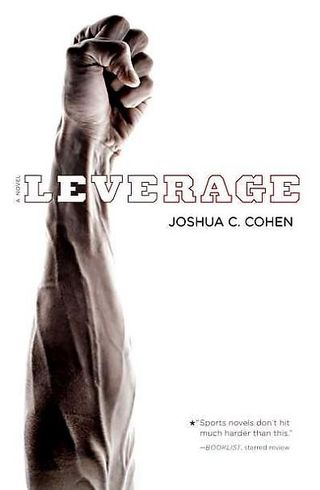
Kurt and Danny could not be more different athletes. Kurt was recruited to play on his high school football team due to his imposing presence and rugged nature on the field. Danny is a young high school gymnast looking to conquer the high bar. In their town, football takes precedence and the heroes on the field become the bullies off of it. However, as a foster child Kurt has seen his own fair share of abuse. One day his teammates cross the line and do something unthinkable to a member of Danny's gymnastics team. Kurt and Danny are both witnesses, causing their worlds to collide with numerous consequences for both.
Get Leverage at the library today!
Book / Audiobook / eAudiobook
Have you read Leverage? What did you think? Write a comment below to share your thoughts
One thought on “Leverage”
Leverage meant various things to me. In the most literal perspective, it was the age-old story of underdogs fighting against bullies in a stereotypical high school setting. In a more metaphorical view, the novel was about the flimsy line between strength and weakness. People could be great football heroes, but choose to hide behind their strength and use their muscles to control others. This book debated among itself what made a person a hero and what made a hero strong. Speech, as it turned out, proved to be more courageous than physical ability. Thus, Leverage was also a story of mattering, of using strength to make a difference – for better or worse.
On the subject of being a hero, I loved the differences and similarities between the two protagonists and the lack of a clear, singular antagonist. Danny and Kurt began the book as different as can be. Danny was on the gymnastics team and a definite high school underdog. He was bullied physically every day and never fought back to the abuse. Kurt was the new student who quickly became a football legend. He was never beat up by anyone at school yet quietly tolerated the mocking jibes of his teammates directed at his prominent stutter. Both boys had weaknesses of their own and were faced with the same problem. They had to overcome their faults for the good of their teams, their school, and most importantly, themselves.
While lots of characters were obvious villains, there was no one true antihero. I greatly admire how Cohen out his characters in situations with huge amounts of physical confrontation, but the main conflict was ultimately internal. I could relate to that. During the school year, for instance, I get irritated at classmates from time to time. Usually, however, I get mad at or place pressure on myself. I become the villain instead of them. I think everybody subjects themselves to this aspect; Cohen did a fabulous job of depicting human nature.
My only main complaint about this story is the beginning. Although the characters are introduced beautifully, I felt that Cohen took too long establishing the setting. The book’s main plotline didn’t directly begin until roughly a third of the way into the novel. Technically, the chain reaction that led to the main conflict was initiated within the first few chapters, yet one does not realize how certain events are relevant until later on. My mind grew tired and impatient after finishing a sixth of Leverage. Without spoiling anything, the book starts out angsty but manageable, yet rapidly descends into the depths of depression. I needed a reason – a proper plotline – to justify the numb and helpless state of mind Leverage reduced me too. Luckily, I stuck out this initial mental block to a well-written middle and end. However, impatient readers beware.
Ultimately, everyone should read this book. The characters are very relatable and their problems are frighteningly realistic. I also want someone to explain to me the uncontrollable American obsession with football. People say it represents strength and courage and yada yada yada, but all I see is a bunch of people trying to kill each other over a ball. Why? The football craze, along with the despicableness of certain characters, made no sense to me whatsoever.