Don’t Toss It In the Humber River…Fix It!
Until I bought my first car at 22, I used my bicycle for absolutely everything. I found if a transfer was involved, I could frequently outride "the Rocket" for no cost and experience an improvement in fitness along the way.
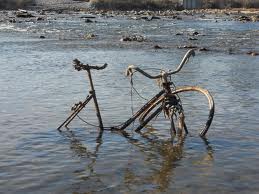
I had maybe three bikes from my teenage years to my early twenties. This was pretty good considering I had a friend who on an annual basis would destroy his bikes in a variety of inexplicable ways and somehow almost every time they would end up submerged in the Humber River.
Out of the three or four bikes I had though there was one that I absolutely despised. When I picked it up from the store I had high hopes. It boasted a flashy yellow and blue paint job. The dual shock suspension system seemed cool. Also, the fact it was a 21-speed made it seem fast (Note: More gears do not translate into more speed, just more pedaling options).
The bike I had high aspirations for was a huge disappointment. It was slow in comparison to the bikes I had rode before. After only about a year gears began to slip, causing my knee to painfully smash into the handlebars. Finally, I had enough one day as I was climbing up a hill near my house and my knee painfully collided with steel. I picked up the bike and held it over my head and body slammed it WWE style into the grass in frustration, bending the handlebar beyond repair.
In the last two years I have begun to take up road cycling as a serious hobby. As a result I have been reading all sorts of bicycling related books, magazines and websites. I have also tinkered with my own bikes quite a bit. In order to stop the gears from skipping on my blue and yellow bike all I needed to do was turn a knob near the back derailleur a few revolutions or less.
I discovered as a teenager I made a lot of rookie mistakes. I inflated my tires maybe once or twice a year (you should probably do this every two weeks, especially if you cycle a lot). I seldom cleaned and oiled my chain (once a month should suffice). I also didn't not know how to change and replace a tire, nor did I carry supplies to do so.
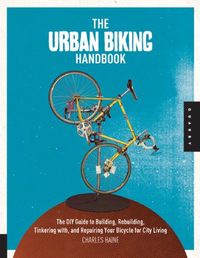 The library has a lot of great books such as The Urban Biking Handbook that I added to this year's Sports booklist in hopes that some smart teens might avoid the same mistakes I made. If I read books like this I would have also known that a heavy bicycle loaded with shocks was meant more for rough terrain than commuting speedily in the suburbs.
So what happened to the remains of my blue and yellow mountain bike? I was smart enough to save some pieces including the seat, tire and rims. The rest of the bike went to the curb for garbage collection.
The spare parts came in handy. Last summer my neighbour badly mangled his front wheel. I was happy to help him fix his bike and replaced the broken rim from his bike with the front wheel from the blue and yellow bike I had stored for years.
Three days later his bike was stolen, so I guess maybe the bike (and its parts) were cursed after all!
P.S. My friend recently destroyed another bike this spring after he fell off it and it slid under a van, destroying the rear derailleur. For spare bike parts, see a ravine/river near you.
6 thoughts on “Don’t Toss It In the Humber River…Fix It!”
I’d love to check this book out sometime, I have lots of friends and family members who cycle regularly and they always fear they don’t care for their bike the way they should. This book will be such a life saver
I know so many people who have no idea at how much work and responsibility biking is. If only they knew…
I think I need to check this one out. As for the blue and yellow bike…I quietly laughed to myself because I had one too and it was more difficult than my previous one.
Nice advice! Although I’m not really into a lot of physical activities. I think that the last time I took out my bike and rode it was two years ago.
Oh bikes… I still haven’t fixed mine yet because i lost a part that keeps air in my bike.
Do you mean the air pump to inflate the tires? If so, they have these at gas stations.
Or is your tube/valve damaged? It is actually really easy to change a tube and they don’t cost too much (probably between $5-10 at Canadian Tire for most mountain bikes). There are plenty of great video tutorials on YouTube for how to correctly change a blown tube.