Death and Dying
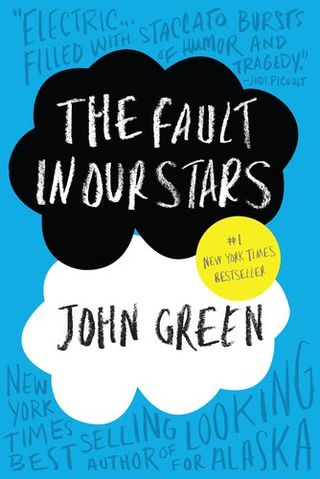 Venturing out of my genre this summer, I recently read the blockbuster The Fault in Our Stars by John Green. Now this was definitely a title out of my element, as I tend to go for the gruesome, morbid, and suspenseful. It was a great book, and to my surprise, I was emotionally invested. Now, I am definitely not one for love stories, but something about this book sucked me in, and I was rooting for the characters till the very end, even though I knew what to expect. This got me thinking about the way the books on my booklist made me feel. Although I enjoyed reading them a whole lot and was sucked into the plot lines, I didn’t feel for/connect with the characters to the same degree. Although there is death in other books as well, especially in the ‘Sick-Lit’ genre, the approach the author takes in a murder mystery is quite different, which means that emotionally, they have different effects on you. Perhaps the reason for this is that the character that gets knocked off isn’t usually as well developed and we tend to meet him/her early on, so we don’t really form any sort of attachment. Personally, I found that The Fault in Out Stars evoked this weird mix of feelings… I was sad, upset, angry, happy, and overall, content with the way the story unfolded. With the murder mysteries, I find that I am usually preoccupied trying to figure out what will happen next, who I think the perpetrator is, and what I think should happen to him/her when he/she gets caught! In addition, I also started thinking about the emotional toll the death of a character has on a reader. Whether it be a murder, suicide, or sickness. This, in return, got me wondering about how you, the readers, feel when you read books that deal with death. What sort of emotions do you go through when a character dies? Does the manner in which the character dies affect the way you feel?
26 thoughts on “Death and Dying”
I haven’t read The Fault in Our Stars but my friends and classmates who have, told me that by the end of the book they had tears streaming down their cheeks. I guess when you get attached to a character you feel affected when the character dies, in any way that they die. I’m really looking forward to reading The Fault in Our Stars this summer.
Hi Uzma, I completely understand where your friends are coming from… it was a tear-jerker for sure! And you’re right, the level of attachment to a character definitely dictates your emotional response to them. On a side note, have you placed a hold on the book yet? I just wanted to let you know that it is also available in paperback now (paperback copies don’t go out to fill holds at other branches) so anytime you are in at your local branch, check out the Teen Paperback section in case there is a copy floating around. Also, let me know what you thought of the book once you have read it 🙂
I got the book before summer and after I read the first sentence I was glued to it. Right now I’m in love with the book,THE FAULT IN OUR STARS is an exellent,superb,amazing romance story and I recomend it for anyone who loves romance and strong love
I also haven’t read The Fault In Our Stars yet, but from past experiences, I have come to notice that a character’s death leads to varying emotions depending on his/her role within the novel. As you mentioned, when reading a murder mystery, I do not feel sadness or depressed when a character dies, and that’s usually because the book only reveals enough of the victim’s character to allow us to envision or notice his or her presence within the book, but does not allow us to fully know and understand the character’s attributes, which limits the connection between the reader and the murdered character. Because of this lack of connection, I usually feel indifferent and unaffected by the death of the character.
However, this contrasts with novels that fully reveal their characters and then kill them off. I feel that the more I am introduced to a character and his/her situation within the novel—and the more I understand and connect to the character—the stronger the evoked emotions would be (whether positive or negative). For example, I will refer to two commonly known novels to help explain my reactions.
In Numbers, when Spider (second main character of the story) died, I felt really sad and just wanted to quit reading the book before ending it. The reason for this is because the author had revealed as much of him as she did with the main character of the story, and I as I was progressing through the book, I felt as if I was building a strong “acquaintance” with Spider, which caused me to grieve over his death for a couple of days before I was able to pick up the book again and finish reading it.
However, not all deaths of important characters make me feel sad. For example, the final death of lord Voldmort that concluded the Harry Potter series actually caused me to relax and feel relieved. Even though Voldmort was one of the most frequently mentioned characters of the series, his death influenced me in a more positive note because he was a villain, and the more I was exposed to his character, the more repulsed and disgusted I was, and therefore his death (whether it was gruesome or not) was very satisfactory to me.
To conclude this really, really long comment (sorry I didn’t mean to write so much!), I’d say that my emotions are affected differently depending on the type of character that dies. As for the method in which the character dies, I don’t think that it influences or changes my overall reaction to the character’s death.
I’m actually planning on reading after Ramadhan, but thanks for letting me know about the paperback copies, and i’ll definitely tell what I think about the book after I’ve read it!
Hi Marian, great comment! I agree with everything you said, especially about the impact the death of a positive character, versus a negative character, has. I was elated when Voldemort died, but was sad that Fred and Dobby (amongst others) died… especially Dobby!!
P.S. Don’t worry about the length of the comment, it is always great to hear (read) what others think, so thank you 🙂
I did not read the book, I did try though. After my friends ranted on and on about it and the movie coming out soon, I thought I would give it a try. I read the summary and was a little disappointed, I was intrigued but the inner struggles present, however, it seemed like a romantic novel as well which I am not fond of. I continued on anyways but after reaching the mention of the love interested before the end of the first chapter, I gave up on the book. I just didn’t want to read another typical teen romance novel despite what my friend argued about the line that Hazel says at the end (“This is not a love story”??? Did I get that right???). I guess I just don’t like romance, the inner conflict was well told (so please don’t kill me John Green fans!).
I’m with you jane, this is just like the pathetic version of romeo and juliet minus the humorous captivating characters, beautiful aubades and epithalaniums, and wonderfully crafted verses in the iambic pentameter. It follows the typical teen love story outline 2 star crossed lovers with a naive insight on love with many unrealistically dramatic scenes in their relationship, with of course a tragic ending out of nowhere. The writing formate and vocabulary were mediocre at best. Perhaps teens would like this, but personally I think of these books as rather pathetic with simplistic words to appeal to teen girls looking for romance.
Additionally this book falls into the long lines of teen books that provide an unrealistic and naive view of love for teens, couldn’t even go though half the book.
Yes, all bow down to Shakespeare, I have so much respect for him, writing sonnets in iambic pentameter is not as easy as Shakespeare makes it look. I agree, typical teen love story, the struggle of love to satisfy raging hormones. Of course there is the tug-at-the-heartstrings moment with the protagonist diagnosed with cancer to persuade us to fall in love with the story. Yes, its very unfortunate that she has to pass on without her beloved. But isn’t this just Terry Fox without the inspiration, motivation and heroism??? Just added romance??? The death out of no where was defiantly there to end off with a bang, very expected with the plot. My friend told me that “The whole theater cried”, I really did not understand the fuss. Just a bunch of love hunger teen girls brawling their eyes out and dragged along guys tapping their feet to the tic of their watches.
I agree, “we live, to love” seems like the message being sent out. As is the author is saying “if you are dying, you should find love! Then you will be happy! All is well!”
Exactly, wasn’t Romeo and Juliet written as a caution against love? After all, they met, got married, made out, and died in the course of a few day. What a genius.
Yes, I can imagine their boyfriends yawning at this movie in theatres. Your right had it been a story about a character similar to terry Fox (who has cancer and an amputation, which is a problem exactly like the main characters) it will not have been as successful because ,as you said it, nowadays the only thing teens look for in books are romance. I don’t know why, while romance is nice in moderation it is not what makes everything good or bad. The whole book relied on the so called “love” between the characters rather than a well crafted plot.
To answer Monica’s question, it really depends on the death. In movies, I would cry for hours about the death of a dog, but didn’t care much about the people.
Oh Dobby, I cried forever about him. It was so sad, poor Dobby, I was full on brawling when Harry wrote “Here lies Dobby, a free elf”.
Omg you too? I’m known to never cry in movie but if i movie depicts the death or immoral acts of an animal it haunts me and I actually end up having nightmares about it which is y I stay away from films starring dogs.
Oops, *hungry
Still didn’t help me when Dobby died in Harry Potter, not a dog, but I still cried like crazy.
Oh society, our generation is quite divisional. Of course I don’t mean everyone, otherwise we wouldn’t be so far along technology wise.
I meant to say delusional
To quote Hemingway, ‘Poor Faulkner. Does he really think big emotions come from big words?’
To paint realistic characters in narrative fiction, vocabulary is important. This doesn’t mean using an advanced jargon, rather,vocabulary pertaining to the represented demographic. Novels use simple and relatable dialogue to stimulate emotion (though, evidently it didn’t work with a large portion of the intended audience). Complicated wording only sounds pretentious.
Though, I still find The Fault in Our Stars a tad bit pretentious because of the philosophies Hazel and Augustus spout. A bit too wise beyond their years.
In my humble opinion, of course.
In regards to the questions, for me, the more detailed the death is, the more affected I am by the character’s death. Especially, when one of the main characters die. It feels unfair to have someone you’ve been reading about for most of the story to just be gone. I would usually freeze after the news and be in shock and denial. Sometimes the emotions I feel for the death is more worrying “what will happen to the story line or plot now?!”
I agree that I think it’s really important how the death is depicted in the story. If the narration is very tightly focalized around a character who is very close to the character who dies, then the death has an enormous emotional impact on the reader, regardless of how much time is spent describing the death itself–like in the death of Ase in Ibsen’s “Peer Gynt.” Sometimes less is more!
Hi Kim, that’s a good point. If the death is hinted at or just mentioned, but never described, then the impact is somehow lessened. For me, this happened with E. Lockhart’s We Were Liars. Has anyone read that?
Hi Edmee, that is also a very good point. Depending on the writing, some authors have an amazing ability to make you feel exactly what the protagonist is feeling, and when they encounter any form of loss, you feel as if it was happening to you.
Uzma, you should really get into reading this book because it really takes romance and death and makes you see them in a different way. Although, I am yet to finish it, I know its gonna be good and by what I hear, I will most likely cry by the end of it.