How much does that shirt REALLY cost?
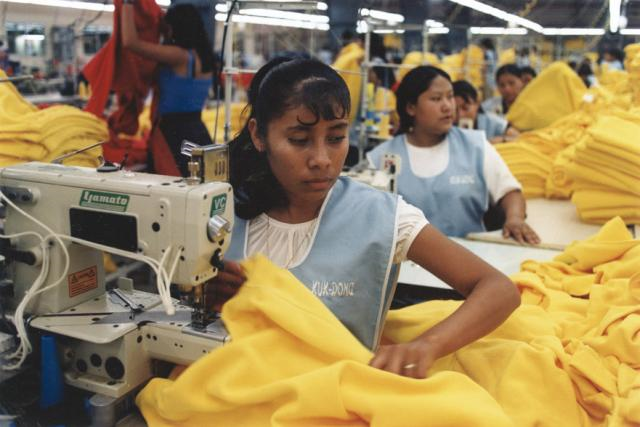
If you're like me and have a limited budget to spend on your wardrobe, being able to get an outfit cheap can be a big incentive to shop at a particular store. A lot of major brands count on this to get customers into their locations, and sell the latest looks at very low cost, hoping that people willl buy a lot of their stuff & return later when they decide to update their closet for the next season.
But what are the costs of such cheap fashion? What possible downside can'there be to being able to refresh your entire wardrobe for less than it'd cost to buy a single high-end designer handbag?
 These questions get thrown into sharp perspective in Wolfgang Korn's book Made On Earth, which looks at what goes into producing a red sweater the author purchases. Starting in the oil fields of the Middle East where the raw material to create the synthetic fabrics of his sweater are pumped out of the ground, through a garment factory in Bangladesh where workers hurry to produce a huge order, Korn follows his sweater all the way to the distribution centres for major department stores where staff rush to sell the item of clothing in question. At each step of his sweater's epic globe-spanning journey, Korn observes that the cheap cost he paid for the sweater came at the expense of the many many people who are paid very little and work in poor conditions in order to produce his garment.
 Cory Doctorow's excellent book For the Win also examines some of the issues of worker's rights around the world. Focusing on the players of MMORPGS (Massively Multiplayer Online Role Playing Games), Doctorow's book takes us from the slums of India to the boardrooms of Silicon Valley and and shows how any savings at the cash register are typically squeezed out of the people at the bottom of the food chain, sometimes even children or teens working in abusive and dangerous situations.
The true cost of a lot of the clothes we wear was brought home to me on April 23 2013 when the 8-storey Rana Plaza garment factory collapsed in Bangladesh, killing over 1,000 workers trapped inside. I was among the many Canadians forced to confront the fact that some of the cheap garments I bought at popular stores here in Toronto were quite possibly sewn by one of those thousand plus workers who had so tragically lost their lives.
These books, and stories like the Rana Plaza tragedy make me wonder about the 'real' cost of the clothes I wear. Should I feel guilty about bargain shopping to get the cheapest item I can? On the flip side, can I feel confident that a more expensive item is actually passing on more money from its sales to the people who made it? I don't think its fair to expect people to never shop for clothes, or to feel bad about buying a fun new outfit from time to time. But I do wonder about the ethics of buying clothes that I don't really need, especially cheap stuff that I can afford to only wear once or twice.
How much do you think about the people who sewed the clothes you wear? What (if anything) should people consider when they go shopping? Are there ethical ways to dress fashionably?
7 thoughts on “How much does that shirt REALLY cost?”
I heard about this issue, I remember studying it in grade 8. I remember feeling self conscious of what I was wearing when I researched this problem. I think that yes, people should think about this when out shopping. Just because we are in a first world country doesn’t mean we should feel superior over the third world countries.
I agree, people often turn a blind eye at this issue. Most fabrics made from these kind of factories are not good for us nor the environment, and workers aren’t even treated morally for producing these clothing. I am very aware of this issue, and make a point to only wear clothing made of natural such as cotton or wool.
Exactly, I just wish that the workers are recognized and paid properly.
Exactly, they are working long hours in dangerous conditions and most of them are young children.
It sounds like you take this issue pretty seriously!
I feel like there are ethical ways to shop, but I think that the main problem is that these methods aren’t talked about in the media and etc. And if they are, the stores that are producing clothing and merchandise ethically are a bit pricey (which brings us to your original statement about buying a cute outfit for cheaper), but then at that point the choice remains to the client for them to buy or not and to do some more research (since most clothing companies are not going to do it).
Instead of struggling with an obscure E-book that might or might not work and which will suddenly go poof for no credible reason, library patrons can read two print titles, which, if put together, might have amounted to one actually good book: To Die For: Is Fashion Wearing Out the World? by Lucy Siegle and Overdressed: The Shockingly High Cost of Cheap Fashion by Elizabeth L. Cline, both of which TPL stocks because I suggested them.