Tag
 People have been wanting to leave their mark on thing since forever. Cave drawing. Petroglyphs. Writing on walls in Pompeii was perfectly preserved, and it turns out it's not all that different from what people write on desks and bathroom walls now, in fact. Notes showing they were there, comments on other people… But sometimes, this need for expression and leaving a piece of yourself behind takes on a whole new dimension, beyond those everyday scribbled pen marks you left behind in math class last year.
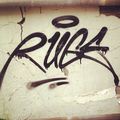 Graffiti as we picture it from the word now tends to take the form of tags or larger versions of them, with the occasional mural. This pretty much started in the late 1960s Philadelphia and New York, with people writing their names – well, their street names, anyhow – on things to build some cred and later, their fame. The actual look you probably associate with tagging started to take shape in the early 70s, when writers started joining letters into a logo (both in thrown up paint bombs and in handwriting), outlining, adding dots and stars, thickening up the font, and adding 3D effects. Now writers sought props for style as well as boldness of their hits, and people began to notice.
In New York, subway cars began to be the canvasses of choice for the top writers, with so-called "burners," ranging from quick "throw ups" to pieces that sometimes covered whole cars that would roll the art through the city the next day. By the end of 1989, the city had declared war on graffiti, imposing strict new penalties for writing, painting the trains, cleaning the last of them, and this form was pretty much done after years of being fertile ground for a host of artists, including those who Jean-Michel Basquiat sampled and remixed for his work.
Basquiat was one of a handful of artists (along with Zephyr, Lady Pink, Lee, Phase 2, and Dondi) who brought graffiti style into galleries (particularly in Europe, which helped export hip hop culture overseas), who by the 1980s had begun to sell pieces, though graffiti still remains essentially street art, about gaining respect, expressing ideas freely, and throwing a middle finger to authority.
Meanwhile, graffiti writers moved to walls and overpasses, for the most part, and began to include some fantastic mural pieces as well as letters, and this is the most common placement for bombing even still.

Want to see some of this stuff? Maybe someone's list of the best? Read a bit more history of New York's kings of graffiti? See who might rule in Toronto these days? Download some graffiti-inspired fonts or create some online? Maybe learn how to decorate simple fonts graff-style or even form those wildstyle letters yourself? There's lot of great links out there, and some fantastic books at the library, too. Like these ones:
Graffiti Moon, by Cath Crowley – read a Word Out review by Fari, who luuuurved this book. I'm thrilled she reviewed it, because it's been on my reading pile and I can't wait to get to it. Also available as an ebook.
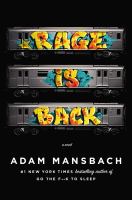 Rage is Back, by Adam Mansbach – Dondi is the progeny of two of NYC's subway kings, Billy Rage and Wren 209. On the fabled night of his birth, the night the Immortal Five crew put up a full-car piece to announce his arrival, the vice squad busted them and in a moment that has never been clearly told, one of the crew died. Rage went on a rampage then, trying to call out the cop responsible, and once the city passed new laws that made him a fugitive, he lit out for Mexico, leaving Dondi to grow up with nothing but the stories of his old crew to know him by, until rumours started that he was back and sure enough, he was… This book is steeped in the culture and language of 1980s writers, complete with drugs, violent mishaps, nights of bombing that earned serious bragging rights, plenty of swearing, and nods to the old writers in names Dondi and Billy (167). It's a fantastic read, and I highly recommend it if you are curious about what it was like to be there.
If more stories of mayhem and the dangerous side of writing appeal to you, try Graffiti Underworld, chock full of oral history from artists and writers telling their craziest stories of near escapes, violent run-ins, and amazing nights of collaboration.
West Coast graffiti artist Scape Martinez has a few great books to teach you how to build tags and pieces in solid graffiti style. These are full of tips and tons of visuals to get you started, so if you're looking to create your own, it's a good place to begin.
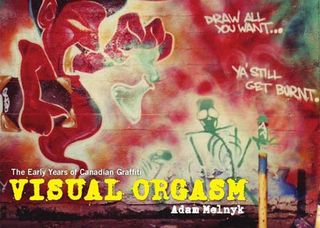 There are also tons of books documenting the graffiti scene in the States and in cities around the world in vivid, amazing colour. A quick search on graffiti or street art will get you tons of large-sized, eye-popping books full of photos to look through, but I love that there's one focusing on Canada's own graffiti scene, with sections for various cities. Who knew we had such hot writers? Check out Visual Orgasm for shots of some serious Canadian talent, including some Toronto mainstays like Ren. (There is also an associated website, so you can scope some Great North talent online, as well.)
7 thoughts on “Tag”
Very insightful post, I love spontaneous expression of art. I remember just walking around downtown snapping pictures of all the graffiti.
Very insightful post on the long ancient history of graffiti art, and how people can fully express themselves through it.
I remember in school, we had a project based on graffity, what we knew about it, and what it might sometimes portray. later on, we got to create our own. It was a nice experience
I’m so amazed and intrigued by some graffiti. Their artists have talent.
They sure do, Kim! I’m blown away by some of the images in these books, and it took me forever to write this because I kept getting lost in all the great photos!
How many people who “enjoy” graffiti would allow these “artists” to use the walls of their homes as a canvas.
My guess is none. Zero. Zip nada bupkiss.
Hey, Joe – certainly plenty of people object to it or find it not their style, as with any art that breaks new ground. Surprisingly, though, these artist were being paid large amounts of money for canvasses or murals, even fairly early on. People who like it, like it a lot!