How to Read Music, Part Two
In my last blog post, I talked about how you can develop a music-reading skill a long way. I described a process where one develops literacy skills from a nursery school classes and on. Nursery school and kindergarten classes are wonderful places where one develops all the basic life skills you and I need, including how to read books!
Now, in North America, for the most part, learning to read music is an optional skill that only a certain portion of the population acquires. Theses lucky people are involved in music lessons – piano or many other instruments – or become involved in band/orchestra classes or even choir. Even then these are slow processes that require many years of dedication if you want to become proficient at it. I am one of many who went through that process. How did I become so good at it, then? Well, I spent a lot of time reading, writing, and imagining music – up to about 40 hours per week, if not more. If you ask a poet how he became so good at writing, he would give you a similar answer: spend a lot of time at it!
Now, fortunately for the many of you, there is a method of learning to read music quicker. It is based on a music education theory of Zoltan Kodaly, a Hungarian composer/music educator from the turn of the 20th century. His theory of music education was so good and practical it was adopted by Hungarian government. So, how does it work?
Most of us, who face a page of music, see the stigmatism-inducing five-line staves, dotted with notes and other strange looking marks, find it confusing. More than anything else, it is those five-lines one must navigate through the novice musicians find the music reading difficult.
Now, imagine there is only one (1) line:

It shouldn’t be all that difficult to read anything on a single line, right? So, a note on single line would look like this:
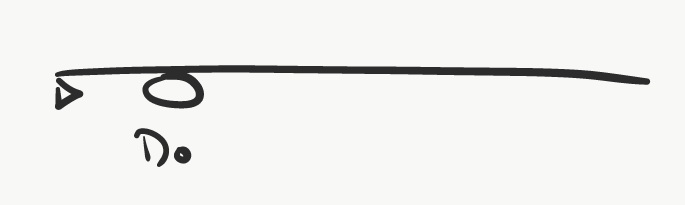
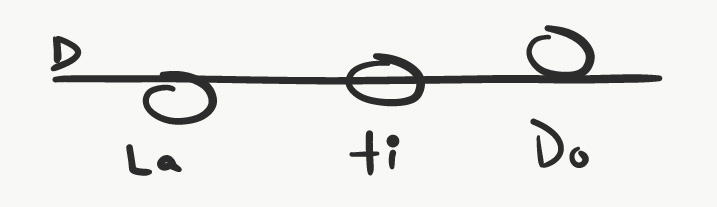
How about few more notes on a single line?

Still not too hard, right? A single line of staff can carry three notes! With a single line of staff you can already write a simple song like "Mary had a little lamb".
According to Kodaly’s reading system, you can now move the base-note point: "DO’"in a major key, for example.
Once you are quite comfortable with a single line of staff, you can add another line. Now you have two lines.
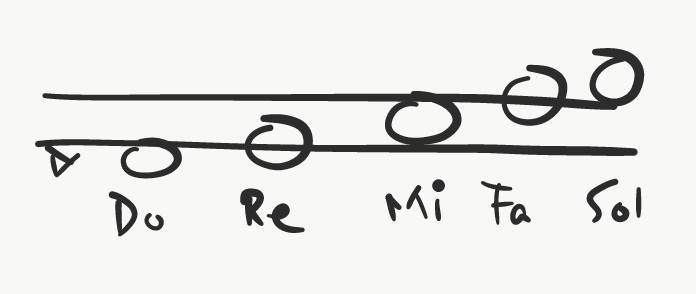
Gradually, you add more lines until you reach five lines and not feeling dizzy.
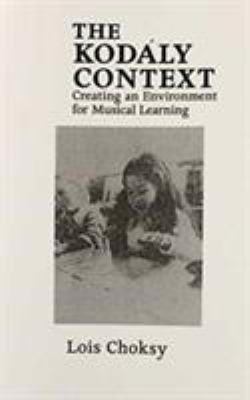
Easy enough, no? Stunning? Hardly. What I described here is just a fraction of a larger and wonderful world Kodaly’s music education theory. There are a large number of schools world-wide that follow his ideas successfully. Interested? Here are a few books to start with:
2 thoughts on “How to Read Music, Part Two”
Great article, I was inspired and immediately looked up the books included in the post. Unfortunately all the books you recommend are reference only. After a search it seems like all the Koda’ly Method books at the TPL are reference. It would be nice if blog posts referenced books we could actually take out.
Sorry, Stephanie,
A little bit of short sightedness on my part. I thought I checked the availability of the books.
I will be more careful next time.