Art in the Digital Age: Algorithmic Art, Artificial Intelligence & NFTs

New technologies are sometimes met with resistance. This is because they change the culture around us. In the early 20th century, the German cultural critic Walter Benjamin argued that mechanical reproduction takes away the essence of art. He called this essence an artwork's “aura”, which comes from its unique identity and physical location.
Later in the 20th century, the philosopher Arthur Danto gave a completely new definition of art. For Danto, art has no intrinsic meaning and can be anything we want it to be. Tongue and cheek, Danto proclaimed the End of Art. He meant that the old view of art was no longer viable.
This raises the question, where are we today? The age of computers and digital production has and continues to expand the meaning of art. Below we delve into the evolution of digital art, including current developments in artificial intelligence arts and non-fungible tokens.
Computer Art
Early experimentation with digital art began with the increasing application of mainframe computers in the 1950s for engineering and science. The earliest attempts at computer art were by mathematicians, computer scientists and engineers. The photograph below was created by American mathematician and early digital art pioneer Ben Laposky. He manipulated oscilloscope electric signals and recorded them on long exposure film:
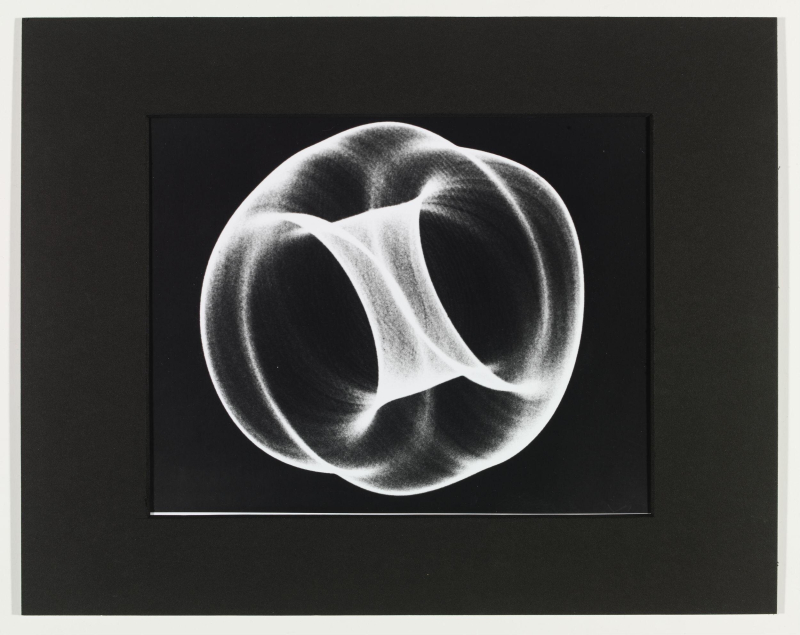
In similar vein, John Whitney's Catalog (1961) employed kaleidoscopic mirroring through frame-by-frame analog computer manipulation to construct the first computer-generated animation. Both Laposky's still and Whitney's moving images harness the affordances of the new media for novel aesthetic effects.
Take a look at the clip below of John Whitney's Catalog.
Catalog (1961) prefigures future developments in algorithmic art.
Since these early forays into computer art, improved digital hardware and software have been harnessed to produce startling art. The wide adoption of graphical user interfaces (GUI) in the 1980s and graphic software like Adobe Photoshop and Illustrator ushered in a new chapter of digital art and design. The commercial availability of high-processing power and the ubiquity of graphics software spawned many art movements. Some of these include algorithmic art, fractal art, generative art, and systems art. Here are some examples:
Algorithmic Art
Algorithmic art refers to the application of algorithms or well-defined procedures to generate art. Most algorithmic art is created by manipulating computer code.
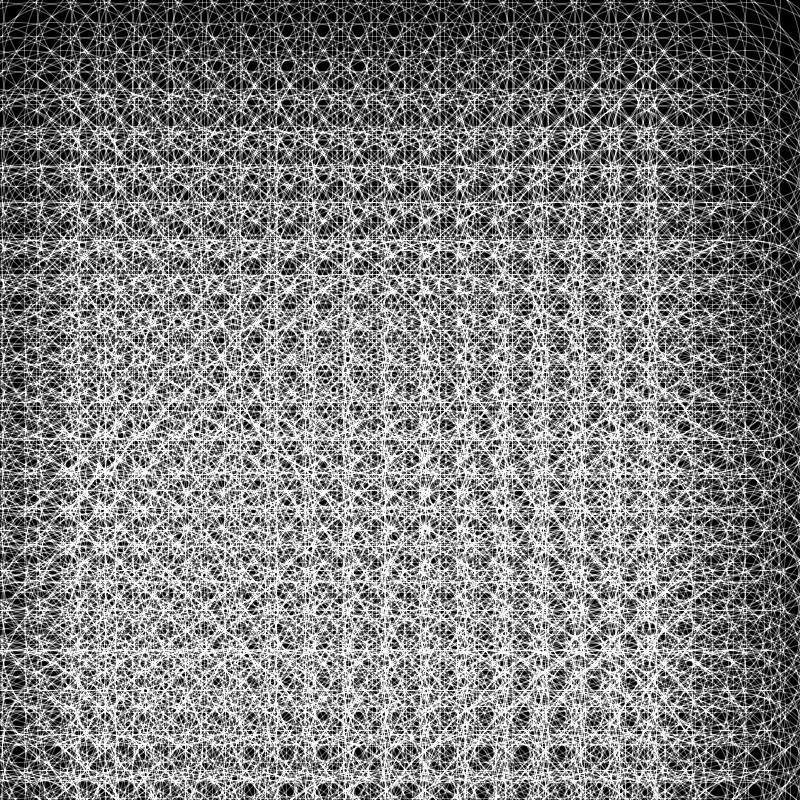
Fractal Art
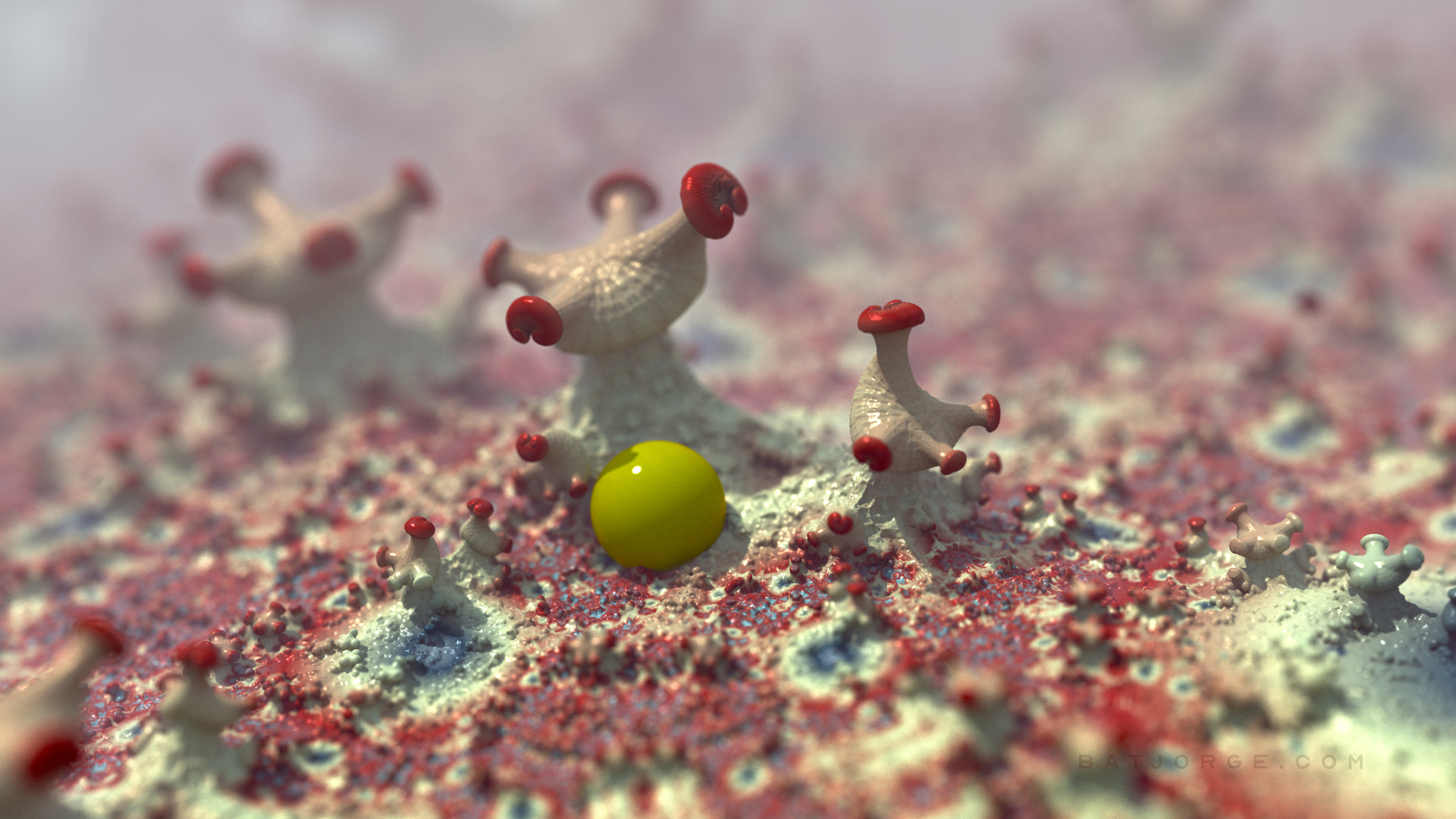
Fractal art is a subset of algorithmic art. It involves generating digital images or animations through the manipulation of mathematical objects called fractals. Fractals are geometrical objects where all parts display the same pattern as the whole.
Creative Coding
Creative coding refers to the use of computer code to generate expressive rather than functional effects.
Check out this awesome visual animation of points and circles scripted by a content generator named Gaby. She used HTML Canvas and JavaScript:
Circle-Circle Intersection by Gabi (@enxaneta) on CodePen.
If you'd like to foray into this fascinating world, here are some coding libraries that you could use:
- Papers.js (Javascript-based library)
- Processing (Python or Javascript-based library)
- P5.js (Javascript-based library)
Artificial Neural Networks
Recently, the immunity of art from automation has come under threat from artificial intelligence. Take a look at the piece below:

On the one hand, the image is highly imitative. On the other hand, the image was generated from scratch by an artificial neural network architecture called a generative adversarial network (GAN).
A recent innovation in AI architecture, GANs have been used to generate photorealistic images of humans called deep fakes as well as art. GANs simulate a zero-sum game between a discriminative network and a generative network to increase the learning efficiency of the network.
Learn more about artificial intelligence and creativity
The Artist in the Machine: The World of AI Powered Creativity by Arthur Miller
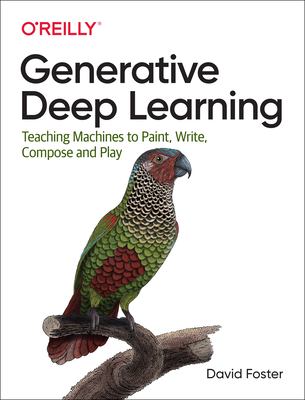
Generative Deep Learning: Teaching Machines to Paint, Write, Compose and Play by David Foster
Non-Fungible Tokens (NFTs)
While AI has made strides in emulating aspects of human creativity, what it can do is still very limited because present AI does not yet have general intelligence or agency. The increased social dependence on digital participation has created demand for a protocol of digital uniqueness. The development of the blockchain architecture behind cryptocurrencies enabled the development of such a protocol. Its units (any digital file/s like an image, a gif etc) are dubbed non-fungible tokens (NFTs).
What are NFTs?
To understand what non-fungibles tokens are, it bears explaining the difference between a coin and a token. You can'think of coins as money and tokens as vouchers. Both are exchangeable but vouchers are only exchangeable for specific things like food. In cryptocurrency, tokens are used in a similar way as vouchers to purchase things or simply store assets. The word fungible means exchangeable. So non-fungible tokens are tokens that are precisely non-interchangeable with others, or unique. And like crypto, they are stored in a distributed ledger (note that only the metadata is stored, not the digital object itself). This does not mean that they cannot be purchased with other fungible tokens or coins. It simply means that the token represents a unique digital asset. For this reason, NFTs are well disposed to represent digital art objects.
What does this mean for art and the art world?
It is difficult to tell yet. In some respects, NFTs hearken back to Benjamin's notion of the unique art object. On the other, NFTs are equally poised to become instruments of commercial art, instead of boosting the livelihood of the average artist scraping by. Concerns have also been raised about the environmental impact of NFTs, and the carbon footprint of NFT art. Finally, the relationship between NFT copyright and creative commons licenses remains to be seen. While nothing prevents NFTs from having creative commons licenses, market incentives may tip the scales toward copyright. What do you think?
Learn more about NFTs
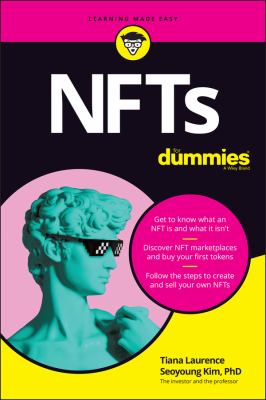
NFTs for Dummies by Tiana Laurence

Introduction to NFTs': Non-Fungible Tokens by Jonathan Reichental
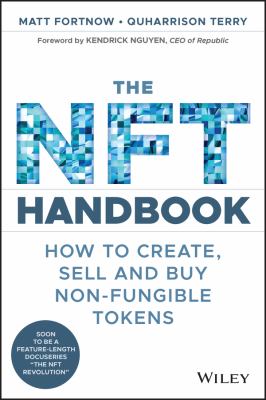
The NFT Handbook: How to Create, Sell and Buy Non-Fungible Tokens by Matt Fortnow
Feel free to leave a comment if you have any thoughts about digital art, AI art, and NFTs. Or the whole shifting meaning of art in our evolving information culture.
Comments