The order of books: Dewey Decimal System
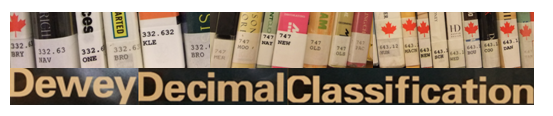
I've had library customers asked me how our Non-Fiction books (about real things, events, people, and places) are arranged on the shelves, what the numbers on the spine means and more importantly, how to find them. I've even had customers give me a barcode number with the hope that I would be able to help them find that number on the shelf. For those that find it challenging to locate a specific book on the shelf, you may have wondered how library staff keeps track of it all.
The answer is: the Dewey Decimal Classification (DDC, also called the Dewey Decimal System). This number system provides a standard for arranging Non-Fiction library books on their shelves so that they are maintained in order. The specific number system was invented by Melville Louis Kossuth (Melvil) Dewey, an American librarian when he was just 21 years old. It became the world's most widely used library classification system, giving a place on the self for every book. The goal of the system was to make it easy to find any particular book and return it back to its proper place on the shelf.


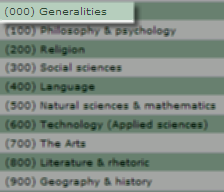
All the Non-Fiction books (all knowledge) are organized into 10 main classes (000 – 900) and each of the ten classes is divided into sub-categories. Each of the sub-categories themselves contains ten sub-divisions. Confused and dizzy yet? Not to worry. You won't be receiving all the knowledge of the DDC now. I'll be explaining each main class in a series of blog posts. Next up is the 000s.
Comments