Everybody’s Got the Fever: 5 Books about Epidemics
On Thursday, February 5, Toronto Public Health confirmed that a fifth person in Toronto has been infected with measles. It is described as a "small outbreak" of the highly contagious, potentially deadly disease.
These non-fiction books describe other disease outbreaks.
 |
 |
 |
 |
 |
The Black Death
Causing 75-100 million deaths, this 14th century pandemic was most likely caused by the Yersinia pestis bacterium. It is considered one of the deadliest pandemics in human history.
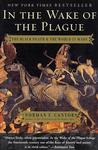
In the Wake of the Plague: the Black Death and the World it Made by Norman F. Cantor
Although it killed 40 per cent of Europe's population, historian Cantor discovers that some positive things came out of the pandemic.
Cholera
This disease is an acute infection caused by ingestion of food or water contaminated with the Vibrio cholerae bacterium. There are 3-5 million cases each year resulting in over 100,000 deaths.
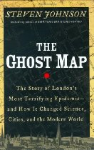
The Ghost Map: the Story of London's Most Terrifying Epidemic–and How it Changed Science, Cities, and the Modern World by Steven Johnson
When his neighbours begin dying from cholera, Dr. John Snow worked tirelessly to find an answer. What he discovered changed cities forever.
Poliomyelitis
Poliomyelitis is a highly infectious disease caused by a virus that is spread person-to-person. It primarily affects children under 5 years of age. It can result in permanent paralysis or death. There is no cure but preventative vaccinations have greatly reduced the number of infections. Only 416 cases were reported internationally in 2013.
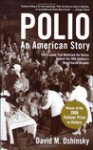
Polio: an American Story by David M. Oshinsky
• eAudiobook
• Talking Book (restricted to Print Disabled patrons)
This book documenting the search for a polio vaccine won'the 2006 Pulitzer Prize for History.
Smallpox
Smallpox is an acute contagious disease. It is believed to have caused the death of Egyptian pharaoh Ramses V in 1149 BC. In 1980 The World Health Organization announced that the disease had been eradicated.
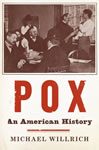
Pox: an American History by Michael Willrich
Willrich tells the story of the United States' 1898 smallpox epidemic and the efforts to treat it with mandatory vaccinations–a campaign that caused suspicion and panic and led to a Supreme Court case.
Typhoid Fever
A bacterial infection caused by exposure to the Salmonella typhi bacterium, usually through ingestion of contaminated food or water. The World Heath Organization estimates that there are between 200,000 and 600,000 deaths each year from this disease.
Typhoid Mary: an Urban Historical by Anthony Bourdain
In 1904, an outbreak of typhoid fever in Long Island, NY was traced to cook Mary Mallon but she proved difficult to apprehend and spread the disease wherever she worked. The first asymptomatic carrier identified by doctors, she denied responsibility for the outbreaks.
4 thoughts on “Everybody’s Got the Fever: 5 Books about Epidemics”
I’d also like to see Virus and the Vaccine on this list!
That’s a great suggestion.
Here’s the catalogue record:
http://www.torontopubliclibrary.ca/detail.jsp?Entt=RDM755230&R=755230
I really loved Ghost Map – it showed how pervasive societal ideas of science can really colour the way we interpret facts. In the book, the accepted idea of sickness at the time was “miasma” theory, that diseases were only caused by “bad air”. Even though Dr. Snow was entirely correct that cholera was being transmitted through the water, and had near-perfect data to back him up, miasma theory was so ingrained that many people weren’t able to accept the conclusion from the facts.
Under small pox, I would add: Plague : a story of smallpox in Montreal by Michael Bliss