Music, Time and Popular Culture
As one of the olds, I regularly bemoan the state of pop music. Why does every song have guest stars? Why do the songwriter credits look like phone books? Why is everything so repetitive? Yes, Taylor Swift, you have mentioned that you're "lying on the cold hard ground" a dozen times already. Tell me something new.
Also, you kids get off my lawn!
Change is inevitable. I get that. There are a lot of new artists I like a great deal. They tend to not be the music you hear in the gym or the supermarket, though.
Do you harbour a secret desire to write songs? Do you just want to understand why listening to the radio is so painful? These books may help:
 |
 |
 |
 |
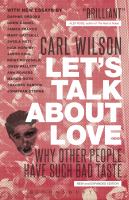
Let's Talk About Love: Why Other People Have Such Bad Taste by Carl Wilson
Céline Dion. Some love her, some hate her. Globe and Mail music critic Wilson used his own dislike of Dion for a look at personal preferences. How much of our preferences are determined by social factors? The New York Times review said that this book could make you more tolerant of other people's musical taste. I should definitely read it.
The Song Machine: Inside the Hit Factory by John Seabrook
• Audiobook
• eBook
• Talking Book (restricted to Print Disabled patrons)
Hit songs are no longer the creation of a person with something to say but are often written by teams of songwriters capitalizing on neurological, cognitive and psychological research into the human response to music. In this entertaining book, Seabrook explores the collaboration of commerce, creativity, technology and science in popular music.
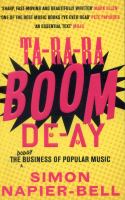
Ta-Ra-Ra-Boom-De-Ay: The Dodgy Business of Popular Music by Simon Napier-Bell
Napier-Bell shines a light on the sometimes sketchy music industry from the advent of copyright in 1713 to the present.
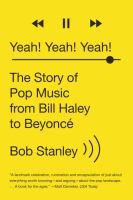
Yeah! Yeah! Yeah!: The Story of Pop Music from Bill Haley to Beyonce by Bob Stanley
Stanley traces the popularity of different types of music (rock, folk, disco, grunge, new wave) from the 1950s on. Why have different eras embraced such different sounds?
Comments