A toy story
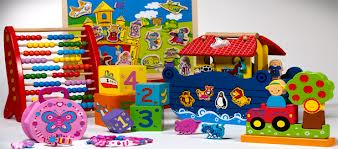
Toys have been around for thousands of years but did not become "big business" until the early 1800s when advances in transportation–mainly trains– allowed for the wider distribution. The industrial revolution that followed led to the mass production of toys making them more affordable. Increased accessiblilty was ccompanied by changes in the products themselves. Early toys such as horses, soldiers, wagons and other simple toys were usually made of wood, tin or cast iron. Later innovations in materials, like sawdust-based composition for dolls' heads and lithographed paper on wood to simulate domestic interiors or hand painted scenes on play sets, added variety and rapid change to this growing industry.
The 20th century introduced many new and exciting products: Plasticine was first made commercially in 1900, Meccano was invented by John Hornby in 1901, train sets became very popular in the 1920s and Lego was introduced in the 1950s. Mr. Potato Head appeared in 1952 and the skateboard was invented in 1958. One of the most famous toys of the 20th century, the Barbie doll, was introduced at the 1959 Toy Fair in New York City. With inventions in circuitry and miniaturization in the early 1980's the video game market exploded with Nintendo leading the pack. According to a Euromonitor report (report available through Research Monitor database ) the traditional toy and games industry, currently valued at $1.8 billion (Canadian Toy Industry Association) in Canada, will continue to grow at 1% per year despite an ageing population while video game sales will reach an estimated $3 billion by 2016!
Are you an inventor looking for more information on the toy industry and it's competitors or are you someone who is simply interested in reading about the cut-throat world of toys? Take a look at what the library has to offer:



Comments