TPL Meets LHC
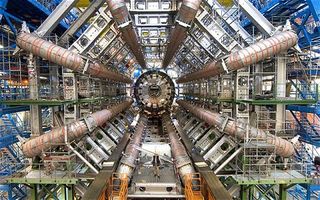 Everyone is curious about how the universe came to be. But, we often leave it up to scientists to figure it all out. Was it God? Was it the Big Bang? Or was it some other unknown fantastical power we have yet to theorize about and/or discover? Learning and uncovering our roots is overall, complex, confusing, frustrating, exciting and extraordinary.
Physicists today have made a giant leap forward with the development of the Large Hadron Collider or LHC. What, may you ask, is the LHC? Well truthfully I had a little trouble understanding it myself, but I found a tonne of resources that cleared the air.
The LHC is a giant accelerator, sitting beneath the ground between France and Switzerland. It is intended to push beams of ion and proton particles at the speed of light (or close there to it). When the beams collide it’s supposed to help scientists learn more about the universe and from what it’s made. The Standard Model is one such theory that the LHC is made to test. Some experiments have already answered a few questions, but there’s still a lot that they’re trying to answer.
For instance, a theoretical particle known as the Higgs Boson Particle has yet to be proven. The Higgs Boson is supposed to reveal information about mass. Why does it matter that matter has mass, and why does it matter that some matter does have mass while it seems that others don’t matter? 
Do you know the answer? If so, then send your answer to the following address:
European Organization for Nuclear Research
CERN CH-1211
Genève 23
Switzerland
Just for clarification purposes, this is NOT my contact info. The LHC is part of a project maintained by an organization known as CERN, The European Organization for Nuclear Research. Thousands of scientists from hundreds of countries contribute to the LHC project, and do so in the hopes of finding answers.
The Science and Technology Department at the North York Central Library has some strong resources that may peak your interest about this topic.
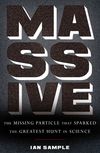
Science journalist, Ian Sample, and his book, Massive : The Missing Particle that Sparked the Greatest Hunt in Science has provided an introduction to the history of particle physics with emphasis on the search for the Higgs Boson particle. Know the drama behind it all with tales about costly lab accidents, crazy ballyhoo, sabotage, and the fear of the destruction of the earth. *shiver*
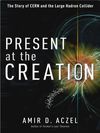
Present at the Creation: The Story of CERN and the Large Hadron Collider by Amir D. Aczel is an engaging title written by one of the world’s most inspired mathematician and science author. Is Higgs Boson on the brink of discovery? Will we at last be able to know the nature of dark matter? Can scientists re-create the birth of the universe? Learn about the development and progress of accelerator technology as Aczel guides you through the fascinating world of particle physics.
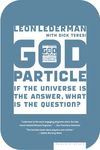 Nobel Prize winner Leon Lederman uses sassy humour to propose the construction of the Superconducting Super Collider in his book, The God Particle: if the universe is the answer then what is the question? This laureate in physics notes that, if constructed, the Superconducting Super Collider would be the fastest particle accelerator in the world. His goal is to find the Higgs Boson, which he’s dubbed the “God Particle.” Beginning with an imaginative conversation with Greek philosopher Democritus, moving into the playful beleaguering of other theorists (apparen'tly Galilelo could be a pain in the butt), and diving into the varying facets of particle physics, Lederman knows how to turn a complicated subject into a magnetic read.
Also checkout the How Stuff Works Website for a more in-depth look at how the LHC works.
The LHC has certainly been an accelerator in more than one capacity. Perhaps soon we'll know more about the universe and its existence. In the meantime, we'll read more, wonder less, and enjoy the power behind particle physics.
Comments