Learn more about the scientists in “The Imitation Game” and “The Theory of Everything”
Holiday movie releases usually range from action-packed to family-friendly. Two of the movies I saw over this holiday season didn't fit into the usual categories; instead, they're based on the lives of two of the twentieth century's most intriguing scientists.
The Imitation Game tells the story of the British intelligence officers who cracked the German Enigma machine code during the Second World War. It focuses on the contribution of mathematician Alan Turing - in particular the machine he developed to decrypt the coded German messages. According to a BBC web page published to mark the recent centenary of Turing's birth, historians estimate the codebreakers' achievements shortened the war in Europe by two to four years and saved millions of lives.
In the movie, Turing uses a crossword challenge to recruit staff for the Enigma project. The reality was somewhat different, but crossword puzzles did play a part in the recruitment of wartime codebreakers. Try your hand at the original puzzle from January, 1942; if you can solve it in fewer than 12 minutes, you might have been a candidate.
 By Antoine Taveneaux (Own work) [CC BY-SA 3.0], via Wikimedia Commons

The efforts to break enemy codes remained secret for decades after the War, but the information has been declassified in recent years and Bletchley Park, site of the codebreaking work, has been opened to visitors who can see a recontruction of the decryption machine built under Turing's direction.
Alan Turing's other claim to fame is that he is considered to be one of the fathers of computing and artifical intelligence. In fact, the name of the movie, The Imitation Game, comes from his famous 1950 paper Computing Machinery and Intelligence (PDF). Turing proposed the game as a test to determine whether machines could think. The Turing Test is still used as one measure of artificial intelligence.
The Theory of Everything is based on the memoir Travelling to Infinity: my life with Stephen by Jane Hawking, and tells the story of her marriage to renowned cosmologist Stephen Hawking. It depicts the period from Hawking's arrival at Cambridge as a graduate physics student in 1962 until their divorce in 1995.
The film focuses more on Hawking's personal life than his work, but there are several scenes in which he discusses his theories about singularities and black holes. There was a physics advisor on set to ensure that the explanations, while simplified for the benefit of the audience, were also accurate. If, like me, you're a bit intimidated by Hawking's ideas, check out this video from The Guardian's Made Simple series. It's Stephen Hawking's big idea in 150 seconds:
The film depicts the early symptoms of Hawking's illness and his diagnosis with ALS, a motor-neuron disease, at the age of 21. Voice and movement coaches worked with Eddie Redmayne to ensure that his portrayal of Hawking as the illness progressed was as realistic as possible. There's a fascinating video in the movie's website that describes how he prepared for the role.
If you're interested in learning more about the lives of these two remarkable scientists – whether you've seen the movies or not – why not have a look at any of these books, available at many Toronto Public Library branches:
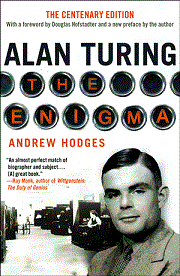 |
 |
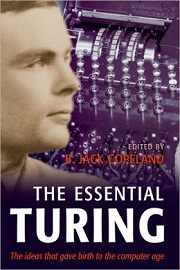 |
| book, eBook | book, eAudiobook |
 |
 |
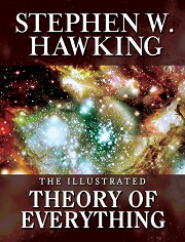 |
| book, eBook | book, audiobook, talking book, eBook, eAudiobook |
One thought on “Learn more about the scientists in “The Imitation Game” and “The Theory of Everything””
Just saw the movie – delighted to see your followup! Thanks.