Science in History
Science in History is a new lecture series presented by Toronto Public library in partnership with University of Toronto Science Engagement and the Institute for the History and Philosophy of Science and Technology.
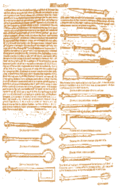
From a Latin translation of El Zahrawi's treatise on surgical and medical instruments.
|
Medical Practice in the Medieval Islamic World October 8, 6:30 pm, North York Central Library The series begins in the 8th and 9th centuries, when Europe was locked in the Dr. Hehmeyer is a professor in the history of science and technology and an agricultural engineer specializing in human-environmental relationships in the arid regions of |
 |
Isaac Newton and the Creation of Modern Science Oct. 16, 6:30 pm Danforth Coxwell Branch In the second lecture, we step ahead several centuries, to Isaac Newton, probably one of the most important scientists in history.This is apparen't in some of the titles in Toronto Public Library's collections: Isaac Newton : organizing the universe Isaac Newton : the scientist who changed everything Isaac Newton : groundbreaking physicist and mathematician Newton's gift : how Sir Isaac Newton unlocked the system of the world This |
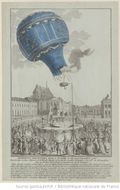 |
Ballooning in the Enlightenment and the French Revolution, Nov 6, 6:30 pm, Runnymede A few years before the French Revolution, Ballooning, the "sublime invention," was both a mass cultural phenomenon and an important symbol of scientific progress. In 1783, when the Montgolfier brothers invented the hot-air balloon, the discovery shocked France, according to author Michael Lynn (Popular Science and Public Opinion in Eighteenth-Century France). Humans had defied gravity and it was not long before the ballooning craze swept Europe. |
 |
The History of Autism Nov 13, First identified in 1943, autism–once little known and rare–is now
considered epidemic in some countries. What happened? Professor Marga Vicedo looks at the major figures in autism's history and changing views on the role of mother love and biological and environmental factors in shaping a child's mental and emotional development.
|
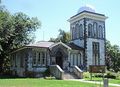 |
Science in History wraps up at North York Central Library on Dec. 4, 6:30 pm. with a presentation on Toronto's Astronomical Heritage Dr. John Percy, a well-known and popular speaker on astronomy, will talk about Toronto's rich astronomical heritage from the 1830s until today as well as astronomy's impact on society and culture. |
Comments