Urban-Based Vertical Farming
A key component of urban sustainability is growing food locally, efficiently and in an environmentally sound manner.
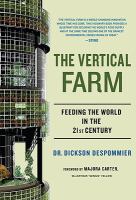
Vertical farming, championed by Dr. Dickson Despommier, is a fascinating concept that builds on existing hydroponic farming. In The Vertical Farm: Feeding the World in the 21st Century, Despommier outlines the advantages of stacking crops in an artificially controlled environment, thereby allowing farmland to revert to its natural state.
Crops grown indoors are not affected by weather, and instead, thrive in an optimal growing environment. Indoor farming does not rely on pesticides, herbicides or fertilizers and does not produce agricultural run-off. Many of the farming activities that require fossil fuels are eliminated, such as plowing, harvesting and transporting food from rural areas to cities. Vertical farms would likely use 70-95 percent less water, and in some cases, could purify grey water.
Despommier envisions a time when land depleted by traditional farming returns to its natural state. He suggests that these forests will consume large amounts of carbon dioxide and help cool the planet.
As for what a vertical farm might look like, take a look at these futuristic designs, which the author admits are more fun and experimental than actual plans.
In The State of the World's Land and Water Resources, 2011, The Food and Agriculture Organization of the United Nations predicts that by 2050, food production will need to increase by about 70 percent globally and nearly 100 percent in developing countries. This will be a huge challenege given that one quarter of agricultural land is highly depleted.
Let's hope that urban-based vertical farming can become a truly viable alternative.
The Vertical Farm is at the Toronto Reference Library, in the Business, Science and Technology Department, as well as at some branch libraries.
8 thoughts on “Urban-Based Vertical Farming”
Thanks for the very interesting post. I wonder how food grown this way compares nutritionally with food grown on a ‘factory’ farm…
Thanks for the very interesting post. I wonder how food grown this way compares nutritionally with food grown on a ‘factory’ farm…
Good question. Since fresh food is healthier than food that travels for thousands of miles this would be a key advantage of growing food within a city. Also, the author discusses how hydroponic growers have made great strides in producing better tasting food, not just food that looks good. He cites Canada as one of the countries involved in successful high-tech green house farming. I think it’s fantastic to be able to buy Canadian grown red peppers for most of the year, and they taste good too!
Good question. Since fresh food is healthier than food that travels for thousands of miles this would be a key advantage of growing food within a city. Also, the author discusses how hydroponic growers have made great strides in producing better tasting food, not just food that looks good. He cites Canada as one of the countries involved in successful high-tech green house farming. I think it’s fantastic to be able to buy Canadian grown red peppers for most of the year, and they taste good too!
Vertical Farms Are A Great Idea, Very Expensive To Get Operational, Corporations will get Involved, When the Available Tecnology Is Proven
Vertical Farms Are A Great Idea, Very Expensive To Get Operational, Corporations will get Involved, When the Available Tecnology Is Proven
Thanks for your comment. I was thinking the same thing when reading the book, that food production could become very concentrated in the hands of a few.
Thanks for your comment. I was thinking the same thing when reading the book, that food production could become very concentrated in the hands of a few.