The Edible Series: Addictive Bite-Sized Books

January 30, 2014 | Gillian | Comments (2)


   Burger.aspx 


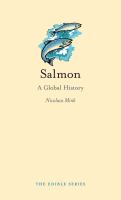
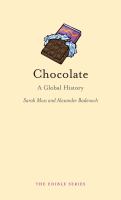
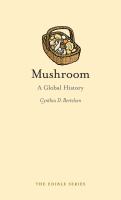
The books in The Edible Series may be diminutive, but each is the fascinating global history of one particular food or drink. These entertaining cultural snapshots are great reads. They draw extensively on art, literature, and historical and modern cookbooks, and they even include recipes!



  Pancake.aspx

 I love the enthusiasm of the different authors; for example, Ken Albala, in Pancake: a Global History, writes from experience: "Having spent roughly half a decade in graduate school, patiently making a pancake every single morning without exception, I can offer some hard-won'tips." Albala, a Professor of History and author of many books about food, describes how different versions of pancakes evolved in different cultures, from the Ethiopian injera: "the largest and most versatile pancake on earth" to the South Indian dosa, which is also huge, can be wrapped around food, or used to scoop small portions.


The-pancake-baker_jpg!BlogSmall

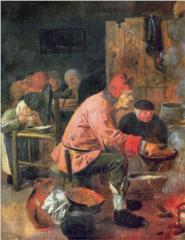
Adriaen Brouwer, The Pancake Baker, mid-1620s. WikiPaintings.org


Worldwide pancakes have provided sustenance for the working classes. William Ellis in the Country Housewife's Family Companion (1750) writes that "Pancakes are one of the cheapest and more serviceable dishes of a farmer's family in particular; because all the ingredients of the common ones are of his own produce, are ready at hand upon all occasions, saves firing, are soon cook'd  are conveniently portable, and supply both meat and bread…" Albala explains that the milk and eggs replaced meat for poor families. 


   Index.aspx

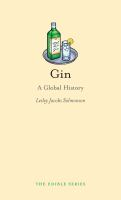
In Gin: A Global History, the description of the Gin Craze in 18th century London is both fascinating and horrifying.  Gin was cheap and readily available, but low quality (cut with turpentine or sulphuric acid) and very potent (160 proof, as opposed to today's average of 80).  In the year 1733, with a population of 600 000, London produced 11 million gallons of gin. It was not until the mid 18th century that gin consumption decreased; however, this was due more to lower wages and the increased popularity of rum than to the final Gin Act of 1751! 


 You can find these books in the Business, Science and Technology Department at the Toronto Reference Library, as well as in some branch libraries.
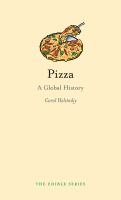
 

 Pizza.aspxChoc.aspx Mushroom Salmon.aspx


Comments

2 thoughts on “The Edible Series: Addictive Bite-Sized Books

Leave a Reply to rarecat Cancel Reply

Your email address will not be published. Required fields are marked *

The Edible Series: Addictive Bite-Sized Books

January 30, 2014 | Nina | Comments (2)


   Burger.aspx 


The books in The Edible Series may be diminutive, but each is the fascinating global history of one particular food or drink. These entertaining cultural snapshots are great reads. They draw extensively on art, literature, and historical and modern cookbooks, and they even include recipes!


  Pancake.aspx

 I love the enthusiasm of the different authors; for example, Ken Albala, in Pancake: a Global History, writes from experience: "Having spent roughly half a decade in graduate school, patiently making a pancake every single morning without exception, I can offer some hard-won'tips." Albala, a Professor of History and author of many books about food, describes how different versions of pancakes evolved in different cultures, from the Ethiopian injera: "the largest and most versatile pancake on earth" to the South Indian dosa, which is also huge, can be wrapped around food, or used to scoop small portions.


The-pancake-baker_jpg!BlogSmall

Adriaen Brouwer, The Pancake Baker, mid-1620s. WikiPaintings.org


Worldwide pancakes have provided sustenance for the working classes. William Ellis in the Country Housewife's Family Companion (1750) writes that "Pancakes are one of the cheapest and more serviceable dishes of a farmer's family in particular; because all the ingredients of the common ones are of his own produce, are ready at hand upon all occasions, saves firing, are soon cook'd  are conveniently portable, and supply both meat and bread…" Albala explains that the milk and eggs replaced meat for poor families. 


   Index.aspx

In Gin: A Global History, the description of the Gin Craze in 18th century London is both fascinating and horrifying.  Gin was cheap and readily available, but low quality (cut with turpentine or sulphuric acid) and very potent (160 proof, as opposed to today's average of 80).  In the year 1733, with a population of 600 000, London produced 11 million gallons of gin. It was not until the mid 18th century that gin consumption decreased; however, this was due more to lower wages and the increased popularity of rum than to the final Gin Act of 1751! 


 You can find these books in the Business, Science and Technology Department at the Toronto Reference Library, as well as in some branch libraries.
 

 Pizza.aspxChoc.aspx Mushroom Salmon.aspx


Comments

2 thoughts on “The Edible Series: Addictive Bite-Sized Books

Leave a Comment

Your email address will not be published. Required fields are marked *