D-Day: Canadians at Juno Beach, June 6, 1944
Seventy years ago today, the largest sea borne invasion in history took place on the beaches of Normandy, as the Allied forces fought to take Europe from the Nazi forces of Adolf Hitler.
While the armies of many nations stormed that coast, the Canadians landed at the area code-named Juno Beach. By the end of June 6, they had established their beachhead in what is arguably the most successful effort of the landing armies on that bloody day.
By August 21 the Allies had defeated the German army in Normandy. German casualties numbered over 380,000. The Allies suffered 206,000 casualties. Of those, 18,444 were Canadians.
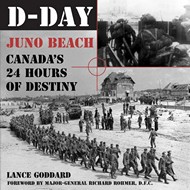
D-Day Juno Beach: Canada's 24 hours of destiny
Lance Goddard
An hour by hour account of the battle, in the words of men who fought there. Over 300 illustrations.
Juno Beach: Canada's D-Day victory, June 6, 1944
Mark Zuehlke
First in a trilogy by historian Zuehlke. An account of D-Day at Juno Beach, based on first hand accounts, military records and personal diaries.
 Holding Juno: Canada's heroic defence of the D-Day beaches, June 7-12, 1944
Mark Zuehlke
D-Day ended with the Canadians six miles inland. Counterattacks began at dawn on June 7. The next six days were bloodier than the first, but the Canadians held and advanced.
 Breakout from Juno: First Canadian army and the Normandy campaign, July 4 to August 21, 1944
Mark Zuehlke
The weeks of battle that drove German forces out of Normandy and opened the way to the liberation of Europe.
Comments