Remembering Richard Wagamese
I remember seeing Richard Wagamese speak. He spoke about how libraries change lives. About how when he was experiencing homelessness, the local library was his refuge. How the librarian took him to see an opera. Many tears were shed while he spoke – not by him, but by the people in the room. Happy, sad, confused, frustrated, empathetic – there was a whole range of emotion in the room, and he spoke to them all.

I think often about the concept of reconciliation, and how many of our public institutions, including libraries, are part and parcel of colonial ideologies. I think often about how the value and importance of oral histories are trumped by the perceived privilege and precedence of the written word. And how indigenous knowledge and epistemologies are often left out of our public discourses. Is reconciliation truly achievable when we continue to live, work, play and learn in the very social structures and institutions founded within colonial systems?
Richard gave me hope that day. I still don't know what reconciliation looks like, exactly, but watching Richard speak gave me a glimpse into what it could be. Reconciliation starts with relationship building. And getting to know someone means trying to understand "where they're coming from" – what they think, how they think, and why they think that. I will never hear Richard speak again, but perhaps you can come to know a little bit of that person, and the gift he had for connecting with people, through his written work.
Perhaps your road to reconciliation will start here.


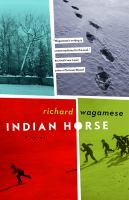


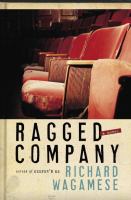

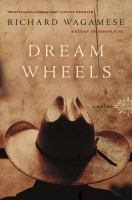
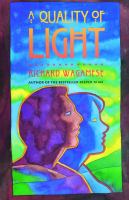
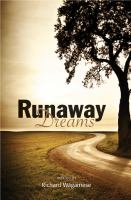
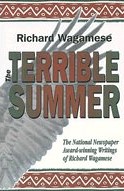
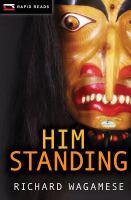

Rest in peace, Richard. You will be dearly missed.
12 thoughts on “Remembering Richard Wagamese”
Libraries are not “part and parcel of colonial ideologies,” and it is not the Toronto Public Library’s job to promote “reconciliation.”
*If* Library patrons need a “road to reconciliation,” it is up to them to decide to follow that road. It is not the Library’s role to propagandize.
You’re already facing one human-rights complaint. Go for a twofer?
Libraries are not “part and parcel of colonial ideologies,” and it is not the Toronto Public Library’s job to promote “reconciliation.”
*If* Library patrons need a “road to reconciliation,” it is up to them to decide to follow that road. It is not the Library’s role to propagandize.
You’re already facing one human-rights complaint. Go for a twofer?
Rest in peace, Richard Wagamese. Thank you for the moment of pausing and honouring this amazing man, who lived his life with truth and courage and left us with his profoud, soul-searching, moving books.
Rest in peace, Richard Wagamese. Thank you for the moment of pausing and honouring this amazing man, who lived his life with truth and courage and left us with his profoud, soul-searching, moving books.
A beautiful tribute – and an excellent reminder of the responsibility libraries, all public institutions, and all individuals have in working toward reconciliation. I also had the privilege of hearing Richard Wagamese speak, and was fortunate to meet him and exchange a few words – his good nature and humour despite his difficult journey were truly inspiring. I hope everyone will take the time to read his works.
A beautiful tribute – and an excellent reminder of the responsibility libraries, all public institutions, and all individuals have in working toward reconciliation. I also had the privilege of hearing Richard Wagamese speak, and was fortunate to meet him and exchange a few words – his good nature and humour despite his difficult journey were truly inspiring. I hope everyone will take the time to read his works.
Richard had a great struggle. His first book, Keeper ‘n Me, is, I think, the greatest stop on his journey. That story, I believe, allowed him to begin the reconciliation of some of his anger, his demons. Keeper ‘n Me reflects Richard’s own journey of self-discovery and healing. It’s very spiritual and very powerful. He has described himself as a victim (not a survivor) of residential schools, because of intergenerational suffering. As he has said many times, we are all our own stories. He had many thoughts on reconciliation. From his words, I glean that reconciliation starts within each of us, and extends throughout our institutions. Thanks, Melanie for this beautiful post.
Richard had a great struggle. His first book, Keeper ‘n Me, is, I think, the greatest stop on his journey. That story, I believe, allowed him to begin the reconciliation of some of his anger, his demons. Keeper ‘n Me reflects Richard’s own journey of self-discovery and healing. It’s very spiritual and very powerful. He has described himself as a victim (not a survivor) of residential schools, because of intergenerational suffering. As he has said many times, we are all our own stories. He had many thoughts on reconciliation. From his words, I glean that reconciliation starts within each of us, and extends throughout our institutions. Thanks, Melanie for this beautiful post.
As a partner in the work for change, a man who is living with the pain and residue of a colonized existence in his own land and rising above it, has said to me, a settler / ally, paraphrasing:
“We just want the recognition of being, being part of the greater aspect of what is Canada; respect, fairness, a share. This means resurgence of language, ways to thrive, acknowledgement of traditional territory. Not taking anything away from ‘Us’ the dominant society, but adding to history what has been omitted and suppressed, alongside us. There is such joy and sorrow in the story-telling that Richard was a part of and shared with us.
As a partner in the work for change, a man who is living with the pain and residue of a colonized existence in his own land and rising above it, has said to me, a settler / ally, paraphrasing:
“We just want the recognition of being, being part of the greater aspect of what is Canada; respect, fairness, a share. This means resurgence of language, ways to thrive, acknowledgement of traditional territory. Not taking anything away from ‘Us’ the dominant society, but adding to history what has been omitted and suppressed, alongside us. There is such joy and sorrow in the story-telling that Richard was a part of and shared with us.
This is a lovely blog post honouring the kind and generous spirit of Richard Wagamese. I had the privilege of hearing Richard speak last year. His story brought me to tears and I shared about that experience with many people I met. His story of perseverance and courage was an inspiration, and I am forever grateful that I got the chance to hear him speak. Thank you Melanie for sharing this and thank you Richard for giving us your wisdom during your time with us.
This is a lovely blog post honouring the kind and generous spirit of Richard Wagamese. I had the privilege of hearing Richard speak last year. His story brought me to tears and I shared about that experience with many people I met. His story of perseverance and courage was an inspiration, and I am forever grateful that I got the chance to hear him speak. Thank you Melanie for sharing this and thank you Richard for giving us your wisdom during your time with us.