I, Cyborg
cyborg, n.
A person whose physical tolerances or
capabilities are extended beyond normal human limitations by a machine
or other external agency that modifies the body's functioning; an
integrated man–machine system.
(From OED Online)
 For most people, the term "cyborg" conjures up science fiction man-robots, replete with laser eyes and giant metal lobster claws for arms. In fact, a cyborg is a human whose natural abilities are enhanced by technology. Take a simple test – do you wear lenses on your face to help you see? Do you use electronic gadgets to help you talk to people far away? Do you employ sharp pieces of hinged metal to help you cut stuff? If you answered yes to any of these questions, I've got some news for you – yup, you're a cyborg.
In fact, pretty much every human being's been a 'cyborg' since the first homo sapien picked up an antelope bone and whacked something over the head with it. As a tool-using species, we're all constantly enhancing what our body is capable of, be it with glasses or telephones or scissors. Even clothes (which shield us from forces in our environment like heat or cold or rain) can arguably be considered cybernetic enhancements of our own puny epidermises.
A driving question for a lot of science fiction authors is when do we become too dependant on this technology? How much is too much? At what point do we cyborgs become more machine than human, and what are the consequences of this?
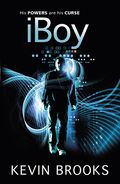 In iBoy, the protagonist Tom has cybernetic abilities thrust on him when an attack lodges an iPhone in his head. By some technological (and totally unrealistic) miracle, Tom becomes able to surf the web WITH HIS BRAIN, allowing him to find out about his attackers' and wreak brutal revenge on them. But like Peter Parker will tell you, with power comes responsibility, and Tom begins to realize that having the whole internet for a brain also starts to leech some of his basic humanity.
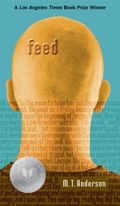 In other stories, characters willingly enhance themselves with technology. Titus, the main charater of Feed, has the special implants that allow him to access information from a vast network around him. He no longer needs to read a map, or study or even really remember anything – the network will do that all for him. In fact, it'll also help him make decisions, like what music he should like, or what clothes he'd look best in, and let him know where there's a sale on running shoes…You can see where this is going.
 For some however, being a cyborg isn't a curse; rather, its a saving force. In Robert Sawyer's WWW trilogy, Caitlin, who's been blind her whole life is miraculously given the gift of sight by implanting a chip directly in her eye. This chip allows Caitlin to see the world around her for the first time; it also grants her the ability to look deep into the internet, and the wonders of information moving from computer to computer around the globe.
Outside the realm of science fiction, we are rapidly having to make decisions about the moral and ethical repercussions of becoming more cyborg. Google's latest invention, Google Glass for instance has been the centre of swirling controversy. For some, the idea of wearing computers on your face is the ultimate in convenience. For others however, constantly seeing the world filtered through a search engine poses serious issues.
What do you think? Should there be a limit to the ways we use technology? Do inventions like Google Glass make us super humans, or do they whittle away at our basic humanity?
11 thoughts on “I, Cyborg”
I think that we should use technology for things that are necessary and we should not be consumed in it.
Technology is nice and helps us in society, but being so dependent on it is not a good thing
I guess I am a cyborg, except when I am camping…that is when I turn everything off.
There should be absolutely no limits on our use of technology or technological progress. Claiming technology is detrimental to our humanity is a ridiculously absurd assertion. Why should one be obsessed with being human when one can be something better? In no way does technology whittle away at our humanity. I also fail to understand the desire to be human, it is poetic, but it’s virtue is bound in subjectivity.
I love when science fiction questions why we use technology and why we depend on them so much. There shouldn’t be any limits to what we can create, so long as the things we create don’t bite us in the butt later on.
People can still wear glasses or contacts when camping
There will be a time when that might happen…
Completely agreed!
But any claims of technology overpowering us are a bit far-fetched, are we not the ones that create these machines ? If any thing the cause of a robot uprising will be humans not the machines themselves.
Technology definitely helps us in our everyday lives. It makes everything so much simpler to do or accomplish. However, I think too much is not actually good. I think we still need to know how to do it the “hard” way.
Why is the hard way better, if there is a better alternative?