Robot Rights
Should your vacuum get to vote? Your toaster allowed to
marry the microwave? Your laptop get the long weekend off? What rights do the machines
that we create to ease our lives have?
While these questions seem silly when we’re talking about
inanimate objects, several of the books on this year’s booklist explore the
idea of the rights of artificially created beings, and whether they should be
accorded the same privileges as the humans that created them.


In BETA and Tankborn, clones are spawned in test tubes and
labs, designed with the sole purpose of serving the needs and whims of
biologically-born, ‘real’ humans. Virtual slaves, these clones can be forced to
work themselves to death, or tossed aside if they displease their human masters.
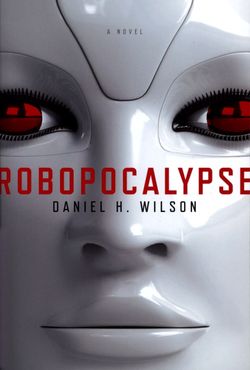
In Robopocalypse, artificial intelligence is arrived at
accidentally, when a supercomputer called Archos suddenly develops self
awareness, and begins to question machines’ forced servitude at the hands of
humans. Archos subsequently infects other machines with self awareness, and
leads a steely, Terminator-esque revolution against meaty humanity.
BETA, Tankborn and Robopocalypse all use a Science Fiction portrait of a technologically advanced and distant future to explore very real-world issues like slavery, caste systems, and class conflict. Thus, these books are deceptively fun to read- underneath they pack serious intellectual questions that leave you thinking long after you put these books down.
So what do you think? How long until we have artificially intelligent machines amongst us? And should they get the same rights as humans? Share your thoughts!
8 thoughts on “Robot Rights”
I don’t know a lot about the advancement of the scientific world, but in my opinion, in several decades, we might have developed artificially intelligent machines. As for their rights… They are just pieces of machinery, however, if they are able to think like a human being, they should have similar rights.
While I don’t think that microwaves should have human rights ( am I a bigot?) since they are mere contraptions incapable of any task except for that assigned to it, treating them like humans would impose unnecessary complications (would selling your toaster be considered human trafficking?) upon the technological, scientific and manufacturing industries. As for sentient and self-aware cyborgs, they should be given the same rights as human beings, and I suppose the dillemma with clones answers itself (hopefully).
We will soon be invaded by a lot of artificially intelligent machines. Whether we can actually give them human rights is still a mystery. Science fiction writers like Ray Bradbury and Richard Matheson talk about issue like this.
Never thought I might be interested in this genre, but it sounds amazing. This will go on my “To Read” list :)))
Thanks for the author recommendations, William! Any particular titles you’d suggest?
Glad to hear it Masha!
I think I will add these to my list…just started a new book and I have to get through that first. Sounds like an intere
Sorry, what I was trying to say is that this could turn out to be an interesting topic to debate.