Q and A with Susan Juby
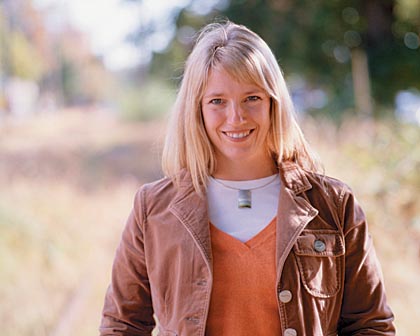 What's it like to be a young teen and heading towards addiction? Or a twenty-year-old with a full-blown case of alcoholism? Award-winning writer Susan Juby's new memoir Nice Recovery tells of her experiences as a young "drinky-pants" and what recovery was like for her. Susan's talent is that, while she makes us understand and empathize with what she went through, she also makes it…well… funny . Can an addiction memoir also be a fun read? Here's Susan Juby to talk to us about Nice Recovery.
Most of the personal part of Nice Recovery takes place twenty years ago, and you admit to being blacked out for most of that period. How did you go about reconstructing this time of your life?
Susan: I chose to write about the times that I actually remembered. For every semi-clear memory I have of my drinking days, there were many more experiences that I can recall only hazily. I told the stories in roughly chronological order and divided the book into sections: i.e. why I drank, what it did for me, what it took away from me, why I decided to get sober and what my first years of recovery were like. My goal in selecting memories to write about was to answer those basic questions.
Why did you want to tell this story?
Susan: My agent asked if I had any ideas for a non-fiction book and I told her I thought one about the lighter side of young people in recovery might be good. She sold the idea and then the book slowly became more about me than anyone else. If it had started out as my personal story, I would have been too afraid to write it. I'd always been very, very private about my history with substance abuse. It took a long time to get used to the idea that I was going to make it public.
Did you ever think when you were writing, "Geez, what if my (mom, dad, best friend, etc.) reads this part? Were there things you didn't put in because you were too embarrassed? 
Susan: Fearful thoughts went through my head constantly and I had to beat them back and put them in a little box and pretend no one would ever read the book. I tried not to leave things out because of what other people might think, but I also wanted to avoid writing a book that was really explicit for no reason other than to shock or titillate people. If a story illustrated a point, I told it. If it added nothing but a sense of "Oh gross! That poor girl!" I left it out.
A lot of people have commented on the humour in this book, and how unexpected it is to find that in an addiction memoir. I think it's one of the strengths of Nice Recovery; it makes a difficult story very readable. How did you come to find this perspective about what you've been through?
Susan: People in recovery, especially people who achieve long term sobriety, tend to develop an ability to put substance abuse in perspective and part of that means developing an ability to laugh at yourself. If you can stop taking yourself and every single one of your problems so very seriously, life becomes much more manageable. That doesn't mean that I think there's anything funny about the destructiveness of addiction, but getting a sense of humour about some of the absurdity and tragedy that accompany this particular disease helps immensely.
A lot surprised me about your story. My expectation was that once you stopped drinking, your life would get a lot better, but in a way it seemed like the hardest struggles came after you sobered up. Can you say something about that?
Susan: That part of recovery surprised me, too! I half expected that I would quit drinking and doing drugs and be instantly transformed into this cheerful paragon of efficiency and good manners. Instead, I was confronted with one of the reasons that I drank and did drugs in the first place: I had a few adjustment issues and was not terribly comfortable with reality. Once I accepted that I had some work to do and would need help if I was going to learn to live without the escape offered by substances things got better fast. Underneath my drinking problem was a fairly pronounced living problem. Fortunately, without booze, I had the opportunity to get genuinely better as opposed to escaping through chemical means and waking up to find that life got worse while I was on my little alcohol fuelled holiday. It isn't always that it gets harder after a person gets clean and sober: sometimes it gets better quickly. The challenge is that it gets very real.
What was the best part about writing this book? How have people responded to it?
Susan: One of the best parts about writing this book was seeing how far I've come as a result of getting into recovery and staying in. It's been 22 years since I've had a drink and my life is richer and more interesting and rewarding than I'd ever imagined possible. The best part of publishing the book has been the feedback from people who are considering recovery, people who are already in recovery and those affected by addiction in friends and family members. It's a hell of a thing to get beaten up by an addiction and it's particularly brutal on families and friends. If Nice Recovery makes any part of the process of addiction or recovery understandable or is useful to anyone, than the work was absolutely worth it. My belief is that there's a nice recovery waiting out there for anyone who wants it. I would be honoured if my book was even a small part of someone's journey.
Thanks for dropping by, Susan! Readers, let us know any thoughts you have about Nice Recovery or Susan's interview.
8 thoughts on “Q and A with Susan Juby”
Wow! I’m so happy that Susan stopped drinking and wrote a book to share her experiences with alcohol!
This is such a great book. I love that she not only told her story, but also talks about the resources, what the process was like, and gives some really strong insights for any young people who may be thinking they need some help. She’s very open about the pros and cons, and very real. Add to that the fact that she’s funny, never preachy, and it’s a great read as well as a good introduction to what it’s like.
I absolutely agree and Susan Juby sounds like a very good author. Looking forward to reading this book.
I think it’s really cool that Susan is sharing her experiences with teens. I think it very much helps teens take in perspective the bad things can happen due to alcohol consumption and someone who can very well relate to alcoholics shows that there is a better path. Looking forward to reading this soon! Sounds really wonderful!
amzaing story:)
wow that’s really cool, and susan choose the right thing to do
My 16 yr. old son (who is in recovery) and I read this book together (aloud) and we just loved it. So much of it rang true for him.
Thank you Susan Juby.
i love this book im in the middle of it right now and its amazing!!
Comments are closed.