Week Fifteen
Welcome back to Three Things, faithful reader. This week's fictional
leads: "Conversion," "Shell" and "Leave Me."
Conversion
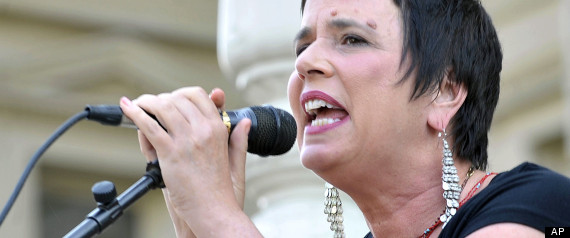
This week I had the great pleasure of meeting
playwright/author/activist Eve Ensler, and hearing her speak about her stunning
new memoir, In the Body of the World. The book is a raw, insightful, deeply moving account of Ensler's recent experience with uterine cancer, as well as her advocacy
work for the victims of violence against women in Congo. Ensler writes (and
speaks) with remarkable candour and clarity about what she calls her
"cancer conversion." While she wouldn't wish it on
her worst enemy, her recent ordeal has resulted in a profound new approach to life.
The book and its author got me thinking (and feeling!)
deeply in several directions, one of which led to an idea for a short story. In
my own work, I've long been interested in the "up side" of injury,
particularly the manner in which can shed new light on other conflicts and concerns. Ensler's cancer
conversion made me consider the propensity of illness to do the same.
I began
to conceive of a character who has always been "the capable one" in the family; I saw
him laid low, weakened to the point of dependency on his
"dependents." Then I began to imagine the ways in which those
dependents (wife? kids? feckless little brother?) might grow into the space he
leaves vacant through his illness. I gave some thought to my patient's conversion too.
(Maybe the story is even told from his bedridden point of view.) How does
the evolution of his formerly helpless loved ones affect him? Is he frightened
for (or of) them? Does even a small part of him come to appreciate the new status quo?
A side note: often when I meet
with developing/emerging writers, we end up discussing the topic of fear. Writing about the human
condition requires that we venture into dark corners, that we write through
pain, rather than around it. It can be terrifying to take that journey, and
just as scary to share one's findings with the world. In both cases, one could
scarcely hope for a more inspiring role model than Eve Ensler.
Shell
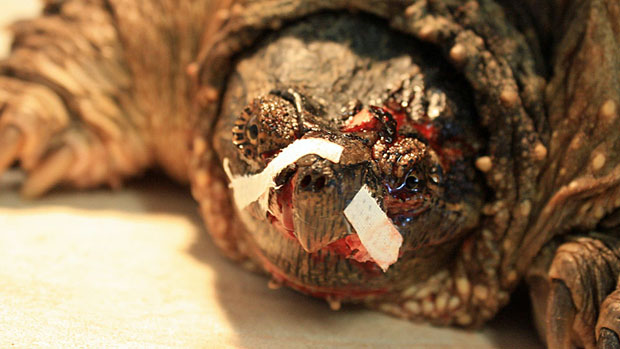
"Turtle Hit by Car Airlifted 400 km for Medical
Care"
Those of you who are familiar with my work will know this is just the
kind of headline to catch my eye. It's a heart-warming article: Windsor pilot
Rick Woodall, a volunteer with animal rescue group Pilots N Paws, transports
the injured creature from Sarnia
to the Kawartha Turtle Trauma Centre in Peterborough, thereby saving its
life.
If I were to write a fictional story based on this
true-life tale, I take as my starting point the following quote of
Woodall's:
"'When I found out it
was a turtle, my daughter insisted the turtle needed to fly.'"
Okay, so maybe there's a fictional daughter too (let's call here Eve, in honour of Ms. Ensler). I see her as twelve years old – part sullen teenager, part little girl.
Where's her mother? She left on a voyage of
self-discovery over a year ago; her emails are few and far between.
Where's Eve's father? Sitting across from her at the
kitchen table, locked away inside himself, impossible to reach.
The turtle is what they've both been waiting for. Not
only does Eve beg/bully her dad into transporting it to the trauma centre, she
insists on coming along. Consider what might pass between them in that cockpit,
what the pair of them might share.
Here's another line that struck me:
"'I didn't know it existed,' [Woodall] said of the
turtle trauma centre. 'And to be honest, I didn't know so many people were
working so hard to save turtles.'"
Imagine a story that begins with the knock on their
door (the neighbour in tears, the bloodied turtle in her arms), and ends with Eve's dad keeping out of the way while dedicated volunteers minister to the poor
bewildered beast. Imagine Eve standing at the heart of the action, her hand on
the turtle's shell. See how she turns to look at her father? How that look
cracks him open wide?
Leave Me
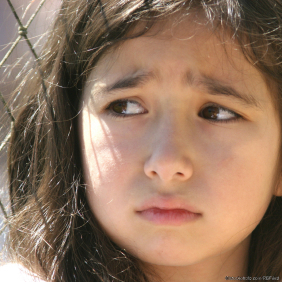
This week I was riding the Bloor subway line when I chanced to observe a brief unhappy scene. A girl of perhaps six years old was
travelling with a woman who looked to be her grandmother. When they approached
their stop, the girl rose and went to stand by the closest door. Without a
word, the grandmother stood and walked to the far door, leaving the child
standing alone. It was the look on the girl's face when she realized that got
me, a flash of abject fear. She scurried to join her grandmother, who ignored
her pointedly, stepping off the subway car without looking back.
I had witnessed a small, seemingly routine act of
abandonment – a quotidian power play. As I sat with the emotional echo of the
scene, the girl – or what little I knew of her – began to take on a fictional
life of her own.
What if her fear turned inside out one day (when she was eight? nine?) and became
anger? What if, instead of flying to her grandmother's side, she sat back down
and called the old woman's bluff? Alone on the subway for the first time, where would she
go? Is there perhaps an unstable paren't out there somewhere? Does the memory his/her
chaotic love hold out more promise than the grandmother's iron control?
Comments