Week Thirteen
Welcome back, gentle reader. This week's Three Things: “The
Guest,” “Thinking Big” and "Spruces."
The Guest

Recently, while listening to The Story from Here on CBC
Radio, I heard a chilling cautionary tale about a sixty-seven-year-old woman
who fell prey to an opportunistic couple. (To listen, click on the April 24th episode). Characterized by her niece as
good-hearted and shy with the mental capacity of a twelve-year-old, Aunt Sandra
can't have known what she was in for when she allowed Gail Benoit
and her family to move in. Under the guise of caring for her, they kept her
half-starved and captive, and emptied her bank account.
While it might seem more natural to tell a related fictional tale
from the victim's point of view, I found myself wondering
about the motivation behind such a crime. The cycle
of abuse and addiction seemed an obvious place to start, but where to go from
there?
In the true story, Gail Benoit brings a boyfriend and two
kids with her, but my fictional interloper comes alone. Maybe she starts out
wielding power over her victim, but finds herself yielding to kinder impulses
along the way. How does her prisoner manage to win her over? Is there something about the
girlish old woman that reminds her of a younger, more innocent self?
(An unsettling connection: I missed the beginning of the
story on the radio. Only later, when I looked up the podcast, did I learn that
Gail Benoit is the selfsame dog thief whose tale of fraud and cruelty served as a fictional
lead in week six of this blog . . .)
Thinking Big

Earlier this week, a headline (and accompanying
photo!) caught my fiction writer's eye:
Giant Egg Cracks $100K at Christie's Auction
It just gets weirder as one reads on:
"A massive, partly fossilized egg laid by a now
extinct elephant bird has sold for more than double its estimate at a London
auction."
Partly fossilized? I asked myself. What about the rest of
it? Can it still be broken? Then what?
"Christie's auction house said Wednesday that the
30-centimetre long, 23-centimetre diameter egg fetched £66,675 ($104,475). . . . and was sold to an anonymous
buyer over the telephone after about 10 minutes of competitive bidding."
I began to imagine that successful bidder-his racing heart, the slippery smartphone in his sweaty hand. What drove him to keep upping
his price? Who on earth is that enormous egg for?
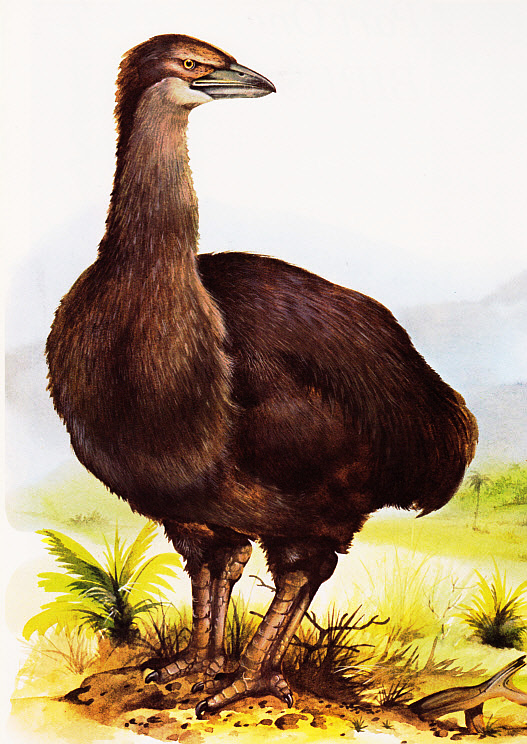
"Elephant birds were wiped out several hundred years
ago. The oversized ovum, laid on the island of Madagascar, is believed to date
back before the 17th century."
Hm, I thought, maybe part of my fictional take unfolds in 16th century Madagascar.
Maybe the egg's intended owner is a young PhD
student with more time for the history of science than for love.
And maybe, just maybe, my story braids together three narrative threads: the lovesick
bidder; the thesis-obsessed student; and the mighty elephant bird herself . . .
Spruces

This week, while reading the lovely novel Ru, by Kim
Thúy, I was struck by the following line:
"Photos could not preserve the soul of our first
Christmas trees."
Thúy's narrator speaks of "branches gathered in the
suburban woods of Montreal"; my own memory, however, led me to a decidedly non-suburban forest in northern Alberta, not far from the town where I was
born.
We were like a family in a fairytale: a lovely,
golden-haired mother; two small, bright-eyed children; a woodsman of a
father, complete with black beard and axe. The
setting too was magical: snow-laden evergreens as far as the eye could see. Back then no one-or at least no one we knew-considered the
ecological ramifications of chopping down trees. We had simply driven out of town, turned down a
wooded side road and pulled over where the pickings looked good.
I remember the way we felt that night, the four of us
gliding together through the trees. I remember my mother urging my brother and
I to choose, helping us find a way to agree. Most of all, I remember the heft
of the axe. I was perhaps five, my brother, six, yet each of us got to deliver
a single blow. I can still feel the thrill of that handle resounding against my palms.
For some reason, this memory didn't surface alone; it
brought with it a second snowy scene. Family friends of ours-lets call them the
Spruces-lived on a sprawling farm some miles from town. I can't remember how
many Spruce kids there were-only that they formed a kind of happy pack. There
was a pond on their land. Our two families skated there once-all of us, even
the moms and dads. I thought we'd have to quit when it got dark, but Mr.
Spruce sent his sons to cut dried bulrushes from the margin, and soon each of
us held a flaming torch.
It can be difficult to see clearly when approaching material this close to home. If I were to attempt a story based on those two nights, I would start where the feeling
runs deepest: a pair of small hands trusted first with a blade, then with the glory of fire.
Comments