Week Twelve
Hello again, fellow writers and readers, and welcome to
Three Things. This week's offerings: "Family Ties," "Her
Face(s)" and "Selfish Jean."
Before we begin, a reminder to those of you
within hailing distance of Toronto: don't miss the upcoming panel discussion,
"Abiding Obsessions, Recurring Themes" with myself and celebrated Canadian authors, Kathryn Kuitenbrouwer, Nino Ricci and Rabindranath Maharaj.
(Thursday April 25, 6:30 pm, North York Central Library Auditorium.)
Family Ties
I can't be the only one who spotted this gem
among the week's headlines:
"Kissing cousins? Icelandic App Warns If Your Date
Is a Relative"
The article takes a light approach to the topic of
accidental incest:
"You meet someone, there's chemistry, and then come
the introductory questions: What's your name? Come here often? Are you my
cousin? In Iceland, a country with a population of 320,000 where
most everyone is distantly related, inadvertently kissing cousins is a real
risk."
Another writer might respond to such a narrative "prompt"
by spinning a high-tech tale of star-crossed love set in the land of hot
springs and volcanic rock, but it was the phrase "kissing cousins"
that caught my imaginative eye. Neither the app angle nor the Icelandic setting interested me nearly as much as the idea of two people attracted not to an "opposite," but
to one of their own.
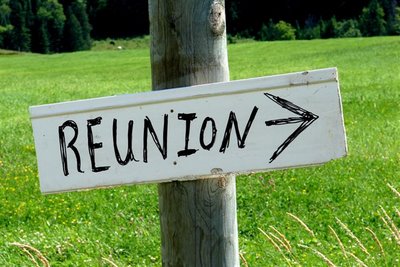
I began to envision a large family reunion and two (teenage?
thirty-something?) first cousins whose paths haven't crossed since they were
small. One (Celeste, daughter of NGO workers) belongs to a branch of the
family who forsook the home community for
foreign shores; the other (Thomas, first son of a first son) stayed put to run the family farming empire alongside his
pa.
Celeste and Thomas got along famously when they were toddlers; reunited,
they fall for one another, hard. Sounds like a natural for a short story told from dual
(duelling?) points of view. A potential structure comes to mind:
Act One: The big reunion where something begins.
Act Two: A series of love/denial/negotiation letters.
Act Three: A second, more selective reunion . . .
It can be challenging to address such delicate
subject matter, but when writers do so with sincere, rather than
sensationalistic motives, the results can be electric. Quebec literary icon Michel Tremblay took on the
question of consensual incest in the seventies with his groundbreaking play,
Bonjour Là Bonjour. It's a brilliant, enduring work, in large part because he
approached a taboo subject with boundless courage and compassion.
Her Face(s)

A few days ago, I was witness to an amusing game. A young
mother and her son of perhaps four years old were making faces at each other on
the train. She stuck her thumbs in her ears, made antlers of her hands and
crossed her eyes; he let out a yelp of pure pleasure and mirrored her with
impressive accuracy. Then it was his turn. He thought for a second before
presenting a hideous, lop-sided grimace unexpected from one so young. When his mom delivered her version, the pair of them dissolved into
giggles. Eventually they collected themselves and began the next round.
As I continued to watch them,
I was surprised by how moved I felt. Was it just because they were clearly so close?
Because the "blood kin" resemblance they shared went so much deeper
than their freckled skin?
In any case, I carried a fictionalized idea of them with
me long after I got off at my stop. It was a rare and lovely sight: a mother and child
playing together in an absorbed, unselfconscious manner amid a crowd. It
occurred to me that it would have been even more unusual in times past, when
paren'tal roles were more rigidly defined.
This got me thinking about a
character – a middle-aged man whose mother never fit the mould. Maybe his story begins
with a scene in flashback based on the loving game I was fortunate enough to
observe. Maybe it ends in a hospital room: a son faced with imminent loss visits his bedridden mother, who comforts him by crossing her eyes.
Selfish Jean
This week, while watching a PVR-ed episode of the PBS show, Nature, I was captivated as usual
by the words of world-renowned naturalist, David Attenborough. This time, it
was his take on the notion of the
"selfish gene" (popularized in the influential bestseller by
Richard Dawkins).
Beginning with ants and progressing to meerkats,
Attenborough explored social systems that value the regenerative impulse over the needs of the individual, and are therefore dependent on the contributions
of "non-breeding members."
Insects. Mammals. Us.
I began to imagine a pair of sisters: a "queen"
who looks out for number one and has it all (kids, home, family, career); and a
"worker-aunt" who provides the behind-the-scenes babysitting,
shopping, typing, etc. that makes it all possible.
Can this kind of imbalance really endure? Surely there's potential here for
a story that charts the evolution of
"Jeanie the Lifesaver" to "Selfish Jean."
A side note: Given the title I chose for this fictional
"lead," I may also have had Practical Jean, the darkly comic novel by
Canadian author Trevor Cole, in mind. (His Jean decides to save her loved ones from the indignities of age
and illness by bumping them off . . .)
Comments