Week Four
Welcome back, fellow writers and readers. This week's
Three Things: "Anywhere but Here," "Pick of the Okanagan
Valley" and "4ever."
Anywhere but Here

Yesterday I had a great chat with a friend who's visiting California.
While filling me in on her recent trip to Big Sur, she mentioned the many
hitchhikers she saw along the road to that fabled coastline, including one who
held a sign that read "Anywhere but Here." Later, we talked a bit
about Jack Kerouac's Big Sur, which my friend found to be an immeasurably
sad book about a man "at the mercy of his alcoholism."
After we hung up, both the hitchhiker's sign and the idea
of being at the mercy of an addiction continued to echo in my mind.
If I were to write a work of fiction based on these two "leads," I doubt whether
I would set in anywhere near Big Sur; the literary allusion would loom too
large. In any case, for me the narrative potential lies not in that particular
place but in the idea of a man who takes to the road in order to escape
something he carries within. Our
hero might travel any number of actual roads while he battles his
addiction/affliction, just so long as he scrawls those three telling words on a
piece of cardboard and holds them over his chest like a shield.
Pick of the Okanagan Valley
I usually read on the subway (taking the required breaks for observation and/or eavesdropping), but every now and then I
forget to bring a book and find myself reading the ads. This week one of those
ads awakened a memory, which in turn gave rise to a short story idea.
Years ago, my husband (then boyfriend) and I drove with a friend from Vancouver to the interior of BC. Our friend had been to
a party the night before. When we picked her up bright and early she had us
stop for a big jug of orange juice; she chugged the whole thing in the back seat,
groaned, and conked out for the first several hours of the trip.
That's the first part of what Margaret Laurence called the
"memory bank movie." The second, longer "clip" takes place at a roadside fruit stand in
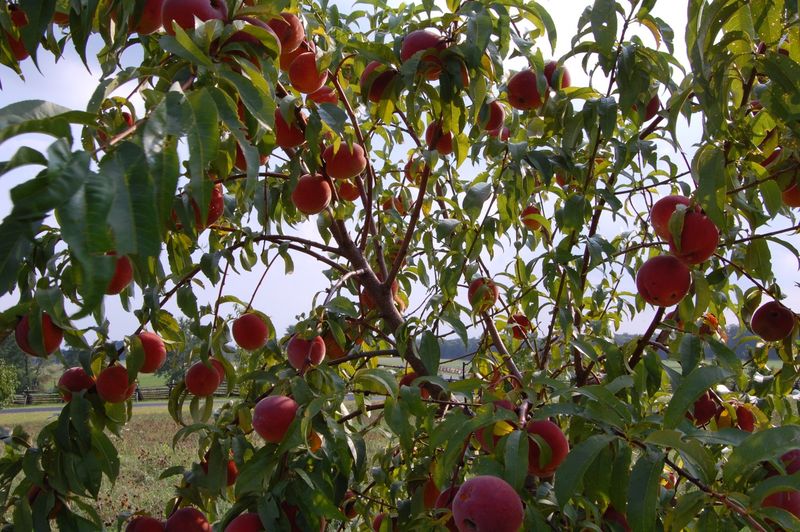
the Okanagan Valley. The peaches were the best we'd ever tasted; the three of
us polished off two baskets between us. We ate standing up, juice running down
our faces, our necks, our arms. The vendor let us hose off around the side of his stand. It was one of those
baking hot Okanagan days; we started out just washing our faces and hands but
ended up soaking one another head to toe.
I don't recall much else about the trip, except that we had a lovely, fairly uneventful time. Not exactly great fodder for
fiction. But there are those two specific memories – the backseat hangover and
the hedonistic pit stop for peaches (pun intended). The great thing about being
a fiction writer is that you don't have to stick to the facts. (In fact, the
work almost always suffers when you do. The "but it really happened like that" defense holds no sway in the court of fiction.)
So maybe a fictional backseat groaner didn't just have a
hangover because she'd been to a party; maybe she'd had her heart broken, or
done something terrible she was trying to forget. And maybe a fictional roadside
fruit-fest and water fight could start out friendly but evolve into a situation
that was explosive or disturbing or both . . .
4-ever

When it comes to gleaning the news for fictional leads, I
find the "Offbeat" section of the CBC News site to be fertile ground.
This week, the headline "Internet's Worst Tattoo Fixed Pro Bono"
caught my eye.
It turns out this wasn't just any botched tattoo; it was
a memorial to the owner's late wife. The article supplies little information
concerning the young woman's death, but the details we do learn are compelling:
"Apparen'tly, the man had lost his wife in a fire only three months after
getting married sometime in the early 2000s."
After a decade of sporting an unflattering portrait of
his beloved on his arm, the widower approached a second tattoo artist to
"see what his options were." This line interested me. Was he considering having the tattoo removed, and if so, why?
My imagination was further stimulated by the following
quote from the tattoo artist who supplied the illustrative
"face-lift": "'Touched by his story, I gifted the entire project
to him for free.'"
Okay, so what if our fictional fix-it artist wasn't a
bearded dude with lip studs, but an attractive, kind-hearted, heavily-tattooed
woman? What if she talked our young widower out of removing his bride's face
from his arm, even though his new fiancée had demanded he do so? Imagine her
holding his arm gently, examining the distorted image of the girl he'd loved
and lost. She might say something like, "You bring me the picture. I'll
make her like you remember, like she was."
A complicated reconstruction job like that would require several sessions. What might our young widower
and the attractive tattoo artist talk
about? What might happen when the fiancée found out?
Ask yourself, what are we humans attempting to do when we
memorialize a loved one – especially when we do so on our own flesh? Doubtless
those who mark themselves in such a manner understand (as we all must) that
part of them will always belong to the late loved one. Perhaps by designating a
certain specific part – right forearm, left wrist – they hope to make their
grief easier to carry, or even to contain.
Related recommended reading: Flannery O'Connor's
masterful short story, "Parker's Back," available in The Complete Stories. (And while you're at it, read the whole
collection!)
Comments