Week Six
Welcome to the sixth instalment of Three Things. This
week's fiction finds: "Études," "Running for Nana" and
"Snowy."
Études
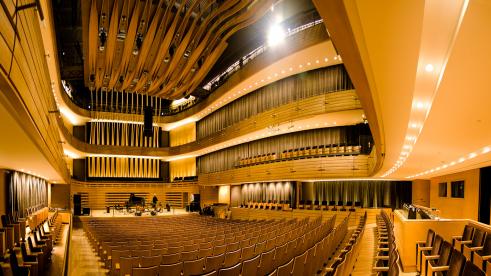
This week I had the pleasure of attending a piano concert
at Koerner Hall. While waiting in
the lobby for my friend to arrive, I happened to observe a disquieting scene
through the glass. A father was pulling his daughter of perhaps four years old
along by the hand; her older brother trailed after them. All three carried
violin cases – the children's cases touchingly undersized. The father was clearly
angry – he jerked the little girl's arm repeatedly, then brought his face down
to hers and held her firmly by the chin while he told her off. She didn't
flinch, didn't cry. The brother stood waiting behind them with his eyes on the ground.
Before I knew it, I was inside the mind of a character based on that
little boy. A line came to me: "Kate got the worst of it. By the time she
began showing real promise he'd already given up on me."
The concert was lovely, an all-Chopin program featuring
Études from Opuses 10 and 25. As I sat listening, the young man at the piano
gave way to an imagined character – that four-year-old girl, now twenty-one and
taking the world by storm. Her family were there with her, the angry father beaming from the front row, the
troubled (perhaps even estranged?) son/brother in the balcony above.
A narrative structure began to take shape: the concert as frame,
each Étude a gateway to a memory. I found myself wondering, Why has the brother
come to this particular performance? What, besides listening and remembering,
is he planning to do?
Running for Nana
While riding the subway the other day, I couldn't help
but notice an unhappy-looking young woman sitting with her knees drawn up to her chest. Her expression
and posture spoke volumes, but it was her clothing that jump-started a story in
my mind. She was dressed head to toe in state-of-the art running gear: black,
breathable Lycra with reflective white stripes, and expensive, neon-green
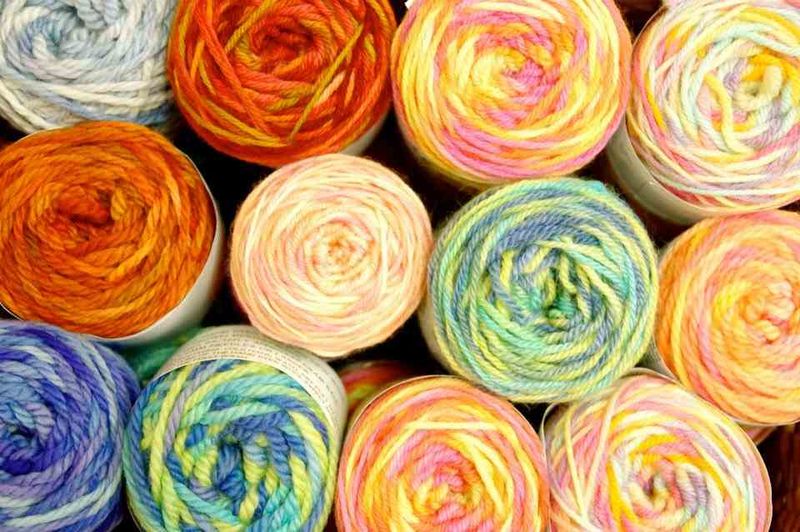
training shoes. Only her mittens stood out. They were hand-knit from
rainbow-coloured wool, bright and bulky, like a child’s. It was warm in the
subway car, but she kept them on.
Who knit them for her? I asked myself. And why is she so
sad?
Two questions called up a single answer: Nana.
What if a fictionalized runner sets out
before dawn, her reflective white stripes catching the headlights as she runs
the ten (twenty? thirty?) kilometres to the hospital where her grandmother lies
struggling to breathe?
Now what if that grandmother is the only person who's
ever really loved our runner, the only who takes the time and effort to
accommodate a series of obsessive behaviours that include counting, checking and pacing? What if
Nana is the sole kindred spirit who understands how those behaviours work like a spell to
keep her granddaughter safe?
Maybe this morning's run isn't a single pilgrimage but
rather a daily ritual born of an obsessive mind. Perhaps our sad young woman in
the rainbow mitts believes herself to be running not for her own life, but for
Nana's . . .
Snowy
This week's third fictional lead was "ripped from
the headlines," Law and Order style. The banner in question:
"Dogsitter Charged with Theft, Fraud for Stealing 2 Dogs."
The real-life thief was a woman with
previous convictions for animal cruelty who was in it for the money; my
fictional dog-napper is made of kinder material.
Imagine a fragile young man who's recently suffered a
loss (let's call him Colin). Maybe he's one of those boys with no friends, save
for the mother who's done her best to shield him from a less than caring world.
Let's say they build a life together – Mom bringing home the bacon from her job
in the hospital laundry, Colin keeping house. It's a small life, but a loving
one, until the day when Mom collapses while hauling sheets from the industrial
dryer, and a massive "coronary event" claims her life before her
co-workers even notice she's down.
Colin has little in the way of savings; after a month or
two, he realizes he has to get a job. Every wanted ad terrifies him, until he
spots a friendly notice stapled to a power pole: Dogsitter Wanted.
My character bore little resemblance to the dog thief in
the article, so it made sense for the dog(s) to be different too. Given Colin's
lifelong dependence on a single person, one dog felt more appropriate. The
breed didn't seem right either. The dogs in the article were white boxers – too
athletic and self-assured by far. I liked the idea of a white dog, though – a
blank page of sorts, upon which Colin might hope to write the story of a new,
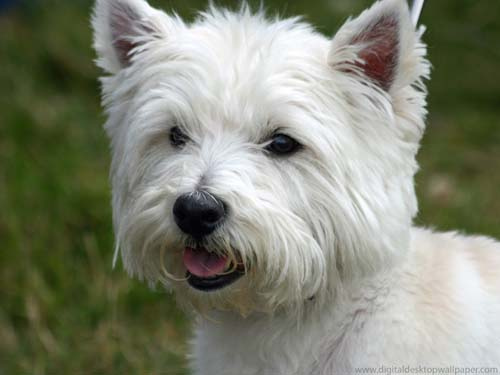
less lonely life. I settled on a West Highland Terrier: small, sweet-faced and
feisty, the perfect counterbalance to a pervasive, paralysing grief.
At some point in my deliberations, a memory surfaced.
Years ago, my husband and I gave a snow-white teddy bear to a friend's small
son. I'll never forget the look of pure, unadulterated love on the little guy's
face as he hugged that bear. When I asked what he would name his new pal, his
answer was a joyful shout: "Snowy!"
Colin is in his twenties when he steals Snowy, but part
of him is still a little kid. He falls for that Westie as a child would: with an open and terribly vulnerable
heart.
(Remember, your protagonist must have a goal. It may not
be a goal the reader shares, but it must be one s/he can understand.)
Comments