In conversation with Melanie Little
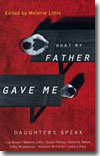
We recently caught up with this week's Nonfiction Book of the Week author Melanie Little. Melanie is the editor of, What my Father Gave Me, a collection of short stories by seven women who write about their relationships with their resepective fathers. This collection of stories is heartfelt, honest and at times painful, as the women recount their evolving relationships with their fathers as they grew from little girls into young women.
Here's what Melanie had to say…
Why did you decide to put "What My Father Gave Me" together?
There were already a lot of great books out there about mothers and daughters, including a previous Annick Press anthology that I’d written a story for called Certain Things About My Mother: Daughters Speak. But it seemed there weren’t nearly as many places to go for stories about fathers and daughters, particularly from teen girls’ points of view. When Annick asked me to put together a collection of female voices on the subject, I jumped at the chance. I think the father-daughter relationship is one of the most fascinating, most powerful relationships in our lives—and it’s often at its most important, complicated, and confusing during our teen years. I think fathers and teenage girls often find it hard to talk to one another, to have a single conversation that isn’t fraught with misunderstandings.
I also thought it was important to hear the stories of girls who went through adolescence without their fathers. All of these unique experiences inform and shape the women we become. I was struck by how, out of each of these diverse relationships—which range from conflict to abandonment to abuse to great love—the girls emerge from their experiences as much stronger people because of the lessons they’ve learned. I thought that was an important and inspiring thing to show teenagers.
What are some of the challenges of writing non-fiction about very personal details of your life?
First of all, it’s terrifying, of course, to think that your most intimate secrets are going to be published and available for the entire world to read. But that can be liberating, too, and I think the rise of blogging, Facebooking, and so on has made us all, and young people in particular, more comfortable with sharing extremely personal material with a limitless audience. Despite one’s comfort or discomfort level, however, the fact that something is going to be published makes it very important to get the details right—especially if you’re writing about other people. And that can be harder than you might imagine. Memory, especially, is a very tricky thing. Trying to faithfully represent a conversation that took place even just a year ago can seem like the most impossible task in the world when you sit down to it. That’s when you have to learn to be faithful to the spirit of what happened, even when you know in your heart that you might be getting some of the details wrong. Almost always, writing non-fiction is a frustrating and humbling experience that teaches you to pay more attention, not just to the world around you, but to your own life.
Why write for young adults?
I’m a voracious reader, and what I like best about reading is that it takes me out of myself. It opens up my imagination and empathy so that I can remember I’m not the only one on the planet with problems and joys. I think our teenage years are the ones when we need to be taken out of ourselves most—even if it’s just as a break from the constant self-questioning we’re asked to perform. “Am I good enough? Smart enough? Attractive enough? Making the right plans?” And on and on. I think adults seriously underestimate both the stress that teenagers face in their lives and also the intelligence and understanding they possess. When I’ve done public readings of my writing, many of my best, most perceptive audiences have consisted of young adults. They listen the hardest, ask the toughest questions, provide the most useful feedback. It’s a joy to write for them.
What inspires you to write?
I get carried away by the tiniest details of life—those are the things I find most fascinating. Once I start fixating on something like, say, the way the woman in front of me on the streetcar is cradling her Blackberry as if it’s a baby bird—then I want to build on that detail, create a story around it, make other people take notice of it and feel moved or disgusted or intrigued by it as well. Human beings, in particular, fascinate me. The paradox that we are each so different from one another and yet all so much, at heart, the same.
What are you working on now?
After finishing a non-fiction anthology about fathers and daughters, I’m now working on fiction—a novel—about a mother and son. I guess I like opposites!
5 thoughts on “In conversation with Melanie Little”
wow, really want to read the new novel she’s working on!
father and daughter so many questiions?
I would agree that one of my favourites things about reading is that you create imagination. I would like to know what bonds these seven women share with their fathers. Very interesting.. 🙂
I’ve always found writing to be difficult though i love to read, it’s very hard for me to put into words the scenes i have in my head. But after reading this, i feel inspired to try writing some more
wow this ought to be a pretty good book, it’ll be good if there’s a father-son and mother-daughter squeal as well!
Comments are closed.